Medellín / Colombia Things to do
What are the most worthwhile things to do in Medellín on a first visit?
The short answer
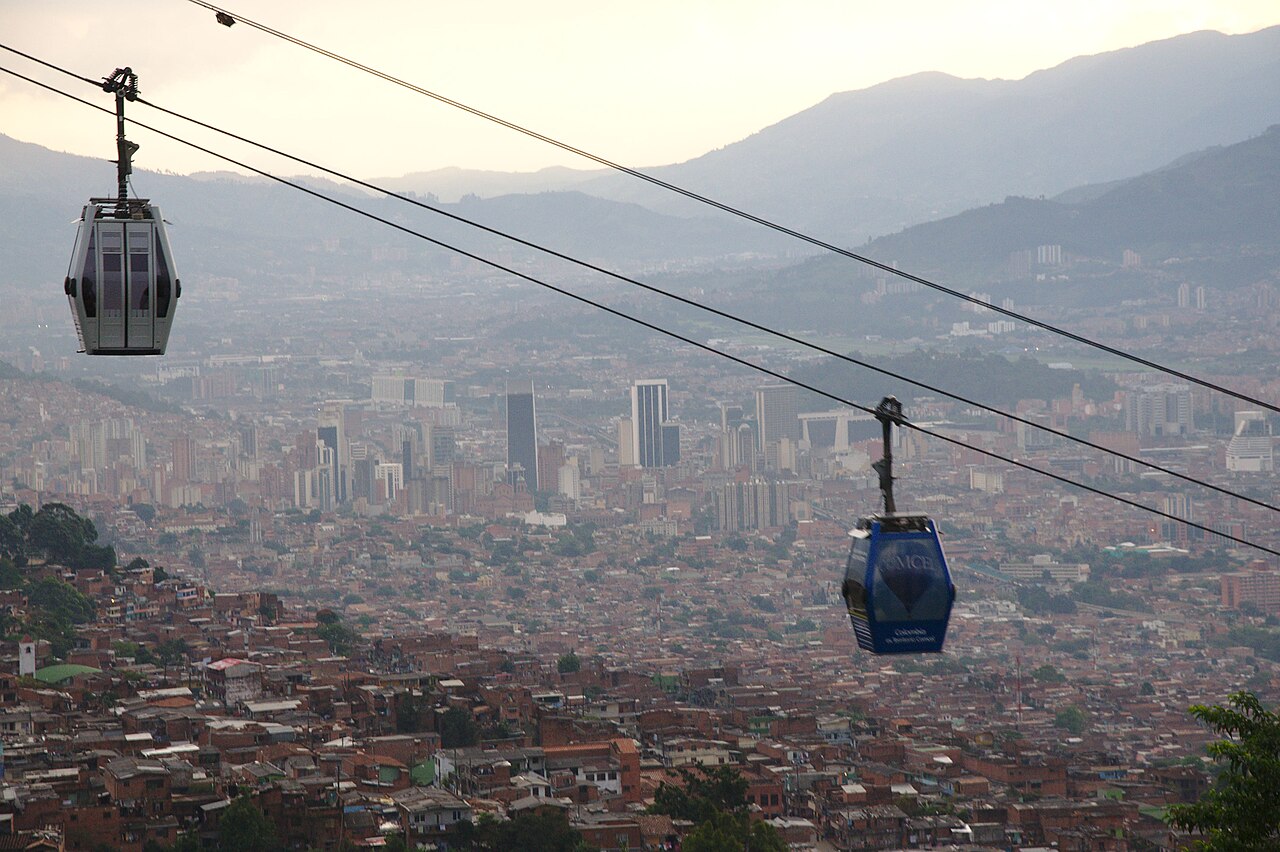
Ride the transit system as if it were the attraction — because it is: Colombia's only metro, opened in 1995, and its Metrocable gondolas climbing to the hillside comunas — then walk Comuna 13's escalators and murals, stand in Plaza Botero among the 23 bronzes, and take Line L up to Parque Arví.
The answer, with local context
Begin with the machine that remade the city. The Metro de Medellín carried its first passengers on November 30, 1995, in the middle of the city's hardest years, and it remains Colombia's only metro: two rail lines — Line A running the valley's length, Line B west to San Javier — integrated with six Metrocable lines, a tram and feeder buses into a single network of some 53 miles (85 km) that moves over 200 million passengers a year. A single fare buys the transfers between rail and gondola — in 2026, COP 3,820 for frequent users and COP 4,400 for occasional ones — and the system is famously kept immaculate by its riders, a civic pride locals call the Cultura Metro. Line K, opened in 2004 from Acevedo up to Santo Domingo Savio, was among the first urban cable cars in the world built as everyday mass transit rather than a tourist ride, and gliding over the brick rooftops of the northeastern comunas remains the single fastest way to understand Medellín's geography: a rich valley floor, and a ring of hillside neighborhoods the gondolas finally stitched into the city.
Comuna 13 is the stitch made visible. Reached from San Javier station, the neighborhood that was once synonymous with the city's violence now runs on tourism built by its own residents: six sections of free public outdoor escalators, opened in 2011, climb some 1,260 feet (384 m) of hillside that once meant hundreds of exhausting steps, flanked by murals, hip-hop and the houses of the guides who grew up there and lead the tours. Go with one of them — the art is excellent, but the narration is the exhibit. Then ride Line L from Santo Domingo over the ridge to Parque Arví, a protected forest reserve above Santa Elena where the silletero farmers live: trails, a market of local producers, and air a full climate cooler than the valley floor.
The center holds the art. In Plaza Botero, 23 of Fernando Botero's monumental bronze sculptures — donated by the artist, Medellín's most famous son — stand in the open air in front of the Museo de Antioquia, which holds one of the world's great Botero collections inside: his paintings, and with them a survey of Colombian art. A few stops away, the Museo Casa de la Memoria gives the conflict years their sober, necessary account. And for the day out of the city, Guatapé waits about two hours east: a lakeside town of painted zócalo friezes and, beside it, the granite monolith of El Peñol, climbed by 740 steps set into a crack in the rock, with the reservoir's islands spread below.
Picture the place
From a Line K gondola the valley performs its whole argument at once: below, the brick houses of Comuna 1 stacked in orange terraces up the slope; ahead, the cabin's cable rising to Santo Domingo; behind, the city floor with its towers and the green wall of the western hills — and inside the cabin, commuters reading the view with the boredom of people for whom this miracle is a bus.
The easily missed detail
The escalators of Comuna 13 are not a monument but a municipal utility, maintained and ridden daily by the neighborhood's elderly and children like any other piece of transit — which is the point of them. The detail that completes the thought is at the other end of Line L: Arví's forest is the watershed the whole valley drinks from, protected long before it became an outing, so the city's favorite Sunday walk is inside its own water supply.
A practical rhythm
- Morning — Ride early: Line K to Santo Domingo and on to Arví before the gondolas fill, when the valley light is clear and the forest trails are at their coolest.
- Midday — The center takes the middle hours: Plaza Botero and the Museo de Antioquia, the Casa de la Memoria, and lunch in one of the traditional houses near Junín.
- Evening — Comuna 13 glows at the day's end — the murals in low light, the escalators lit, the city's grid coming on below — before dinner in Laureles or El Poblado.
What could complicate the plan
The system's popularity is its friction: the Metrocables run at commuter capacity in the morning and evening rush, and the Arví line draws long weekend queues, so ride them on weekday middays or early. Comuna 13 deserves a guide and a sense of proportion — it is a living neighborhood, not a theme park, and the tours that return money and authorship to residents are the ones to book. And the Metro fare rules reward the Cívica card: buy one at any station on arrival rather than paying the occasional-user rate all week.
What to do next
Buy the Cívica card at the airport bus's first station, ride Line K on your first morning, and let Comuna 13 — with a resident guide — be the afternoon the trip is remembered by.
Sources
- Metro de Medellín — the system opened November 30, 1995, Colombia's only metro; two rail lines integrated with six Metrocable lines, a tram and feeder buses across some 53 miles (85 km) of network and over 200 million passengers a year; Line K opened in 2004 as among the first urban cable cars built for mass transit; 2026 fares of COP 3,820 (frequent) and COP 4,400 (occasional)
- Museo de Antioquia — the 23 Botero bronzes of Plaza Botero and the museum's Botero collection, donated by the artist
- Alcaldía de Medellín — Comuna 13's free public escalators, opened in 2011, climbing about 1,260 feet (384 m) of hillside; Parque Arví, the protected reserve above Santa Elena reached by Metrocable Line L