Melbourne / Australia Things to do
What are the most worthwhile things to do in Melbourne on a first visit?
The short answer
The MCG and the National Gallery of Victoria anchor the first visit — one for the sport, one for the art — with the laneway grid, the World Heritage-listed Royal Exhibition Building and penguins at dusk in St Kilda filling the space between them.
The answer, with local context
Start at the ground Australians treat as a cathedral. The Melbourne Cricket Ground opened in 1853 and now holds 100,024 people — 95,024 seats plus 5,000 standing places — making it the largest stadium in the Southern Hemisphere and the largest cricket ground in the world by capacity. It hosted the first Test match ever played, Australia against England in 1877, and the first one-day international in 1971, and it was the main stadium of the 1956 Olympic Games. On non-event days, guided tours run from Gate 3 through the Long Room and out to the turf, and the Australian Sports Museum sits inside the ground.
The gallery is the second anchor, and it comes as a pair. The National Gallery of Victoria, founded in 1861, is Australia's oldest, largest and most visited public art museum, with more than 75,000 works divided between NGV International on St Kilda Road — entered through its famous water wall — and the Ian Potter Centre: NGV Australia at Federation Square, which holds the Australian and Indigenous collections. The permanent collection is free at both. A few streets away, State Library Victoria, founded in 1854 as one of the world's oldest free public libraries, opens its La Trobe Reading Room to anyone: a six-storey domed octagon, opened in 1913, that remains the city's grandest interior.
For the heritage entry on UNESCO's list, walk to Carlton Gardens. The Royal Exhibition Building was built in 1880 for the Melbourne International Exhibition, and in 2004 it and the surrounding gardens were inscribed on the World Heritage List — the first building in Australia to receive that status. The Melbourne Museum stands next door. South of the river, the Royal Botanic Gardens, established in 1846, spread 94 acres (38 ha) and more than 8,500 plant species beside the Shrine of Remembrance, opened in 1934; and the view of it all is from Melbourne Skydeck, on the 88th floor of the 91-storey Eureka Tower, 975 feet (297 m) above Southbank.
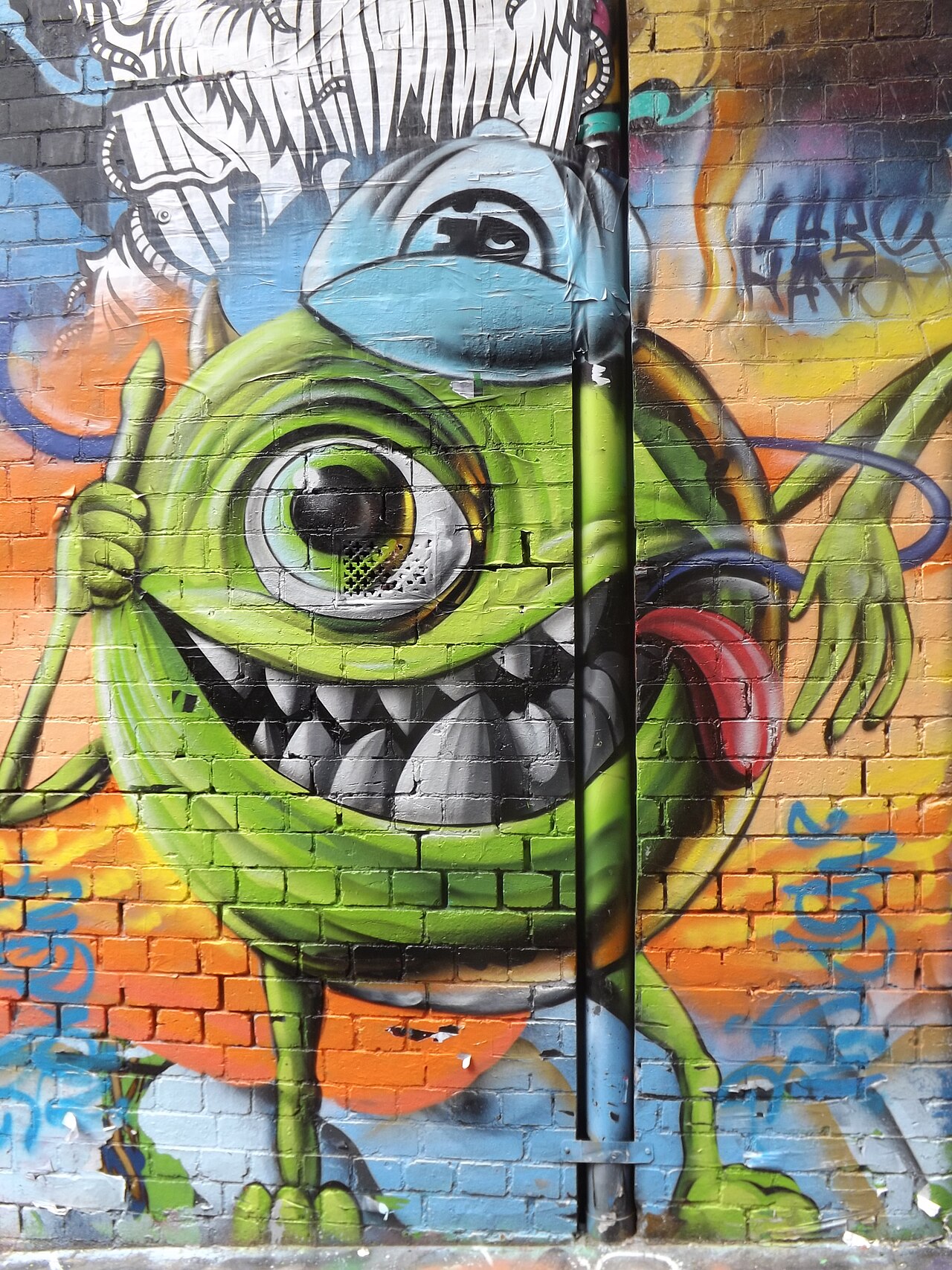
What remains is the grid itself and the bay. Hosier Lane's walls are a sanctioned, constantly repainted open-air gallery; the Block Arcade (1892) keeps its mosaic floor, and the Royal Arcade (1870), Australia's oldest surviving arcade, is guarded by the clock figures Gog and Magog. Then ride the tram to the water: Luna Park in St Kilda has grinned over the foreshore since 1912, and more than 80 painted bathing boxes line Dendy Street Beach at Brighton. The one expedition worth a full day is the Great Ocean Road — 151 miles (243 km) of coast road from Torquay to the Twelve Apostles in Port Campbell National Park.
Picture the place
Hosier Lane at mid-morning is a cobbled slot between bluestone walls where every surface — bricks, bins, doorways, the cobbles themselves — carries paint in layers, the freshest pieces still sharp over last month's, and a tour group stands breathing in the faint sweetness of aerosol while an artist works the far wall undisturbed.
The easily missed detail
There are penguins inside the city limits. Little penguins — the world's smallest penguin species, about 13 inches (33 cm) tall — nest in the rocks of the St Kilda breakwater, and researchers have estimated the colony at around 1,400 birds. They raft in from Port Phillip Bay at dusk and pick their way up the rocks past the end of St Kilda Pier, a few miles from the CBD, in a nightly parade that has nothing to do with a zoo.
A practical rhythm
- Morning — The Royal Botanic Gardens and the Shrine of Remembrance before the heat builds, then coffee in South Melbourne on the walk back toward the river.
- Midday — The gallery pair and the arcades: NGV International, the reading room dome at the State Library, and the Block and Royal Arcades while the laneway cafés are at full hum.
- Evening — A tram to St Kilda for Luna Park's lights and the breakwater, timed to be in place before sunset so the penguins' return is the main event.
What could complicate the plan
The MCG's tours vanish on event days — and in a city this saturated with sport, event days are frequent — while the NGV's blockbuster exhibitions are ticketed, timed and sold out on weekends despite the free permanent collection. Penguin viewing is managed from a boardwalk, photography rules are enforced for the birds' sake, and numbers swell on warm weekends. The Great Ocean Road, meanwhile, is a ten-to-twelve-hour commitment as a day trip; treated as a half-day idea, it defeats everyone who tries it.
What to do next
Book the MCG tour and any timed NGV exhibition before you arrive, and keep one clear evening for St Kilda. The food question in this group covers the cafés and dining strips that fit around this itinerary.
Sources
- Melbourne Cricket Ground / Melbourne Cricket Club — the ground's 1853 opening, capacity of 100,024, the first Test in 1877 and first one-day international in 1971, its 1956 Olympic role and tour arrangements
- National Gallery of Victoria — the gallery's founding in 1861, its collection of more than 75,000 works, its two sites and free permanent collection
- UNESCO World Heritage Centre — the 2004 inscription of the Royal Exhibition Building and Carlton Gardens
- Parks Victoria — the little penguin colony at the St Kilda breakwater and its managed public viewing