Melbourne / Australia When to visit
When should I visit Melbourne, Australia, for the best experience?
The short answer
March — Melbourne's autumn sweet spot, when days still average 75°F (24°C) but the month stacks the Formula 1 Grand Prix, the Comedy Festival and the Food and Wine Festival into the weeks just after the Australian Open crowds have gone home.
The answer, with local context
Melbourne's year is not ruled by rain. The Bureau of Meteorology's long-term averages for the city station show about 25.5 inches (648 mm) of rain spread across roughly 100 days a year, with no true wet or dry season — October is statistically the wettest month at 2.6 inches (66 mm), wetter than any winter month. Temperature does the deciding instead: January and February average highs of 79°F (26°C), March holds at 75°F (24°C), and July bottoms out at highs of 56–57°F (13.5°C) and lows near 43°F (6°C). What Melbourne does have is swing: the city sits where hot air off the continental interior collides with fronts off the Southern Ocean, which is why its all-time record is 115.9°F (46.4°C), set on February 7, 2009 — Black Saturday — in the same climate that can demand a coat in January.
The locals named the phenomenon before the forecasters did. "Four seasons in one day" comes from the 1992 Crowded House song of that name, written by Neil Finn about this city's habit of delivering a cold front, a downpour and a warm evening inside a single afternoon. Visitors should pack for the song in every month: layers and a shell jacket matter more here than in any other Australian capital.
So the real calendar is the events calendar. The Australian Open takes over Melbourne Park for two weeks in mid-to-late January and has drawn more than a million spectators across recent editions. March answers with three festivals at once: the Australian Grand Prix at Albert Park, which Melbourne has hosted since 1996; the Melbourne International Comedy Festival, running from late March into April and ranked among the largest comedy festivals in the world; and the Melbourne Food and Wine Festival. Spring counters with the AFL Grand Final at the MCG on the last Saturday of September and the Melbourne Cup on the first Tuesday of November, while the Boxing Day Test anchors December 26. March is the one month that pairs summer-grade weather with festival density and post-Open hotel rates.
Picture the place
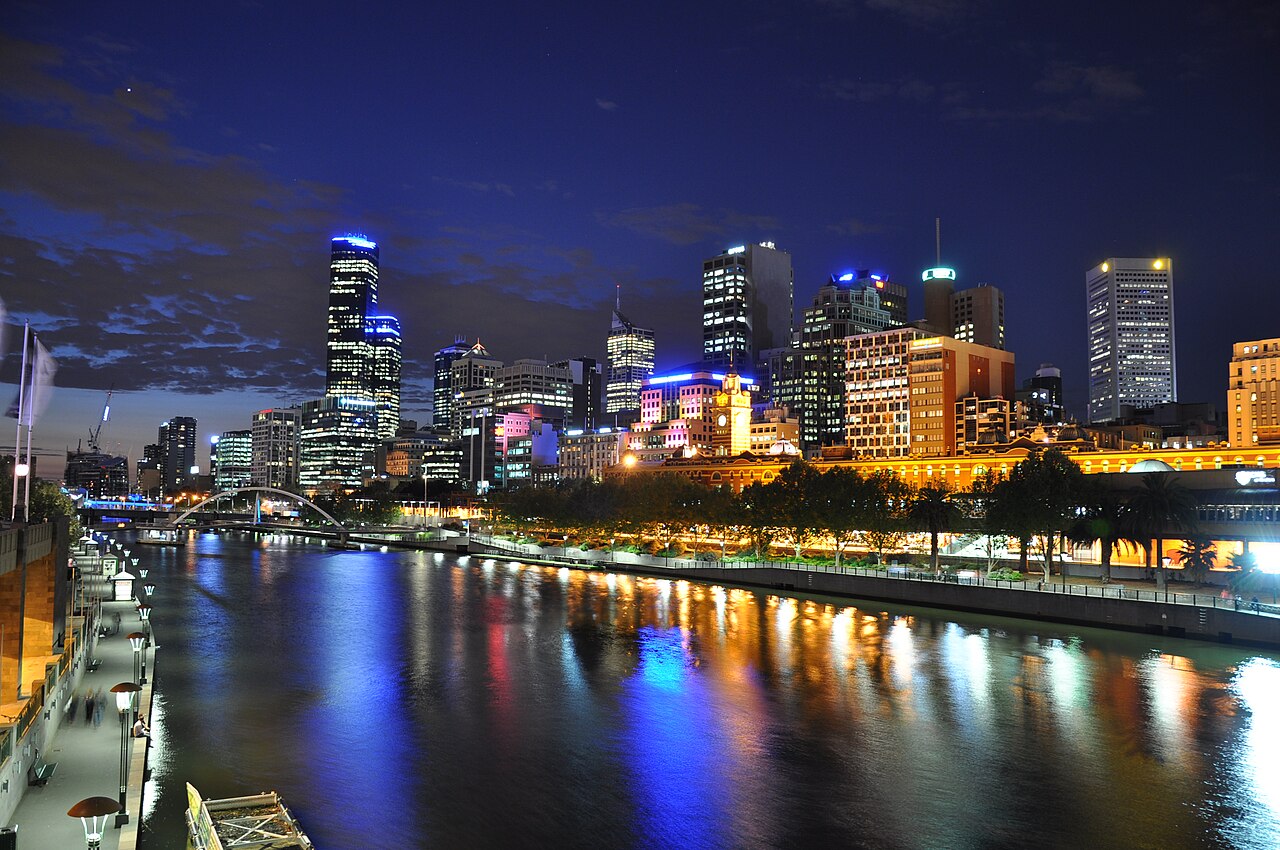
On a March evening the Yarra runs brown and slow under Princes Bridge, rowers are still out in the last of the light, and the plane trees along St Kilda Road are dropping their first curled leaves onto the tram tracks while the city heads out in shirtsleeves to a comedy show.
The easily missed detail
The Melbourne Cup's public holiday is not a national one, and it is not even statewide in the way visitors assume: Cup Day is a public holiday across metropolitan Melbourne, while regional Victoria takes its race-day holiday on its own local cup days instead. Melburnians compound the gift by taking the Monday off as well, so the city runs on an unofficial four-day weekend — book Cup week accordingly, because locals are traveling too.
A practical rhythm
- Morning — March mornings are the year's most reliable: cool, bright and calm, the slot for the Botanic Gardens, the river paths and the Grand Prix circuit at Albert Park before the day warms.
- Midday — When a summer front or an autumn shower arrives, it usually arrives at lunchtime; the arcades, galleries and laneway cafés of the grid are built for exactly this hour.
- Evening — Festival season runs at night — comedy shows cluster around the Town Hall precinct from 7 p.m., and daylight lasts until nearly 8 p.m. in early March.
What could complicate the plan
Event weeks are the city's price spikes: the Open fortnight, Grand Prix weekend, AFL Grand Final week and Cup week all fill hotels and lift rates well above the seasonal norm, and Grand Final Saturday and Cup Day change the city's transport and opening hours outright. Winter is the honest trade-off — July is genuinely cold by Australian standards and dark by 5:15 p.m., though it is also when the city is cheapest and its bars, galleries and football are at their most Melburnian.
What to do next
Fix your anchor first — a race, a festival or a final — then book accommodation around it; if no event calls you, take March. The things-to-do question in this group is written for exactly that month.
Sources
- Bureau of Meteorology — long-term climate averages for Melbourne: monthly temperatures, annual rainfall of about 648 mm over roughly 100 rain days, October as the wettest month, and the 46.4°C record of February 7, 2009
- Visit Victoria — the city's official event calendar: Australian Open in January, the Grand Prix and Comedy Festival in March–April, the AFL Grand Final, the Melbourne Cup and the Boxing Day Test
- Victorian Government / City of Melbourne — Cup Day as a public holiday across metropolitan Melbourne, with regional areas observing local race days