Micronesia country guide Trip planning
How can I plan a memorable first trip to Micronesia without rushing?
The short answer
Two weeks, 2 or at most 3 states, threaded on the Island Hopper and the Guam–Yap hop: Pohnpei 5 days (Nan Madol plus the island), Chuuk 4–5 for divers or Kosrae 4 for reef-and-ruin quiet, Yap 3–4 if the route allows — with every state's fees, taxes and Sundays priced into the plan from the start.
The answer, with local context
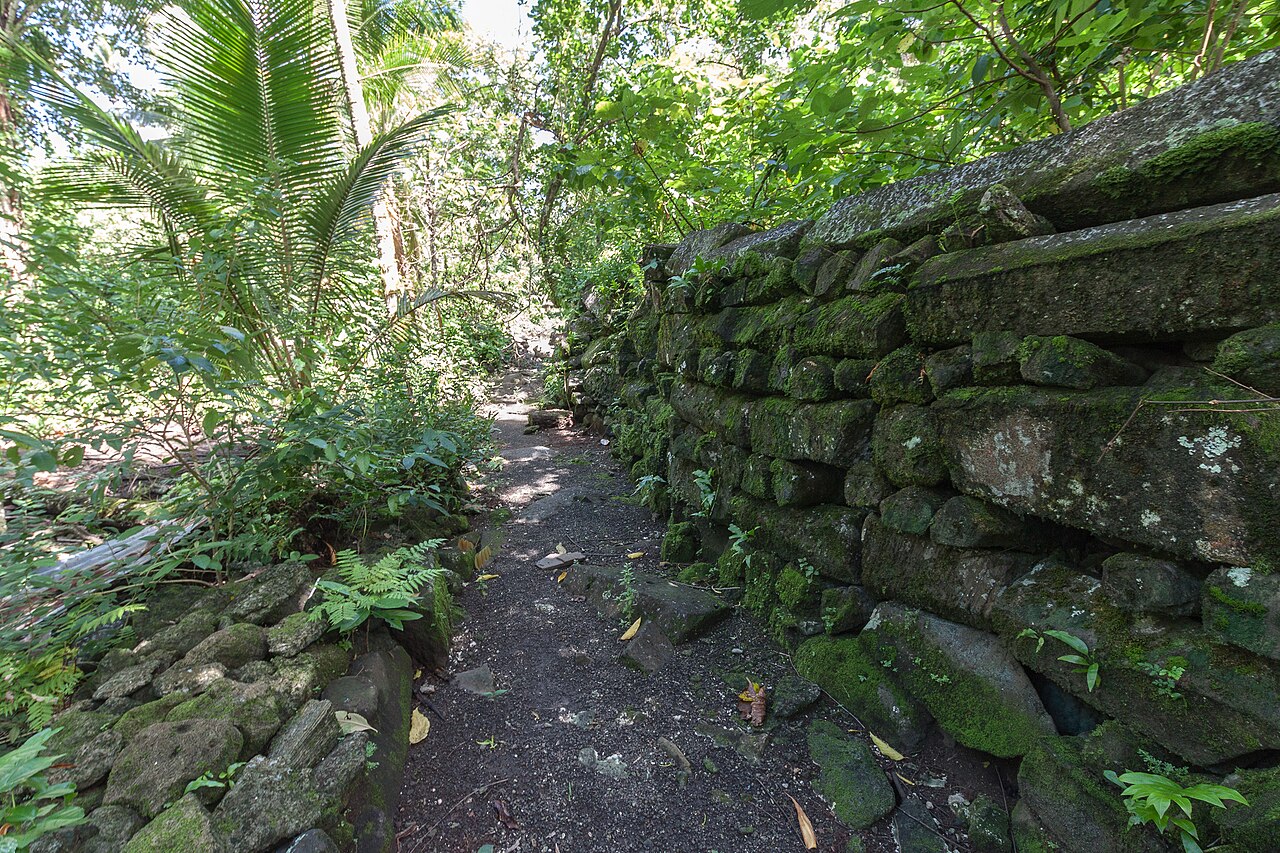
The FSM's shape dictates the trip: the 4 states run west to east across 2,700 km of ocean in the order Yap–Chuuk–Pohnpei–Kosrae, but the air map does not match the geography map. United's Island Hopper (Honolulu–Guam) stops at Kosrae, Pohnpei and Chuuk, in that westbound order, a few times a week; Yap is not on the line — it is served separately from Guam (a short hop, limited weekly frequency). So the classic first trip is drawn in 1 of 2 shapes: the eastern triangle (enter from Honolulu: Kosrae → Pohnpei → Chuuk → out to Guam, or the reverse from Guam) or the Guam-based arc (Guam → Yap → Guam → Chuuk/Pohnpei on the Hopper). Trying to do all 4 states in under 2 weeks converts the federation into a series of airport benches; the unhurried choice gives each state its own chapter: Pohnpei 5 days (Nan Madol on the first calm morning, Sokehs Ridge and the falls, a sakau evening, a buffer day the rain will claim), Chuuk 4–5 days if you dive (2 wreck days minimum with the lagoon islands between) or Kosrae 4 days if you do not (Lelu, the reefs, the Blue Hole, a Sunday of total quiet), and Yap 3–4 days (village tour and money banks, a manta morning, Yap Day if your February–March timing lands it).
The federation's paperwork is light but layered, and the layers are the planning: no visa for anyone (entry permits on arrival — 30 days for most visitors, extendable; U.S. citizens under the Compact may stay indefinitely), a passport valid at least 120–180 days (the State Department advises 180), an onward ticket, and then the state system — each state collects its own departure tax in cash (about $15–$20 at Yap, Pohnpei and Kosrae; Chuuk's reported up to $40), each runs its own site permits (Chuuk's dive permit, Nan Madol's landowner and state fees), and the clocks split (UTC+10 west, +11 east). The U.S. dollar is the currency; cards work at the main hotels of Kolonia and Weno and almost nowhere else; cash in small bills is the federation's true passport. Population for scale: about 105,000 people in the whole country (Chuuk holds roughly half), so these are small societies where the visitor is visible and remembered — dress modestly, ask before photographing, and let hosts set the pace.
Season everything for the dry trades (December–April; February as the peak month per the climate answer above), and build each state block with a weather flex day — Pohnpei's rain, Chuuk's lagoon swells and Kosrae's single-runway simplicity all cancel things cheerfully. What the design returns is the federation's real luxury: 4 distinct Micronesian civilisations — stone-money philosophers, ghost-fleet divers' hosts, sakau ceremonialists and coral-city conservationists — each met at walking pace, in a country most travelers cross at 35,000 feet without ever learning its name.
Picture the place
The Hopper descending toward Kosrae at dawn: 1 green volcanic island alone in an empty ocean quadrant, its reef ring glowing, the Lelu causeway a hairline on the lagoon — the federation's far end, and worth every mile.
The easily missed detail
The Hopper's stop order ambushes the unwary: westbound from Honolulu it lands Kosrae first, then Pohnpei, then Chuuk — the reverse of the map order most people plan by — and eastbound reverses again, so an itinerary sketched as a neat west-to-east line (Yap-Chuuk-Pohnpei-Kosrae) is actually flown as a zigzag unless you enter from Guam. Sketch the trip from the timetable outward, not from the atlas. The second detail is the Sunday gradient: Kosrae closes completely, Pohnpei slows, Yap's villages observe, Chuuk's dive boats often still run — a 2-week plan that parks its Sundays in Chuuk's lagoon or in transit loses nothing at all.
A practical rhythm
- States as chapters — 3–5 full days each; no state visited in a day, ever
- Guam as the hinge — The Yap hop and the Hopper joined with a Guam night between, bags and nerves reset
- Flex days inside states — Nan Madol and the mantas scheduled against weather, not hope
What could complicate the plan
Fewness rules again: few flights (a Hopper cancellation moves a state by days, and Yap's Guam link is the thinnest thread of all), few hotels (Kolonia's handful fill with government and project travel; Chuuk's dive liveaboards book far ahead in the dry season), and few second chances (a mistimed Chuuk dive permit or Nan Madol fee errand costs a morning each). Inter-state movement has no ferry fallback — the states are joined only by air for visitors, and domestic cargo-passenger ships run on schedules measured in weeks. Health care ceilings are low (state hospitals in Kolonia, Weno, Colonia and Tofol; serious cases go to Guam or Honolulu — medevac insurance is essential, and Chuuk's divers should note the nearest chamber logistics before deep wreck penetrations). ENSO years bend the dry season, typhoons are born in these very waters from May onward, and Sundays write dead days into every state block. Build for all of it and the FSM stops being complicated — it becomes what it is: the Pacific's most rewarding slow country.
What to do next
Draw the route from the 2 timetables (Hopper and Guam–Yap), book Chuuk's diving or Kosrae's rooms first, and keep a Guam night in hand at the seam.
Sources
- United Airlines — Island Hopper and Guam–Yap schedules and stop order
- U.S. Department of State — Micronesia country information (Compact entry rights; passport validity 180 days; per-island departure taxes in cash)
- FSM Division of Immigration — entry permits (30 days for most visitors, extendable; 1 year for U.S., Palauan and Marshallese citizens)
- FSM Visitors Board — state-by-state planning, permits and fees