Micronesia country guide Places and experiences
What should a first-time traveler see in Micronesia beyond the obvious highlights?
The short answer
Yap's stone money banks and manta channels, Kosrae's Lelu Ruins and untouched reefs, Pohnpei's Sokehs Ridge and waterfall interior, and Chuuk's lagoon islands beyond the wrecks — the federation beyond Nan Madol and the Ghost Fleet is 3 more countries, each with its own genius.
The answer, with local context
Yap, the western state, is the culture island. Its stone money — the Rai discs of aragonite limestone, quarried in Palau's Rock Islands some 400 km away and carried home by canoe and raft — still stands in village money banks along the paths: the largest discs run to about 3.5 m (12 feet) across, and their value lies not in size but in the recorded history of each stone's voyages and owners, a ledger kept orally into the present. Yapese villages keep stone-money paths, men's houses (pebaey) and a living hierarchy of custom that visitors meet through guided village tours — this is the most protocol-bound state in the federation, and the most rewarding for it. Underwater, Yap's other signature is the manta: resident reef mantas feed and clean year-round in the channels (Goofnuw Channel's cleaning stations are the famous site, with the mating season roughly December–May raising the encounter rate), and the island's mangrove-fringed coast shelters a quieter reef world entirely. Yap Day, around March 1, is the state's great cultural showcase — dances, crafts, canoe work — and worth planning a whole trip around.
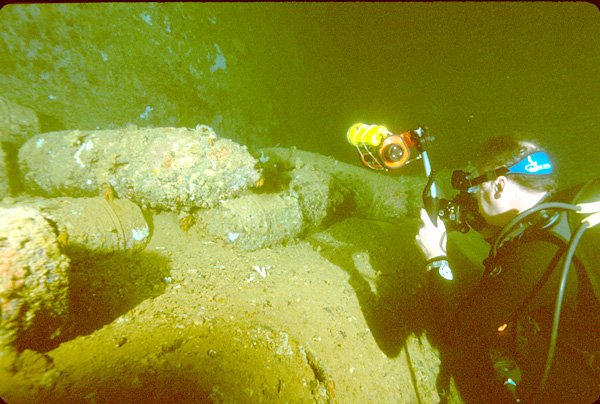
Chuuk beyond the dive boats is the lagoon itself: a barrier reef some 60 km across enclosing dozens of high islands, of which Weno (the state capital) is only the busiest. The lagoon islands hold Japanese-era tunnels, lighthouses and gun positions from the base the Allies called the Gibraltar of the Pacific, village guesthouses on Tol and Fefan, and a snorkelling reef system that non-divers can work from island beaches while divers are down on the fleet. Kosrae, the easternmost state, is the conservation island: a single volcanic island ringed by some of the Pacific's most intact hard-coral reefs, with the Lelu Ruins as its stone signature — a coral-and-basalt city of canals, tombs and royal compounds on an artificial island off Tofol, built by Kosrae's kings in the 14th–15th centuries and Nan Madol's smaller cousin. Kosrae's interior (Mount Finkol, 634 m) is roadless jungle, its Blue Hole and mangrove channels run by local eco-tours, and its diving — pristine walls, big coral heads, no crowds — is the connoisseur's Pacific secret. Pohnpei's own beyond, finally, is vertical: Sokehs Ridge above Kolonia (Japanese anti-aircraft guns, command tunnels and the island's best panorama), the Kepirohi and Sokehs waterfalls in the interior's rain, the Spanish Wall and German bell tower in the capital's colonial sediment, and offshore, the reef pass surfing of P-Pass at Palikir — a world-class right-hander that runs on the northern swells of roughly October–April.
Picture the place
A Yap money bank at path's edge: 3 great stone discs leaning among palms and breadfruit shade, holes at their centres dark with age, and a village boy pedalling past them on a bicycle as if past fence posts.
The easily missed detail
The stone money never needed to move: ownership of a Rai disc changes by public agreement while the stone itself stays exactly where it stands — the system is a distributed ledger in limestone, and a disc lost at sea on the Palau crossing could keep its value for generations because its story was witnessed (the famous tale has a sunken stone still trading, in memory, from the lagoon floor). Understanding that 1 fact converts Yap from a curiosity into a philosophy, and it is why the museum explanations matter less than a village guide's telling. The twin miss is Kosrae's Sunday: the island is famously devout (Congregational), and Sundays close essentially everything — plan the Lelu day and the reef days around it, and dress for church-formal if you attend.
A practical rhythm
- Yap as a culture block — 3 days minimum: village tour, money banks, 1 manta morning in the channel
- Kosrae as the green coda — Lelu at low crowd hours, a reef day, the Blue Hole by kayak
- Pohnpei's interior on wet days — Waterfalls and Sokehs saved for the rain that Chuuk and Yap escape
What could complicate the plan
The 4 states are 4 jurisdictions: each has its own immigration checkpoint habits, site permits and fees (Chuuk's dive permit is the famous one; Nan Madol has its landowner fees; Yap's villages are entered with guides by arrangement), its own departure tax ($15–$20 at most airports, Chuuk's reported higher), and its own customs of dress and photography — a federation itinerary is really 4 small trips stapled together by the Hopper. Transport enforces the stapling: Yap is reached only from Guam, the other 3 ride the Honolulu–Guam Hopper a few times a week, and no scheduled boats link the states for visitors. Chuuk's infrastructure is the federation's roughest (Weno's roads and services have a reputation that honest guides do not hide), Kosrae's flight days are the fewest, and everything everywhere slows on Sundays — in Kosrae to a full stop. Betel nut, the region's social chew, is central in Yap (and present in Pohnpei and Chuuk): expect red smiles, learn the etiquette of accepting or declining politely, and note that sakau, not alcohol, is Pohnpei's social sacrament (the next answer tells that story).
What to do next
Choose 2 states well rather than 4 thinly — Yap with Pohnpei for culture, Chuuk with Kosrae for divers — and let the Hopper's and Guam–Yap timetables draw the order.
Sources
- FSM Visitors Board and state tourism offices — Yap stone money and village tours; Kosrae's Lelu Ruins and reefs; Chuuk lagoon islands; Pohnpei's Sokehs Ridge and P-Pass
- UNESCO World Heritage Centre — Nan Madol (2016) as the regional stone-city context for Lelu
- Manta Ray Bay Resort / Yap Divers — manta cleaning stations and seasonality in Goofnuw Channel
- Historical record — the Rai stone quarries of Palau and the oral-ledger ownership system