Milford Sound / New Zealand When to visit
When should I visit Milford Sound, New Zealand, for the best experience?
The short answer
Late November through March — the heart of the Department of Conservation's Great Walks season, which for the Milford Track runs 1 November 2026 to 30 April 2027 with a last departure on 28 April 2027, and the only stretch of the year when the huts are staffed, gas-equipped and plumbed.
The answer, with local context
Fiordland does not have a dry season. DOC puts average rainfall for the park at about 7 m a year, spread across roughly 200 rain days, and its own Milford Track page goes further, citing up to 9000 mm in places. Choosing a month here is not about dodging rain. It is about choosing how cold the rain will be and whether the infrastructure is open when it falls.
Temperature is the clean seasonal signal. January and February are the warmest months, with summer days running about 50 to 64°F (10 to 18°C). July is the coldest, around 34 to 48°F (1 to 9°C). DOC's own monitoring at Mintaro Hut, the second night's stop on the Milford Track, records average daily highs of 55 to 68°F (13 to 20°C) across October to April, with lows between 30 and 36°F (−1 to 2°C) and 12 to 18 rain days in each of those months.
The booking calendar then does the rest of the work. In the Great Walks season a hut bunk costs NZ$152 per night for an international adult and NZ$106 for a New Zealand adult; outside it, the same bunk is NZ$30 for everyone, but the gas is removed, the flush toilets become pit toilets, the indoor water is turned off and no ranger is based at the hut. That price gap is a statement about what the off-season actually is.
Picture the place
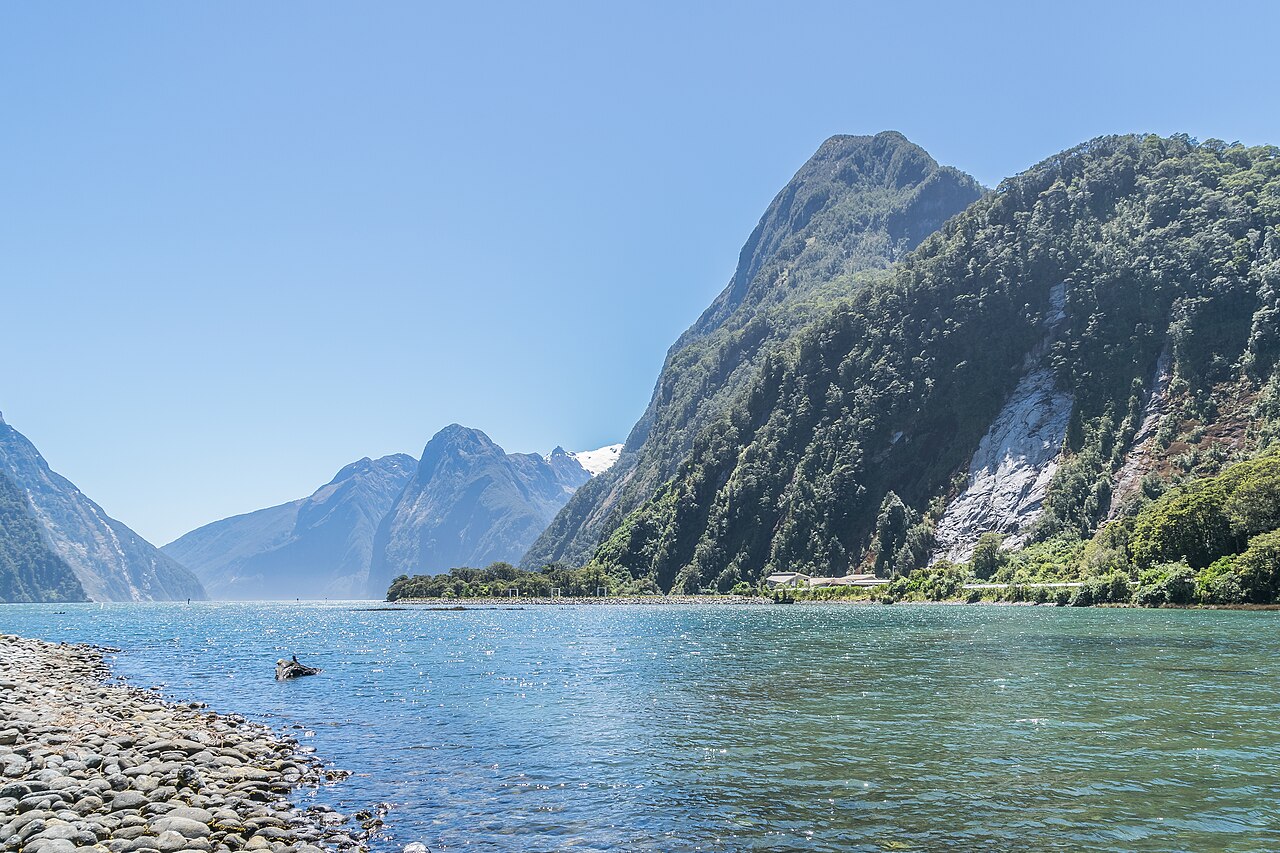
Rain in Milford is not weather that interrupts the view — it is the view. Water runs off near-vertical rock in temporary falls that appear within hours of a downpour and vanish again, and the tannins that heavy rain washes out of the forest floor stain the top of the fiord a dark tea color that sits over clear salt water beneath.
The easily missed detail
Fiordland's most dangerous month is not its wettest. DOC rates avalanche risk across the park as high mainly in winter and spring, and singles out late August to early November — which overlaps the start of the Great Walks season and the reopening of the 120 km Milford Road from Te Anau. Snow can fall at higher elevations at any time of year, and road closures from weather, rockfall and avalanche are expected rather than exceptional.
A practical rhythm
- Early season, November — Huts are staffed and the track is open, but alpine snow lingers and avalanche risk is still rated high into early November.
- Peak, January to February — The warmest window, with Mintaro highs in the mid 60s Fahrenheit and the longest usable daylight for the 18 km final day into Sandfly Point.
- Shoulder, late March to April — Still inside the season, with the last departure fixed at 28 April 2027; after that the huts revert to first-come, first-served with no gas.
What could complicate the plan
There is no vehicle access to either end of the Milford Track, so transport has to be booked separately: a bus or car to Te Anau Downs, about 30 minutes, then a boat to Glade Wharf, about 1 hour 15 minutes. The track can only be walked in one direction, and without a valid booking in season you can be charged a penalty or turned away if the hut is full. Mobile reception along the Milford Road exists only at Te Anau Downs, Totara Campsite, The Divide and Milford Sound itself. Flying a drone without a permit is prohibited, and freedom camping is banned within 200 m of the road.
What to do next
The Milford things-to-do question in this group covers the fiord itself — Mitre Peak, the marine reserve and the day walks that need no booking at all.
Sources
- New Zealand Department of Conservation, weather and climate in Fiordland — annual rainfall, rain days, seasonal temperature ranges, Mintaro Hut monthly figures, avalanche timing
- New Zealand Department of Conservation, Milford Track — Great Walks season dates, hut fees, off-season conditions, transport and one-direction rule
- UNESCO World Heritage Committee, Decision on Te Wahipounamu — 1990 inscription of the area containing Fiordland National Park under natural criteria (i) to (iv)
- New Zealand Ministry for Primary Industries, Fiordland Marine Area fishing rules — year-round closure of 10 Fiordland marine reserves to all fishing