Milford Sound / New Zealand Food and drink
Where should I eat in Milford Sound, and which local food or drink is worth trying?
The short answer
Eat in Te Anau, not in Milford Sound — DOC states plainly that Te Anau is the nearest town with facilities and that Milford Sound itself has limited ones, and the two sit 120 km (75 miles) and about 2 hours apart on the Milford Road.
The answer, with local context
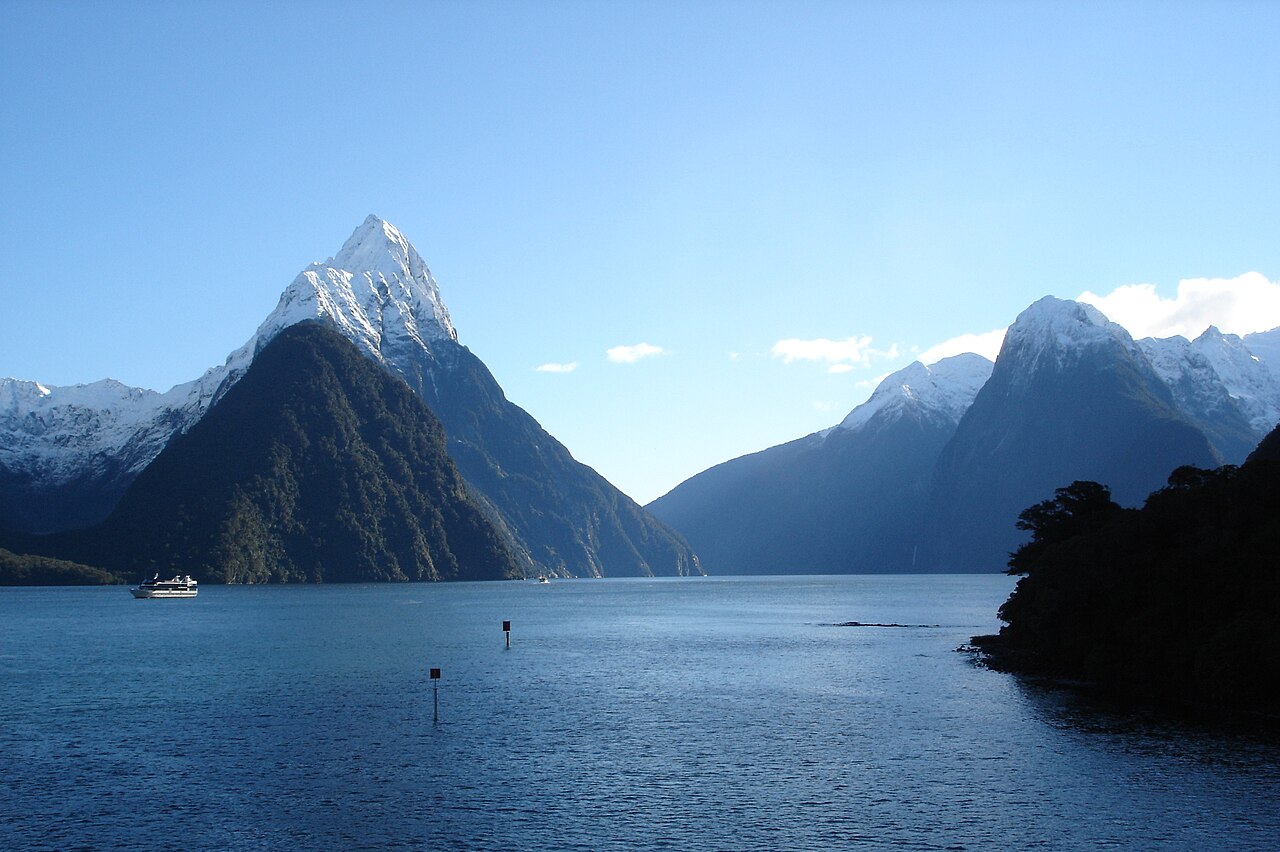
This is a fiord with an airstrip, a wharf and a handful of operators, not a restaurant district. Planning a day here means planning where food comes from, and for most visitors that is Te Anau at the start or the end of the drive, because there is no roadside resupply in between and mobile reception exists at only 4 points along the route.
What makes the local seafood distinctive is how tightly it is regulated. The Fiordland Marine Area has its own recreational rules under the Fisheries (Amateur Fishing) Regulations 2013, and inside the fiords they are stricter than elsewhere: a combined bag limit of 10 finfish, hāpuku and groper prohibited in the Internal Waters, recreational set netting prohibited across the whole Fiordland Marine Area, and all commercial fishing prohibited in the Internal Waters. So any Fiordland fish on a plate has come from outside those inner waters.
Rock lobster is the signature catch, and the numbers show how carefully it is rationed. A recreational fisher may take 6 per day, with a 3-day accumulation maximum of 15 — and no more than 3 of those may come from the Milford Sound (Piopiotahi) Internal Waters. The minimum tail width for spiny rock lobster is 54 mm for males and 60 mm for females or unknown sex; for packhorse rock lobster, measured by a method introduced on 1 April 2024, it is 84 mm and 90 mm. Undersized, berried and soft-shell lobsters go back in the water. Up to 3 pots per person are allowed, each marked with the owner's initials and surname.
The easily missed detail
Nothing may be taken from the fiord at Milford Sound itself. The Piopiotahi marine reserve is a full no-take zone, one of 10 in Fiordland, and DOC's reserve guidance also bans feeding fish because it alters their behavior. MPI's page notes that offences under the Fisheries Act can carry fines of up to $250,000, which is a strong reason to read the rules before accepting an invitation to drop a pot. The page was last reviewed on 15 July 2026. The wider setting raises the stakes: Fiordland National Park was folded into the Te Wahipounamu – South West New Zealand World Heritage property when UNESCO inscribed it in 1990 under natural criteria (i) to (iv), so this is a food chain running through a listed natural property rather than an ordinary coastal fishery.
A practical rhythm
- Before the drive — Provision in Te Anau; the next facilities are 120 km north and limited when you get there.
- On the water — If a charter offers fishing, confirm it is outside the reserve and the Internal Waters restrictions before you cast.
- Back the same evening — Te Anau is where a 2-hour return drive naturally ends, and the park visitor center on Lakefront Drive sits in the same town.
What could complicate the plan
The Milford Road closes for weather, rockfall and snow or avalanche, especially in winter, so a lunch booking at either end can be undone by SH94. Freedom camping is banned within 200 m of the road, which rules out the self-catering-in-the-van approach along most of the corridor. Pāua accumulation beyond one day's legal entitlement is unlawful, and recreational pāua fishing is totally prohibited inside the Waitutu Mātaitai Reserve, declared in June 2014.
What to do next
The Milford things-to-do question in this group explains what lives in the fiord — black coral, red coral and a resident bottlenose dolphin population — and why the no-take reserve exists.
Sources
- New Zealand Ministry for Primary Industries, Fiordland Marine Area fishing rules — bag and size limits, pot rules, prohibited species and methods, penalty ceiling, review date
- New Zealand Department of Conservation, Milford Road and Milford Sound area — facilities, distance and drive time to Te Anau, reception points, camping rule, road closures
- New Zealand Department of Conservation, Visiting Piopiotahi Milford Sound Marine Reserve — no-take rules and the ban on feeding fish
- UNESCO World Heritage Committee, Decision on Te Wahipounamu — 1990 inscription and natural criteria covering Fiordland National Park