Moorea / French Polynesia Things to do
What are the most worthwhile things to do in Moorea on a first visit?
The short answer
Read the island from the Belvedere, walk its Polynesian past in the Opunohu valley, and spend the rest of the time in the lagoon — the ray-and-shark sandbar off Ta'ahiamanu, the reef passes, and in season a regulated morning with the humpbacks.
The answer, with local context
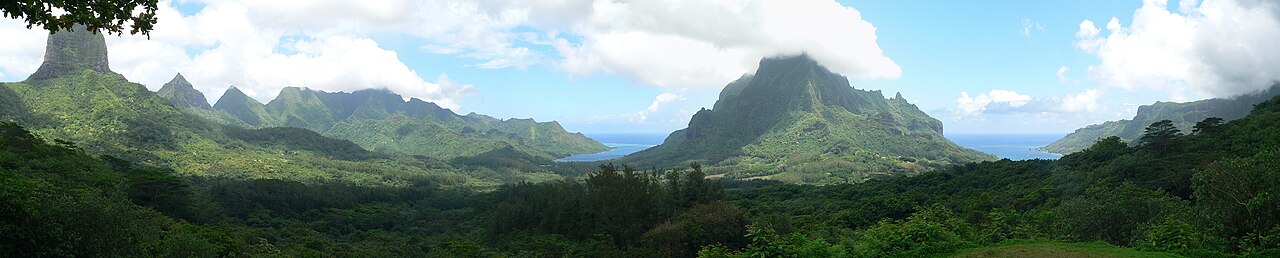
Again the frame: Moorea's first visit belongs to the north coast and its interior valley, with the west and south coasts as the second day's reward. Begin at the Belvedere, the lookout on the ridge road between the bays, because it is the island's own map of itself — Opunohu Bay on one side, Cook's Bay on the other, Mount Rotui's 899 m wall between them, and the reef ring closing the picture. Below it, the Opunohu valley carries the human story: one of the most studied archaeological landscapes in Polynesia, surveyed since Kenneth Emory's work in the 1920s and Roger Green's in the 1960s, where restored marae (stone ceremonial platforms) such as Titiroa and the multi-level Ahu-o-Mahine stand among the pineapple fields of the agricultural estate, and the trails of the ancestral path wind up through mapped forest planted with mahogany and bamboo. At the bay's head, Te Fare Natura, the eco-museum run alongside the CRIOBE research station (the French EPHE/CNRS base that has studied this lagoon for decades), translates the reef into exhibits before you swim in it.
The lagoon is the second act and the main one. Moorea's reef ring encloses a lagoon broken by passes — Ta'ahiamanu, off Papetoai on the Opunohu side, is the famous shallow, where pink whiprays and blacktip reef sharks gather over white sand in waist-deep water and guided snorkelling puts you among them under rules that have ended the old feeding free-for-all. Temae, the long public beach by the airport on the east coast, is the island's swimming-and-picnic classic; the west coast adds the Tiki Village cultural center at Haapiti, where the day builds to dance, craft and an earth-oven feast, and the sunset faces Taha'a's direction across open ocean. From July 20 to November 20 the ocean outside the reef takes over the itinerary: authorised whale boats work the north coast under DIREN's distances (100 m by boat, six swimmers at a time), and Moorea — deep water close inshore — is French Polynesia's principal base for it.
Land days complete the circuit. The 60 km circle road is a half-day's drive that strings together everything: Cook's Bay, where Captain Cook's name sits on the bay he did not anchor in (he lay in Opunohu from September 30 to October 11, 1777, and the bay took his name later), Maharepa's shops, the Rotui juice factory at Paopao, Vaiare's ferry wharf, and the waterfalls of Afareaitu on the east coast. Guided hiking is the connoisseur's layer — the strenuous climb of Mount Rotui from the Belvedere road, the Three Coconuts pass trail, and, for the fit and guided only, the ridges toward Tohiea — while the Magic Mountain viewpoint above Opunohu, reached by 4x4, gives the postcard angle on both bays for those who would rather not earn it on foot. A first visit that does the lookout, the valley, the sandbar and one ocean morning has understood the island; everything else is a return trip arranging itself.
Picture the place
Waist-deep on the Ta'ahiamanu sandbar: white sand underfoot, a ray's wings printing slow shadows beside you, blacktips patrolling the drop-off, and Rotui's green pyramid filling the sky behind the beach.
The easily missed detail
The Opunohu valley is free, open and almost empty, because the island's visitors are funnelled to the lagoon — yet its marae complex is the densest surviving record of pre-contact Polynesian society on Moorea, and the agricultural estate's trails are signed and walkable without a guide. The second sleeper is the anchoring irony at Cook's Bay: the bay named for the great navigator is the one he skipped; his anchorage, Opunohu, is where the 1984 film The Bounty later shot its exteriors — Moorea's two bays have been trading identities for 250 years.
A practical rhythm
- Day one from above — Belvedere, Opunohu marae and Te Fare Natura, so the lagoon days that follow have a context
- Day two in the water — The Ta'ahiamanu sandbar in the morning calm; Temae or a west-coast beach for the afternoon
- One ocean morning — Whales in season (July 20–November 20, authorised boats only); a pass snorkel or dive outside it
What could complicate the plan
Access has textures the brochures flatten: several valley trails and waterfalls cross private or customary land where a guide or the landowner's permission is the correct key; the Rotui climb is steep, hot and unsigned in places; and lagoon excursions are trade-wind dependent — a blowy week cancels the sandbar's glass and the whale boats' swimming alike. Tiki Village and the eco-museum run set days and hours that a first visit should check rather than assume. And in whale season, the ocean morning is rationed by law — six swimmers per boat — so it books out ahead of everything else on the island.
What to do next
Book the whale boat (in season) and a valley-and-Belvedere day first, then let the sandbar and beaches fill the weather's best mornings.
Sources
- Tahiti Tourisme — the Belvedere, Opunohu valley and Moorea's circle-island geography (60 km coastal road)
- CRIOBE (EPHE/CNRS) and Te Fare Natura — the Opunohu Bay research station and eco-museum; the valley's archaeological record from Emory (1920s) and Green (1960s)
- Direction de l'Environnement (DIREN) — whale-approach regulation (authorised operators, 100 m, six swimmers) for the July 20–November 20 season
- Moorea visitor authorities — the Ta'ahiamanu sandbar, Temae public beach, Tiki Village (Haapiti) and the Afareaitu waterfalls