Mount Fuji / Japan Food and drink
Where should I eat in Mount Fuji, and which local food or drink is worth trying?
The short answer
Eat noodles on both sides of the mountain: Fujinomiya yakisoba on the Shizuoka side, Yoshida udon and hoto on the Yamanashi side, each tied to the town and the water at Fuji's foot.
The answer, with local context
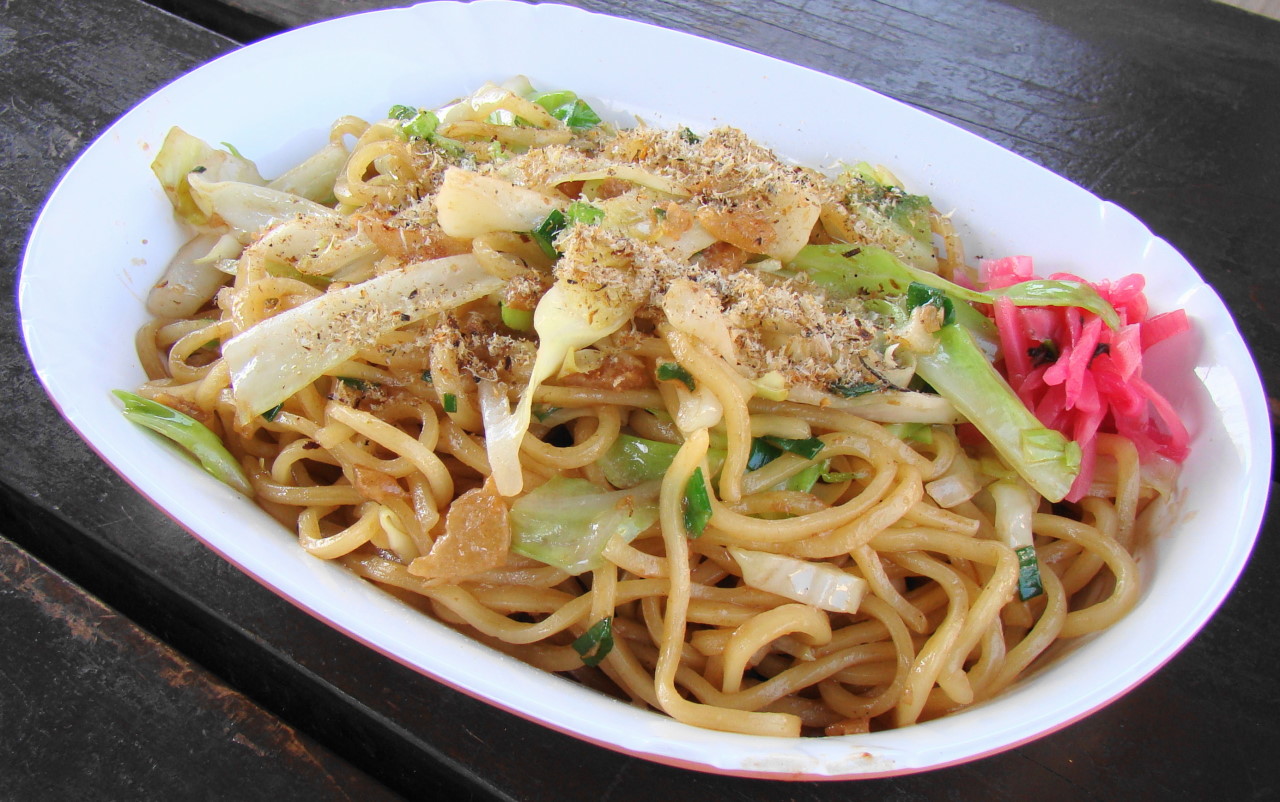
Fujinomiya, the city at Fuji's southwestern foot, owns the mountain's most famous fried noodle. Fujinomiya yakisoba is made from steamed wheat noodles, not boiled ones, fried on a thick iron griddle with cabbage and nikukasu, the crisp scraps left from rendering pork fat, then seasoned with a Worcestershire-style sauce and finished with a dusting of sardine powder. The noodles are steamed, cooled quickly and coated with oil before frying, which gives them a firm, chewy bite that survives the griddle. The dish grew up as cheap food for workers in a shrine town, and its natural home is still the small, counter-style shops of central Fujinomiya rather than a resort dining room.
Across the prefectural border in Fujiyoshida, the noodle changes completely. Yoshida udon is built on exceptionally thick, firm noodles made with pure spring water from Fuji's northern foot, served in a broth flavored with miso or a blend of miso and soy sauce, and topped in the classic version with boiled cabbage and horse meat. Each shop makes its own suridane, a chili condiment blended from sesame seeds, Sichuan pepper and chili pepper. The city's official travel guide counts about 60 udon shops in Fujiyoshida, and notes that they are generally open for lunch only, so an udon crawl is a midday activity, not a dinner plan.
The third bowl belongs to the wider Yamanashi foothills. Hoto is a stew of wide, flat wheat noodles simmered directly in a miso broth with pumpkin, taro and mushrooms, and it is served as a single hot pot dish rather than as noodles with a separate soup. Japan's Ministry of Agriculture, Forestry and Fisheries selected hoto in 2007 for its list of 100 great rural regional cuisines, and the same ministry list also includes Yoshida udon, which makes the Fuji foothills one of the few places where two neighboring noodle traditions both carry that national recognition. A day that moves from a Fujinomiya griddle at lunch to a Fujiyoshida udon shop the next midday, with hoto on a cold evening, eats the mountain's geography in order.
Picture the place
At a Fujinomiya counter, the griddle hisses as the steamed noodles darken in sauce, the cabbage wilts into the oil, and the finished plate arrives topped with pale sardine powder and pickled ginger, eaten standing or at a narrow counter while the next order is already on the iron.
The easily missed detail
The water is the link between the three dishes. Yoshida udon's firmness is credited to Fuji spring water and the cold winters of the northern foot, hoto's broth is built on the same foothill water, and Fujinomiya's noodles are steamed rather than boiled so that their texture holds. Ordering the same dish away from the mountain loses the ingredient that shaped it.
A practical rhythm
- Morning — Start in Fujinomiya, where the shrine town's small shops open for the lunch trade and the yakisoba griddles are already hot.
- Midday — Cross to Fujiyoshida for Yoshida udon at lunch, since the city's shops fill early and many do not serve dinner.
- Evening — Finish with hoto on a cold night, when a miso hot pot with pumpkin suits the foothill temperature better than a fried noodle.
What could complicate the plan
Horse meat tops the classic Yoshida udon, and fish powder finishes Fujinomiya yakisoba, so neither dish suits a strict vegetarian without asking the shop first. The lunch-only pattern of Fujiyoshida's udon shops also catches visitors who arrive in the evening expecting a noodle dinner, and the small counter shops of Fujinomiya fill quickly at midday in the climbing season. Mountain huts sell simple food during the season, but they are not a substitute for a foothill meal, and they close with the season.
What to do next
Pair this food day with a climbing-season plan from the first answer in this group, and keep the next group, Muscat, for a complete change of climate and cuisine.
Sources
- Fujinomiya Yakisoba Society — Fujinomiya yakisoba made from steamed noodles fried with cabbage and nikukasu, seasoned with sauce and finished with sardine powder
- Yamanashi Prefecture Official Travel Guide — Yoshida udon made with Fuji spring water, served in miso or miso and soy sauce broth with cabbage, with about 60 shops in Fujiyoshida generally open for lunch only, and each shop's own suridane
- Japan Ministry of Agriculture, Forestry and Fisheries — hoto and Yoshida udon selected in 2007 among the 100 great rural regional cuisines, and hoto defined by wide flat noodles simmered in miso with pumpkin, taro and mushrooms