Muscat / Oman When to visit
When should I visit Muscat, Oman, for the best experience?
The short answer
Visit from November through March, when daytime highs sit roughly between 78°F and 87°F instead of the summer peak above 104°F, and plan outdoor walks for early morning or late afternoon.
The answer, with local context
Muscat, the capital of Oman, sits on the Gulf of Oman coast with the Al Hajar Mountains behind its coastal districts, so heat, not rain, sets the calendar. NOAA climate normals for Seeb give a January mean daily maximum of 77.9°F (25.5°C) and a mean daily minimum of 63.1°F (17.3°C), while June averages a maximum of 104.7°F (40.4°C) and a minimum of 87.1°F (30.6°C). The record high in the table reaches 120.6°F (49.2°C) in August, which means summer nights in Muscat offer little relief after a hot day.
Rainfall barely enters the decision. The same normals total about 100.3 millimeters (3.95 inches) for the whole year, with February the wettest month at 24.5 millimeters (0.96 inches) and September at 0.0 millimeters. November averages a maximum of 86.9°F (30.5°C) and December averages 80.8°F (27.1°C), while October still averages 95.0°F (35.0°C), so the comfortable window opens late, not at the first sign of autumn. The Royal Opera House Muscat concentrates its main performance season in the cooler months, which gives a November-to-March trip a cultural calendar to match its weather.
Picture the place
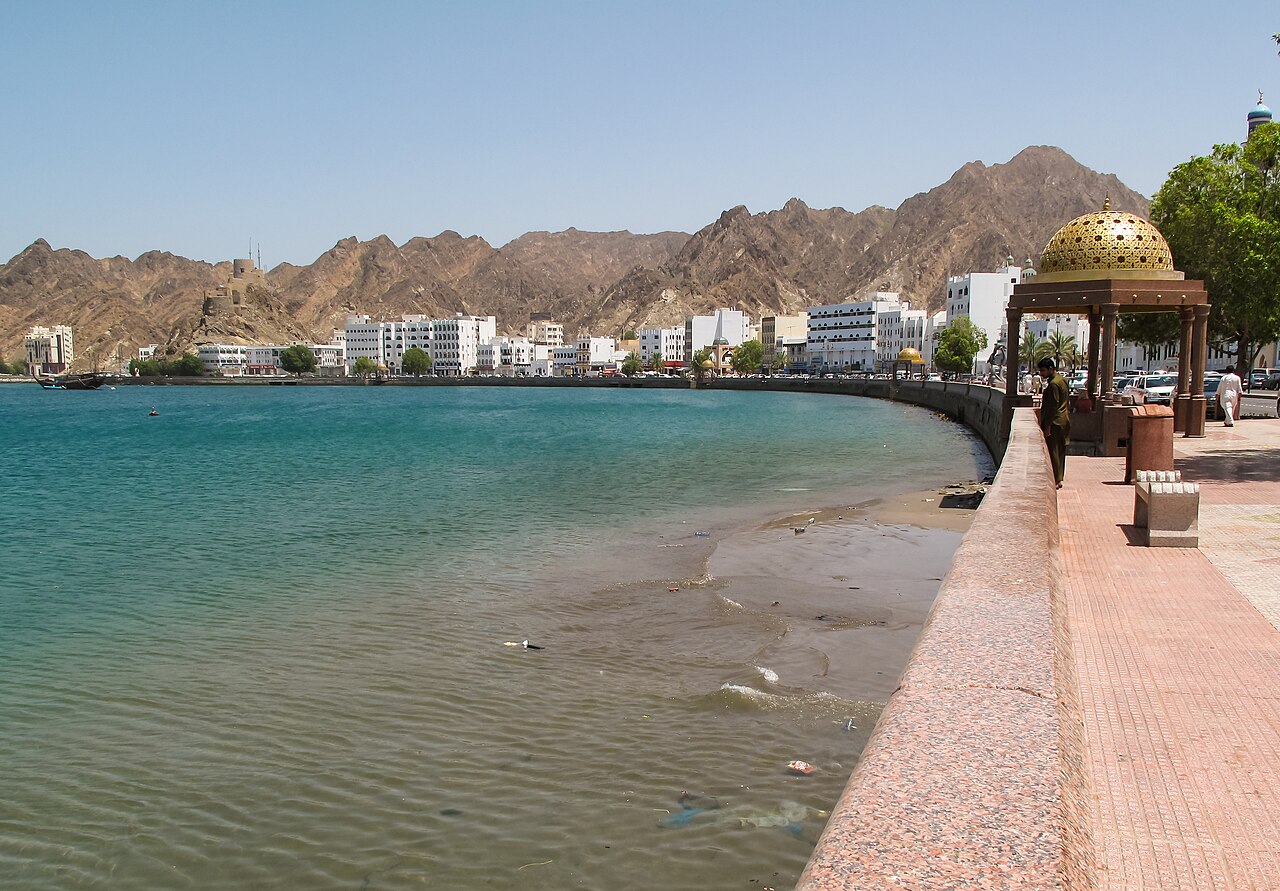
On a January evening along the Mutrah Corniche, the sea lies flat beside white waterfront buildings, the mountains darken behind the town, and the gazebos along the promenade fill as the heat of the day leaves the stone.
The easily missed detail
A Muscat summer is not just a hot day followed by a cool evening. With June and July mean daily minimums above 86°F, the stone, the air, and the water all stay warm through the night, so an evening stroll does not reset the body the way it does in a cooler coastal city. That is why the season matters more than any single daytime figure.
A practical rhythm
- Early morning — Walk the Corniche and the old waterfront before the sun climbs, when the light is low over the harbor and the air is at its coolest.
- Midday — Move indoors to a museum or a shaded souq lane, since the midday sun in Muscat is strong even in winter.
- After sunset — Return to the waterfront for dinner and a promenade walk, when the city moves outdoors again.
What could complicate the plan
Muscat's districts stretch along the coast rather than clustering around one center, so walking from one district to another is rarely practical and a trip needs transport between the mosque quarter, the opera house area, and Old Muscat. Summer humidity adds to the heat, and a single hot spell can make an otherwise well-planned outdoor day hard work, even for visitors used to warm climates.
What to do next
Use the morning and evening rhythm above for the mosque, museum, and souq route in the next answer.
Sources
- NOAA — Seeb/Muscat climate normals, including monthly mean maximums and minimums, the August record high, and annual and monthly rainfall
- Oman Ministry of Heritage and Tourism — Muscat's coastal setting and the Mutrah Corniche as a waterfront promenade
- Royal Opera House Muscat — a main performance season concentrated in the cooler months