Muscat / Oman Food and drink
Where should I eat in Muscat, and which local food or drink is worth trying?
The short answer
Seek out shuwa for a feast meal, halwa with kahwa in the souq, and grilled fish near the waterfront, because those three cover Oman's underground oven, its sweet ritual, and its sea.
The answer, with local context
Shuwa is the dish that defines an Omani celebration. Fresh meat, goat, lamb, or camel, is seasoned with a special blend of spices, wrapped in banana leaves, placed inside a palm-leaf pouch called a khassfa, and cooked in a deep ground oven called a tannur for one or two days until it turns tender. Oman's Ministry of Heritage and Tourism issued its book The Omani Cuisine in 2022, covering 110 Omani dishes, and UN Tourism's gastronomy survey of Oman singles out shuwa as a main dish set apart by that preparation and by its taste. Because the cooking takes a day or two, shuwa belongs to feasts and festivals, including Eid, rather than to an everyday lunch menu.
Halwa and kahwa form the second ritual. Omani halwa is made from red sugar, starch, water, and ghee, with flavors that include cardamom, saffron, rose water, dates, figs, sesame, honey, nuts, and frankincense, and it is served with Omani coffee, or kahwa, brewed from coffee beans with cardamom. UNESCO inscribed Arabic coffee as a symbol of generosity in 2015, with Oman among the submitting states, which explains why a small portion of halwa beside a small cup of unsweetened kahwa is a welcome, not just a dessert. Mutrah Souq and Nizwa Souq both sell halwa alongside jewelry, silverware, pottery, herbs, and spices, so the sweet is bought where it is also tasted.
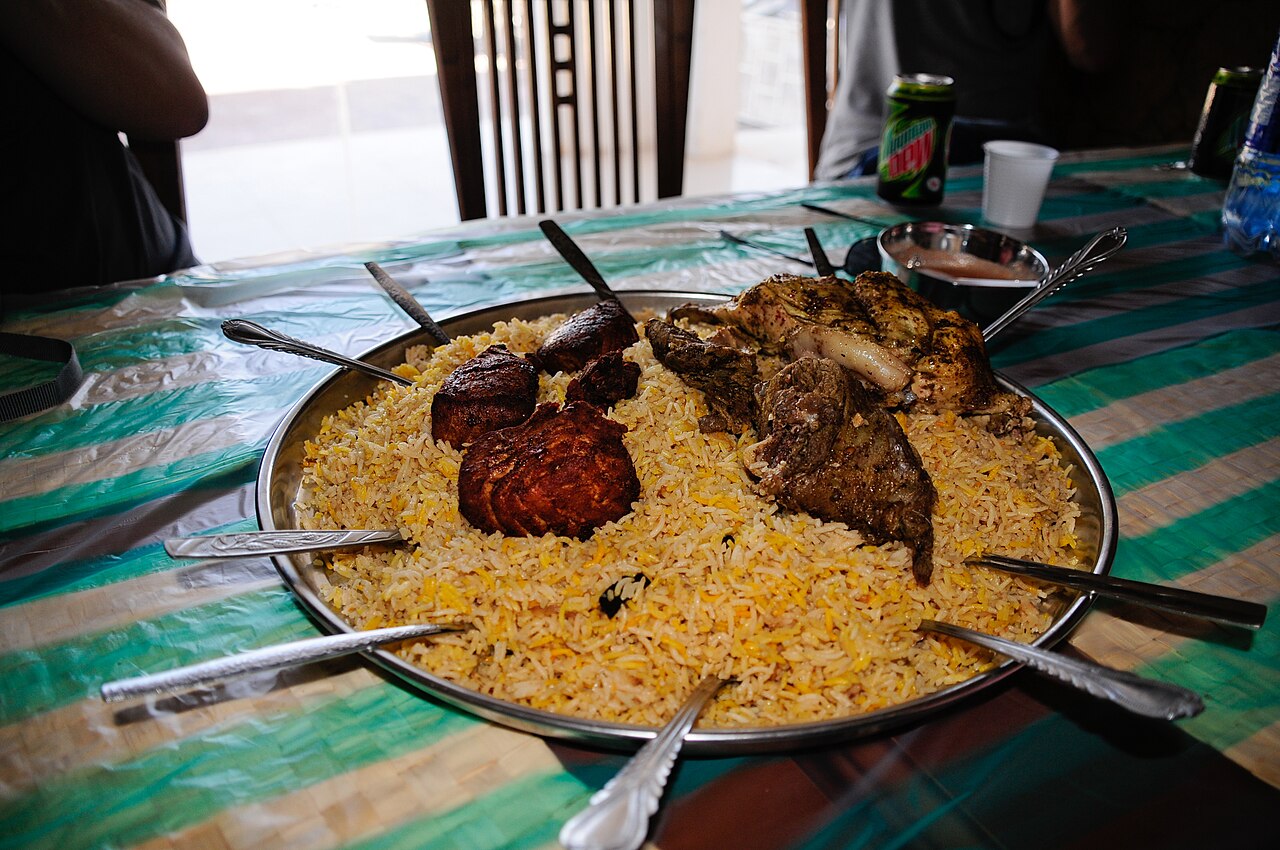
The everyday table underneath those two rituals is rice with meat or fish, seasoned with the same cardamom and saffron, and the waterfront gives that table its freshest form. At Mutrah in the morning, the fish market and the harbor show the catch coming in, and a shared platter of seasoned rice topped with roasted meat and chicken, the kind of large dish served at a Muscat restaurant table, shows how Omani cooking is meant to be shared rather than plated alone.
Picture the place
At a Muscat restaurant table, a large shared platter arrives heaped with seasoned rice and topped with roasted meat and chicken, the center of the table rather than a dish for one person.
The easily missed detail
Halwa is easy to misread as a single sweet course. In Muscat it is portioned small, served with kahwa, and offered as hospitality, so the right way to try it is in the souq or at a welcome, in a few bites with coffee, rather than as a large dessert after a full meal.
A practical rhythm
- Morning — Start at the Mutrah waterfront and fish market, when the catch and the morning trade are at their liveliest.
- Afternoon — Taste halwa and kahwa in Mutrah Souq, where halwa sellers sit among spice, silver, and pottery stalls.
- Evening — Look for a feast-style restaurant meal built around slow-cooked meat and shared rice, and save shuwa for a day when it is actually on the menu.
What could complicate the plan
Shuwa's one-to-two-day cooking time means it is not reliably available on demand, and a restaurant may serve it only on set days or for a celebration. Halwa is intensely sweet and kahwa is served unsweetened, so the pairing suits small portions better than large ones, and a visitor expecting a sweetened coffee or a light dessert will find both traditions run the other way.
What to do next
Pair this food route with the Mutrah and Old Muscat walk in the previous answer, and keep the next group, Nepal, for a complete change of altitude and cuisine.
Sources
- UN Tourism — shuwa preparation in banana leaves and a khassfa in a tannur for one or two days, halwa ingredients and flavors, kahwa as coffee brewed with cardamom, and Mutrah and Nizwa souqs selling halwa, jewelry, silverware, pottery, herbs and spices
- Oman Ministry of Heritage and Tourism — The Omani Cuisine book issued in 2022 covering 110 Omani dishes
- UNESCO Intangible Cultural Heritage — Arabic coffee inscribed in 2015 as a symbol of generosity, with Oman among the submitting states