Nepal country guide Food and drink
What local dishes should I try in Nepal, and where should I look for them?
The short answer
Dal bhat everywhere, momos anywhere, and then the regional sets: a Newari samay baji in the Kathmandu Valley, a Thakali set on the Annapurna side, and Bhaktapur's juju dhau to finish.
The answer, with local context
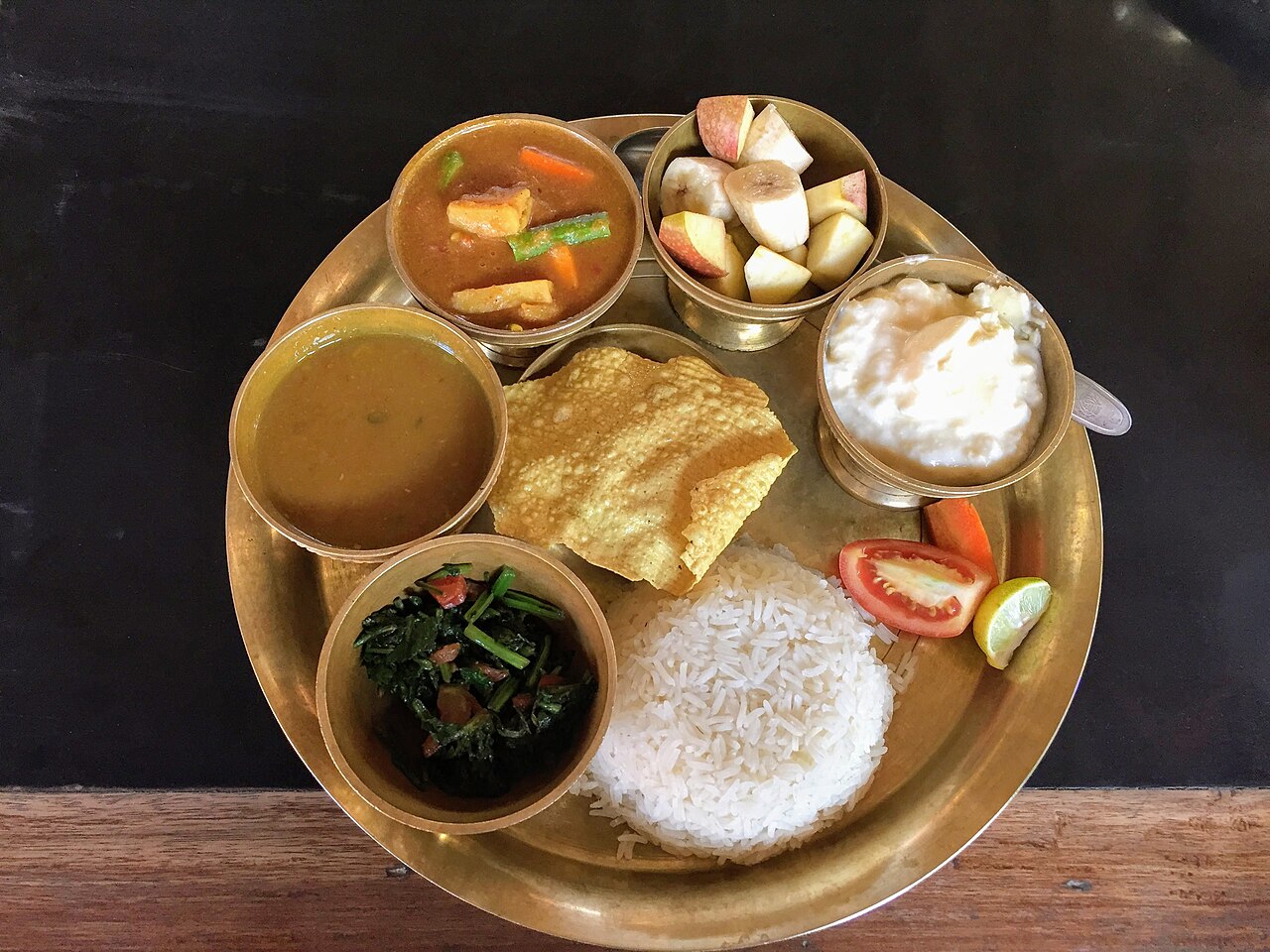
One meal organizes the country's day. Dal bhat — steamed rice (bhat), lentil soup (dal), a vegetable curry (tarkari) and a sharp pickle (achar), often with greens and a meat curry — is eaten by most Nepalis twice daily, at mid-morning and in the evening, and it is served from Kathmandu restaurants to the highest trekking teahouse, almost always with refills of rice and dal included in the set price. On the trail it is also the freshest food available, cooked to order in volume twice a day, which is why trekkers learn to run on it. Its hill variant, dhindo, swaps the rice for a dense, hand-rolled porridge of millet, buckwheat or maize flour, eaten by dipping torn pieces into curry and soup.
The snack layer belongs to the momo. These steamed or fried dumplings — filled with buffalo, chicken, vegetables or cheese and served with a tomato-and-sesame achar — arrived with Tibetan trade and were reshaped in the valley into thinner wrappers and spicier fillings; they are now the country's default fast food, sold from street carts to white-tablecloth restaurants. In the high country the Tibetan register continues with thukpa, a hand-pulled noodle soup built for cold evenings, while the festival calendar adds sel roti, a ring-shaped, lightly sweet rice-flour bread fried at Dashain and Tihar and sold at morning stalls year-round.
The two great regional cuisines repay a deliberate detour. The Newar people of the Kathmandu Valley maintain the country's most elaborate food tradition: samay baji, the ceremonial platter of beaten rice (chiura), spiced grilled buffalo (choila), fried black soybeans, boiled egg, ginger and pickles; bara, a savory lentil pancake sometimes topped with egg or minced meat; and chatamari, a rice-flour crepe — all found in the local khaja houses of Kathmandu, Patan and Bhaktapur rather than in tourist restaurants. Bhaktapur adds the dessert: juju dhau, the "king curd," a rich buffalo-milk yogurt set in clay pots and sold by the pot across the old city. The Thakali people of the Thak Khola valley in Mustang, traders on the old salt route between Tibet and India, cook the set most Nepalis rate highest: a Thakali khana of rice or dhindo with black lentils, meat curry, seasonal greens, fermented gundruk soup, potatoes and a battery of pickles, finished with ghee — served in Thakali bhanchha restaurants in Pokhara, Jomsom and Kathmandu itself.
Picture the place
At a valley khaja house the samay baji arrives on a brass plate in ordered piles — white beaten rice, dark choila glistening with mustard oil, soybeans, egg, a knot of pickled greens — and the room eats with its right hand, quickly, standing at counters worn smooth.
The easily missed detail
Dal bhat's refill custom changes the economics of a trek. The price on a teahouse menu covers the set including second helpings of rice, dal and vegetables, so the most expensive-looking line on the board is usually the best value on the mountain — and ordering a Western dish instead gets a smaller, slower, costlier plate cooked from stored ingredients.
A practical rhythm
- Mid-morning — Eat the first dal bhat when Nepal does, around ten or eleven, in a local restaurant rather than a hotel dining room; it sets up the whole sightseeing day.
- Afternoon — Snack deliberately: a plate of steamed momos with achar at a cart or café, the country's four-o'clock institution.
- Evening — Spend one valley evening on a full Newari set in Patan or Bhaktapur, ending with a clay pot of juju dhau, and one Pokhara evening on a Thakali set.
What could complicate the plan
Buffalo is the default red meat of the valley — it fills momos, choila and curries — so anyone avoiding beef on religious or personal grounds should ask, since "buff" on a menu means buffalo, not beef, but the kitchen's other meats vary. Spice is structural rather than decorative in pickles and choila, and the chili level of a local khaja house is set for local palates. On treks, menus shrink with altitude: above the last road head the choice narrows to what porters and mules can carry, which is another argument for the dal bhat line.
What to do next
Use the valley and Pokhara food stops above as fixed points, then plan the trip's shape in the next answer so the trek, the south and the cities each get their own days.
Sources
- Nepal Tourism Board — dal bhat as the national twice-daily meal of rice, lentil soup, curry and pickle, and the regional cuisines of Nepal's ethnic communities
- The Newari khaja houses of Kathmandu, Patan and Bhaktapur — samay baji with chiura, choila and soybeans, bara and chatamari, and Bhaktapur's clay-pot juju dhau
- Thakali bhanchha restaurants of the Thak Khola tradition, in Jomsom, Pokhara and Kathmandu — the Thakali set of rice or dhindo, lentils, meat curry, greens, gundruk and pickles, from the salt-trade route between Tibet and India