New Zealand country guide Places and experiences
What should a first-time traveler see in New Zealand beyond the obvious highlights?
The short answer
The second tier is where New Zealand keeps its range: Tongariro's volcanic plateau, Doubtful Sound in place of busier Milford, Stewart Island's dark skies, the Catlins coast and Abel Tasman's small golden park — a country of thirteen national parks, most of whose visitors see about three.
The answer, with local context
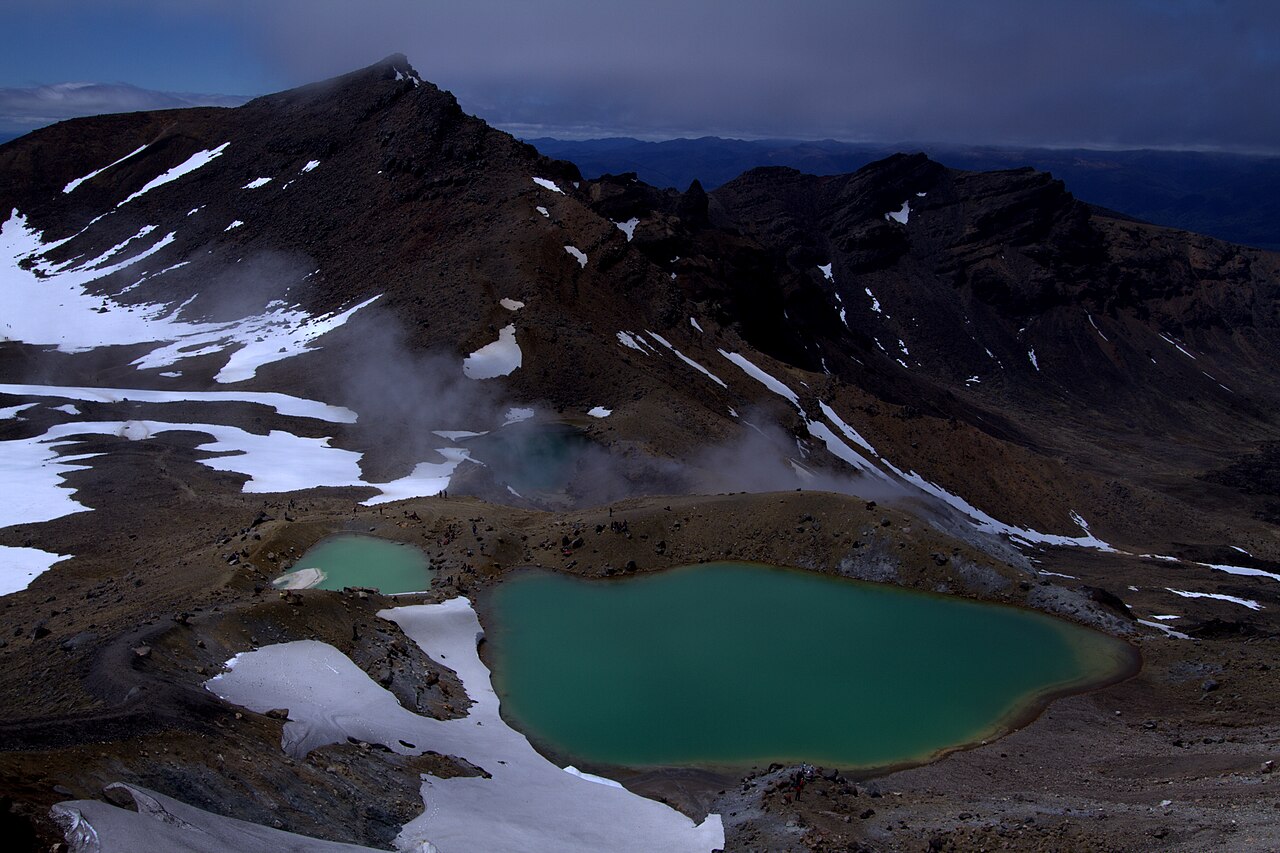
Begin with the park that made history twice. Tongariro, in the central North Island, was New Zealand's first national park, established in 1887 and among the first in the world; UNESCO listed it for its natural values in 1990 and then, in 1993, made it the first property anywhere inscribed as a cultural landscape, recognising the spiritual association between Ngāti Tūwharetoa and the volcanic peaks. The Department of Conservation notes it is one of only 29 properties worldwide holding that dual status. Its one-day Alpine Crossing — past the Emerald Lakes, under Mount Ngauruhoe — is famous; the multi-day Northern Circuit and the quieter tracks around Ruapehu are not, and they are the better walk.
In the far southwest, the obvious highlight is a fiord with a road to it; the deeper experience is the one without. Te Wāhipounamu, the World Heritage area covering 2.6 million hectares — ten percent of New Zealand's land — gathers four national parks in one inscription, Fiordland among them. Inside it, Doubtful Sound is longer and broader than Milford, reached only by boat across Lake Manapouri and a bus over the Wilmot Pass, which is why its boats carry a fraction of the traffic. At the bottom of the country, Stewart Island/Rakiura keeps the darkness: accredited as an International Dark Sky Sanctuary in 2019, with most of the island inside Rakiura National Park, it is one of the few places where kiwi — the southern tokoeka — outnumber the roughly 400 human residents and are seen in daylight.
The rest of the list is a coastline. The Catlins, south of Dunedin, pair Nugget Point's lighthouse with sea lions on the sand and a petrified forest at Curio Bay some 170 million years old. Kaikōura, where the mountains meet a deep offshore canyon, watches sperm whales year-round — and its foreshore itself rose, in places by meters, in the 2016 earthquake. Abel Tasman, at the top of the South Island, is the smallest of the thirteen national parks at about 55,600 acres (22,500 ha): no mountains to speak of, just golden sand, clear water and a coast track served by water taxis, so a traveler can walk in and boat out. Add Waitomo's glowworm caves — the glowworm, Arachnocampa luminosa, is found only in New Zealand — and the West Coast glaciers, Franz Josef and Fox, which descend from the Southern Alps into temperate rainforest close to sea level, and the country past the postcards is most of the country.
Picture the place
On the Tongariro crossing the track tops out at the Red Crater and the Emerald Lakes open below in impossible greens and milky blues, steam breathing off the crater rim while Mount Ngauruhoe stands over the whole plateau in a perfect, brooding cone.
The easily missed detail
New Zealand has a third World Heritage site almost nobody sees. The Sub-Antarctic Islands — five island groups in the Southern Ocean, inscribed in 1998 — are among the most protected places on earth: landing is by permit only, on authorised expedition voyages, and most New Zealanders will never set foot on them. The country's wildest heritage is deliberately kept that way.
A practical rhythm
- Morning — Doubtful Sound's overnight boats leave from Manapouri in the morning; be on the early sailing and take the fiord in its stillest hours.
- Midday — The Catlins reward unhurried middays: Nugget Point's lighthouse walk and the Curio Bay petrified forest are exposed only around low tide, so the day's plan is written by the tide tables.
- Evening — On Stewart Island, the main event starts after dark: aurora australis in the autumn and winter months, and guided night walks to hear — and sometimes see — kiwi working the leaf litter.
What could complicate the plan
Rarity is managed by quota and weather. The Tongariro Alpine Crossing is a serious alpine walk that DOC closes in bad conditions, and its summer crowds have led to booked parking and shuttle-only access at the Mangatepopo end. Stewart Island depends on one ferry route across the Foveaux Strait from Bluff and a small air link, both weather-prone; Doubtful Sound takes a full day minimum and an overnight to do properly. Every place on this list asks for more time than the highlight reel allows — which is the point, and the planning answer in this group takes it up.
What to do next
Trade one famous name for one quieter one per island — Doubtful for Milford, Rakiura for a second city — and book the Tongariro shuttles and Stewart Island ferry before the hotels.
Sources
- Department of Conservation — Tongariro's 1887 establishment, its dual World Heritage status (1990 and 1993) as one of only 29 such properties, and access rules for the Alpine Crossing and the Sub-Antarctic Islands
- UNESCO World Heritage Centre — the inscriptions of Te Wāhipounamu (2.6 million hectares, ten percent of New Zealand) and the New Zealand Sub-Antarctic Islands (1998)
- International Dark-Sky Association — Rakiura/Stewart Island's accreditation as an International Dark Sky Sanctuary