New Zealand country guide When to visit
When is the best time to visit New Zealand for Queenstown?
The short answer
February and March — plan the national trip for late summer into early autumn, with Queenstown as its southern anchor, when New Zealand's tracks, lakes and harvest season are all open at once and the December–January crowds have gone.
The answer, with local context
New Zealand's seasons run in mirror image: summer is December to February, winter June to August, and the whole country stretches some 990 miles (1,600 km) from subtropical Northland to the alpine lakes of Otago, so no single month suits every latitude equally. December to March is the national walking window, when the Department of Conservation's Great Walks are in their booked season. Autumn, March to May, trades a few degrees for settled weather and empty trails. Winter belongs to the ski fields, whose season runs from about late June to early October.
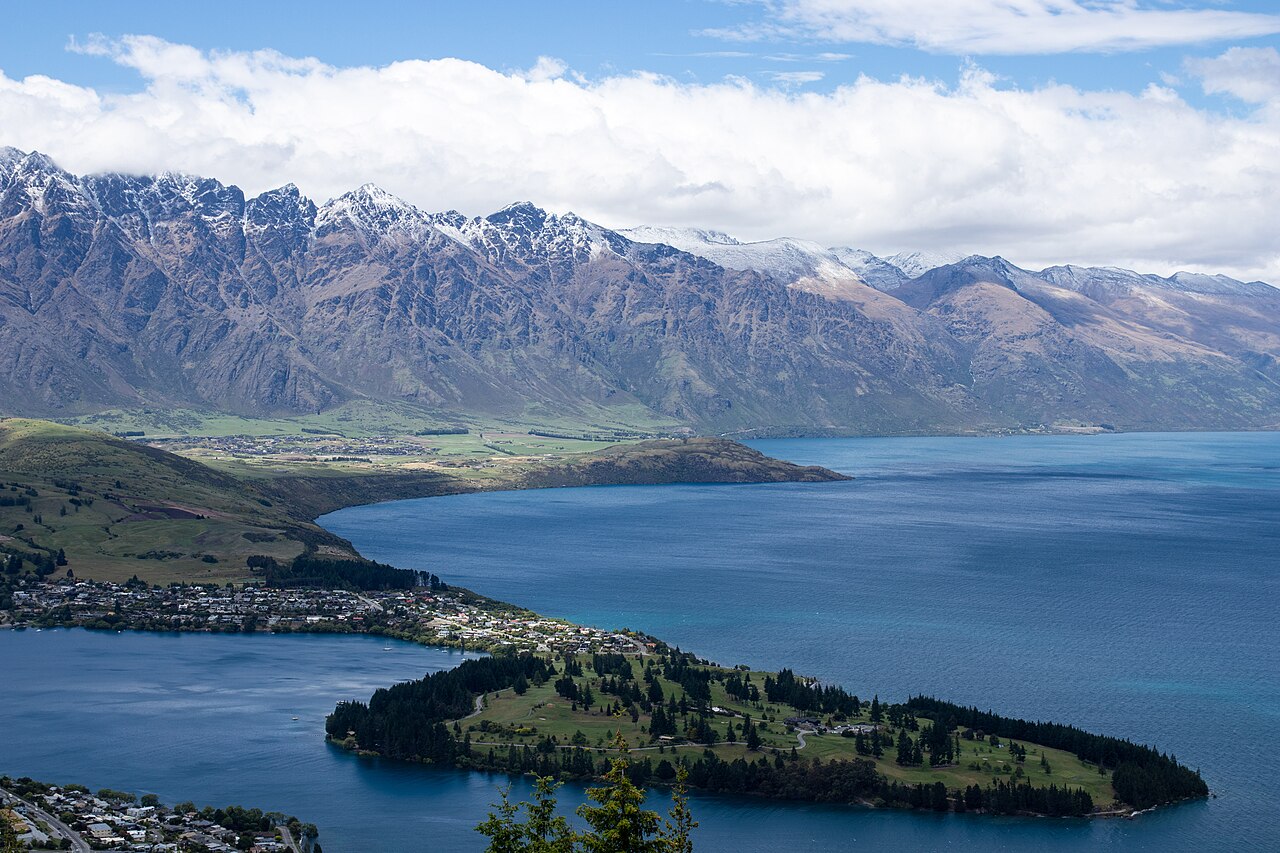
Queenstown sharpens the choice. NIWA's climate normals give the town January average highs around 72°F (22°C) and July highs around 46°F (8°C) — one of the more continental climates in the country, with four true seasons rather than the coast's mild blur. Its lake sets the terms of any visit: Lake Wakatipu is New Zealand's longest lake at 50 miles (80 km), its third largest at 114 square miles (295 km²), and up to about 1,380 feet (420 m) deep, its bed lying below sea level. It stays cold — around 50°F (10°C) even in midsummer — so summer here is for looking at, sailing on and walking beside, not for casual swimming.
February and March collect the rewards on every front at once. The Great Walks season is still running — and this is a rule with an authority behind it, not a suggestion: in season, from late October to late April, huts on tracks like the Routeburn, which starts beyond Glenorchy at the head of Lake Wakatipu, must be booked through the Department of Conservation, and the most popular dates go on the day bookings open. In the Gibbston Valley, twenty minutes from town, Central Otago's pinot noir harvest runs through March and April at a latitude of about 45°S — among the most southerly vineyards on earth. By late April, Arrowtown's planted avenues turn gold for its Autumn Festival.
Picture the place
At dusk in February the Remarkables take the last light in rose and grey above a lake the color of slate, the 1912 steamer TSS Earnslaw is chugging home across Queenstown Bay trailing woodsmoke, and the terraces along the waterfront are full in shirtsleeves — summer holding, with the first rumour of autumn in the poplars.
The easily missed detail
The lake breathes. Lake Wakatipu has a seiche — a standing wave that crosses the basin on a period of 26.7 minutes and raises and lowers the water in Queenstown Bay by about 8 inches (200 mm), all day, every day. Ngāi Tahu tradition explains it as the heartbeat of Matau, the giant who lies in the lakebed; NIWA's instruments politely agree with the rhythm, if not the giant.
A practical rhythm
- Morning — February mornings on the lake are glass: the Earnslaw's first sailing, the Glenorchy road while the light is low, or the Routeburn day-walk section before the wind rises.
- Midday — The national summer at full strength: a Gibbston cellar door lunch in the harvest weeks, or Arrowtown's museum and river walks in the shade of the avenues.
- Evening — The long southern twilight is the season's luxury — in mid-December it is light until about 9:45 p.m. in Queenstown, and even in March the lakefront keeps its evenings past 8.
What could complicate the plan
The weeks from Boxing Day to mid-January are New Zealand's own summer holidays: domestic travelers flood Queenstown, prices peak, and anything bookable — Great Walks huts, Milford Sound cruises, lakefront rooms — is spoken for months out. At the other end, winter's ski season is a genuine alternative rather than a warning, but it changes the national trip's character: Fiordland day trips shrink with the daylight, some alpine passes carry chain requirements, and the Milford Road can close after heavy snow.
What to do next
Aim for a February or March arrival, book the Routeburn or Milford huts the week DOC opens them, and let the planning answer in this group set your pace between islands.
Sources
- NIWA — climate normals for Queenstown and the national seasonal pattern, and the recorded 26.7-minute seiche of Lake Wakatipu
- Department of Conservation — the Great Walks booked season (late October to late April) and the requirement to book huts on tracks including the Routeburn
- Tourism New Zealand — the national events and seasons picture, including the ski season from about late June to early October