Noto / Italy When to visit
When should I visit Noto, Italy, for the best experience?
The short answer
Late September through mid-January, which is the olive harvest window the Monti Iblei designation fixes at 20 September to 15 January each oil campaign, and the season when Noto's baroque limestone is worked on by low sun rather than high summer glare.
The answer, with local context
Noto is a town whose two main attractions run on different calendars. The architecture is open all year: the Italian national tourism portal lists Palazzo Nicolaci at 10:00 to 19:00 Monday to Saturday and 10:00 to 13:00 then 14:30 to 18:00 on Sunday — a split Sunday that catches visitors out more often than any seasonal closure does.
The landscape around it is more seasonal. The Riserva naturale orientata "Oasi faunistica di Vendicari", established in the comune of Noto by decree D.A. n. 81 of 14 March 1984 and published in the GURS supplement of 19 May 1984 no. 21, protects coastal dune systems, salt-tolerant and sand-loving vegetation, Mediterranean scrub and the pantani wetlands near the Tellaro river. Its management framework names the wetlands explicitly as stopover and nesting habitat for birds, which is a seasonal rather than a year-round draw, and bathing is permitted but only subject to safeguards and restrictions set by the managing body.
The harvest is the third calendar. The Monti Iblei protected designation covers the provinces of Siracusa, Ragusa and Catania, requires the name to be used with one of 8 geographic mentions — Val Tellaro among them — and sets the picking window at 20 September to 15 January. Late autumn in this corner of Sicily is therefore working season, not off-season.
Picture the place
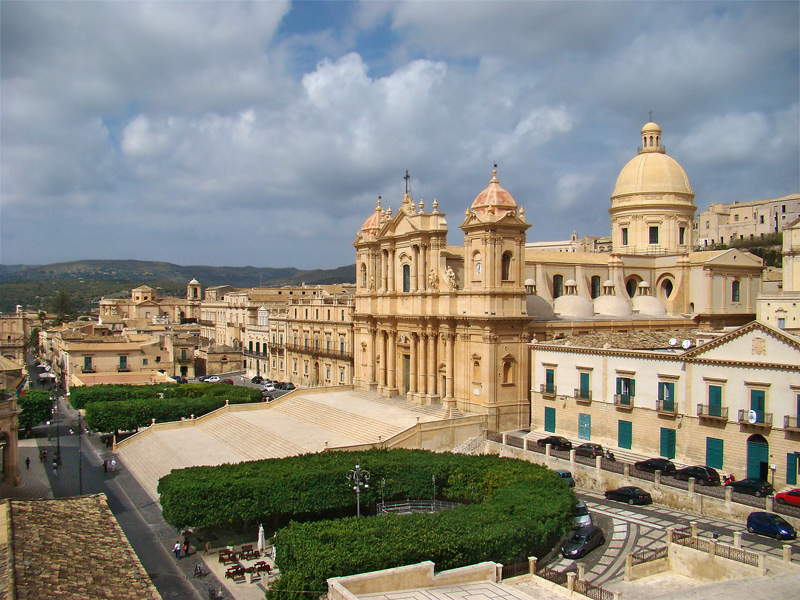
Noto was rebuilt on a new site after the earthquake of 1693, and the whole old town went up in one architectural idiom within a few decades. The stone is a pale local limestone that reads honey-colored in raking light, which is why the hours either side of midday do the building facades fewer favors than late afternoon does.
The easily missed detail
Vendicari is not a park you wander freely. Visitors must stay on marked paths; vehicles, camping, open fires, dogs and hunting are prohibited; collecting plants, animals, eggs or nests is prohibited, as is removing sand or soil; and motor boats must stay at least 200 m (656 ft) from the coast. A 100 m (328 ft) no-build strip runs along the reserve boundary. The pre-reserve is split into a B1 agricultural zone and a B2 zone for recreational, tourist and sporting use, so what is allowed depends on which zone you are standing in.
A practical rhythm
- Autumn — Olive harvest from 20 September, with the Monti Iblei window running to 15 January, and the mildest walking weather on the Vendicari paths.
- Midwinter — The town's interiors come into their own; Palazzo Nicolaci keeps a 10:00 start every day of the week.
- Sunday — Plan around the midday break: 10:00 to 13:00, then 14:30 to 18:00.
What could complicate the plan
UNESCO's listing is explicit that these towns are permanently at risk from earthquakes and from eruptions of Mount Etna, and the historic center of Noto carries landscape protection under Law 1497/39, so restoration scaffolding is a recurring feature rather than an exception. Vendicari's boundaries are defined only on 1:25,000 maps, with no published hectare figure in the establishing documents, so signage on the ground matters more than any map you bring. Bathing there can be restricted at the managing body's discretion.
What to do next
The Noto things-to-do question in this group covers the UNESCO inscription and Palazzo Nicolaci in detail; the food question explains the Val Tellaro olive oil mention.
Sources
- Regione Siciliana, Azienda Foreste Demaniali, Riserva naturale orientata "Oasi faunistica di Vendicari" regulation sheet — establishing decree and gazette publication, comune, habitats, zoning, access rules, boat distance, no-build strip
- Italia.it (Ministero del Turismo / ENIT), Palazzo Nicolaci — opening hours by day
- European Commission, eAmbrosia product specification for Olio Extra Vergine di Oliva "Monti Iblei" — harvest window, production provinces, the 8 geographic mentions including Val Tellaro
- UNESCO World Heritage Centre, Late Baroque Towns of the Val di Noto — the 1693 rebuilding on a new site, Law 1497/39 protection, permanent earthquake and Etna risk