Okavango Delta / Botswana Food and drink
Where should I eat in Okavango Delta, and which local food or drink is worth trying?
The short answer
Plan on meals supplied by your safari camp, with Botswana dishes such as seswaa and bogobe when available; the Okavango Delta is a remote wetland, not a destination with a walkable restaurant strip.
The answer, with local context
The first dining decision in the delta is actually a logistics decision: choose between a camp with full-board service, a self-catering permitted campsite and an itinerary based out of Maun. Many water-access lodges provide meals on site because independent restaurant access would require boat or aircraft transport. Moremi Game Reserve is a regulated protected area of roughly 3,900 square kilometers, so driving out to an ordinary café is not part of a typical safari day.
Botswana’s broader culinary vocabulary includes seswaa, traditionally slow-cooked, shredded or pounded meat; bogobe, porridge made with sorghum or another grain; and morogo, leafy greens. Phane are edible mopane caterpillars eaten in some parts of Botswana. Their presence on an individual camp menu cannot be assumed. A meal that uses sorghum or a local vegetable is not necessarily labeled as a formal “traditional dinner,” and a lodge’s international-style menu does not accurately represent all Botswana cuisine.
Maun, the main practical gateway for many delta safaris, provides a better opportunity for shopping and eating outside an accommodation property. Within the delta, the best reason to dine locally is access to the evening rhythm of camp and its surroundings, not a search for an independently ranked restaurant. The delta’s wetlands were designated a UNESCO World Heritage property in 2014 for their unusual ecological processes, not for urban tourism infrastructure.
Picture the place
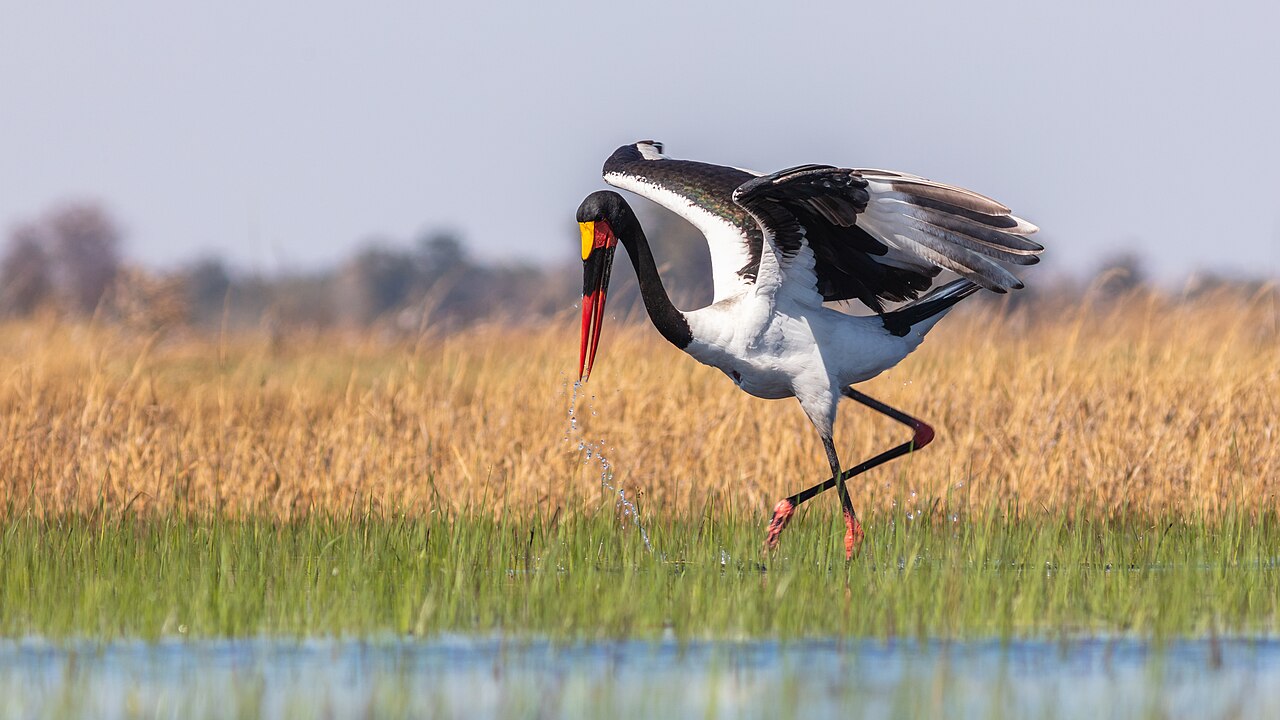
At an island camp, a meal is likely to be eaten within sight of vegetation, water or an open floodplain, rather than on a commercial high street.
The easily missed detail
The food and the transport arrangement cannot be separated. A seemingly cheaper room-only booking in a remote concession may be impractical if no public food service or ordinary road access exists.
A practical rhythm
- Before departure — Confirm which meals and drinking water are included in the camp rate.
- Gateway stop — Use Maun to shop, eat and discuss any special dietary requirements before the remote transfer.
- In camp — Ask the kitchen whether seswaa, bogobe or morogo can be prepared from available ingredients.
What could complicate the plan
Health-related food sensitivities and allergies should be communicated well ahead of arrival because resupply may be infrequent. Camp kitchens and self-catering sites must follow wildlife-safe food storage rules. Off-site dining opportunities are constrained by reserve permits and transfer schedules.
What to do next
Use to select the water season and to choose activities that match your camp’s location.
Sources
- UNESCO World Heritage Centre — dry-season flood pulse and wetland ecology
- Botswana Tourism Organisation, Okavango — mokoro, boating, birdlife and species
- Botswana Tourism Organisation, Moremi — reserve extent, legal distinction and establishment
- Botswana Wildlife Conservation and National Parks Regulations — permit and park-entry conditions; statutory text, verify current amendment before quoting fees
- U.S. State Department — entry and remote-area transport constraints