Oman country guide Trip planning
How can I plan a memorable first trip to Oman without rushing?
The short answer
Allow ten days to two weeks, rent a car, and run one northern loop — Muscat, the interior, the sands, the coast — then fly south to Salalah as a separate chapter rather than a detour.
The answer, with local context
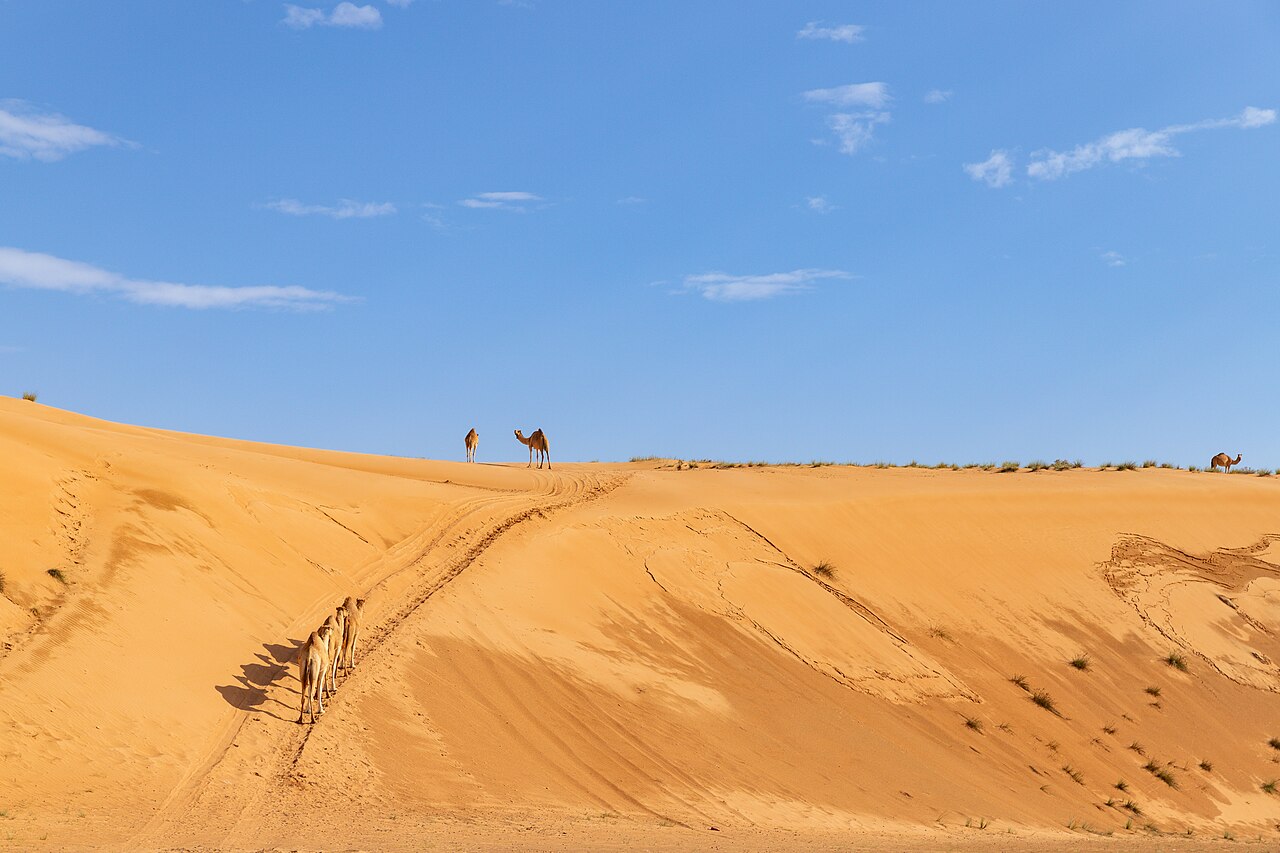
Oman rewards drivers and punishes compressors. The country strings more than 3,000 km of coastline and an interior of mountains and sand around a road network that is excellent and entirely without a passenger railway, so the trip is a road trip by design. The distances set the tempo: Muscat to Nizwa is an hour and three-quarters on the interior highway, while Muscat to Salalah is some 620 miles (1,000 km) of desert highway — a full day's driving of about twelve hours by bus, or a flight of under two hours. The plan that respects those numbers keeps the north as one continuous loop out of the capital and treats the south as a flight, not a leg.
Entry is arranged before any of it. The Royal Oman Police and the Foreign Ministry exempt nationals of 103 countries from entry visas for stays of up to 14 days, on conditions that include a passport valid for at least six months, a return ticket, a confirmed hotel reservation, health insurance and sufficient funds — and the exemption cannot be extended. Longer stays run through the ROP eVisa portal: the unsponsored 30-day single-entry tourist visa (26B) costs OMR 20, which covers a stay of up to 30 days, and the one-year multiple-entry visa (36B) costs OMR 50 with stays of up to 30 days per visit; citizens of the Gulf Cooperation Council states need no visa at all. The 14-day clock is therefore a real planning boundary: a trip that wants twelve northern days plus Dhofar should buy the 30-day visa before departure rather than discover the limit at the border.
Within the north, sequence is the whole craft. Give Muscat two full days at the start, when the mosque's morning visiting window and the museums are fresh legs' work. Base two or three nights in Nizwa for the interior — the forts, Jabreen, and a day up on Jebel Akhdar, remembering that the Royal Oman Police checkpoint at the foot of that mountain admits four-wheel-drive vehicles only, so the rental decision is made by that one road. Then run east: a night in the Sharqiyah Sands, a night on the coast at Sur or Ras al Jinz, and the wadi road back to Muscat. Fly south for two or three nights in Salalah to close, and let the return to the capital be a flight as well — the traveler who drives both directions has spent two of the trip's days watching the same desert unspool.
That shape also decides which of Oman's World Heritage properties the trip reaches. UNESCO inscribed Bahla Fort in 1987 and the archaeological sites of Bat, Al-Khutm and Al-Ayn in 1988, both in the northern interior the Nizwa loop already crosses; the Aflaj Irrigation Systems followed in 2006, and the Ancient City of Qalhat in 2018, on the coast beyond Sur. The Land of Frankincense, inscribed in 2000 as the Frankincense Trail, is the only one that lies in Dhofar — so the southern flight is not an indulgence but the sole way to reach a listed property outside the north.
Picture the place
South of Nizwa the highway runs straight into a wall of brown mountains, date groves flashing green in every wadi mouth, and the road climbing through a notch toward a plateau where the air suddenly smells of roses and cold stone.
The easily missed detail
A flowing wadi is a hard border, not a photo stop. Oman's dry riverbeds carry roads, parking areas and picnic spots in fair weather, and the Civil Defence warnings that precede rain exist because those same channels fill in minutes from storms falling miles away in the mountains; the plan that never crosses moving brown water loses nothing and risks nothing.
A practical rhythm
- Days 1–3 — Muscat unhurried: the mosque in its morning window, Mutrah and Old Muscat in the evenings, the car collected on the second day rather than at the airport curb.
- Days 4–7 — The interior from a Nizwa base: forts and Jabreen, the Jebel Akhdar day in the rented 4x4, one slow souq morning with no driving at all.
- Days 8–10 — East and south: a desert night in the sands, a coast night near Sur, then the flight to Salalah for the frankincense coast before flying home via Muscat.
What could complicate the plan
One vehicle rarely suits the whole trip: a sedan serves the highways, but the Jebel Akhdar checkpoint and the sand edges demand a genuine 4x4, so rent for the mountains or book the plateau day with a driver. Friday reshapes the interior — Nizwa's livestock market is a Friday spectacle while many smaller shops close around midday prayers — so the week's hinge day should be placed deliberately. And the khareef inverts the south's logistics entirely: in July and August Salalah's hotels fill with Gulf visitors escaping the heat, prices climb, and the same city that is an easy add-on in January becomes the trip's hardest booking.
What to do next
Decide the visa by the trip's length first, then book the car class against the Jebel Akhdar day, then fix the Salalah flight — in that order, because each choice constrains the next.
Sources
- Royal Oman Police eVisa portal and Oman Ministry of Foreign Affairs — visa-free entry for up to 14 days for nationals of 103 countries with passport, return ticket, hotel, insurance and funds conditions; the 30-day single-entry tourist visa (26B) at OMR 20 and the one-year multiple-entry visa (36B) at OMR 50; GCC nationals exempt
- Royal Oman Police — the checkpoint at the foot of Jebel Akhdar admitting four-wheel-drive vehicles only
- Oman Civil Defence and Ambulance Authority and the Directorate General of Meteorology — wadi flash-flood warnings during rain over the mountains
- UNESCO World Heritage Centre, Oman Committee decisions — inscription years for Bahla Fort (1987), the archaeological sites of Bat, Al-Khutm and Al-Ayn (1988), the Frankincense Trail (2000, renamed the Land of Frankincense in 2005), the Aflaj Irrigation Systems (2006) and the Ancient City of Qalhat (2018)