Oman country guide Places and experiences
What should a first-time traveler see in Oman beyond the obvious highlights?
The short answer
The interior's deep past: Bahla's mud-brick fort, the Bronze Age tombs of Bat and Al-Ayn, the still-working aflaj irrigation channels, Nizwa and Jabreen, and in the far south the frankincense ports of Dhofar.
The answer, with local context
Start with the statistic that reframes the country: UNESCO's States Parties page for Oman lists exactly five World Heritage properties, all cultural, and none of them is in Muscat. Bahla Fort, inscribed in 1987, is a vast mud-brick fortress on stone foundations built by the Banu Nebhan tribe between the 12th and 15th centuries at the center of an oasis settlement — it spent 1988 to 2004 on the List of World Heritage in Danger before restoration brought it back. The Archaeological Sites of Bat, Al-Khutm and Al-Ayn, inscribed in 1988, are older by millennia: settlements and necropolises of the 3rd millennium BCE, their beehive tombs raised in a Bronze Age landscape that exported copper toward Mesopotamia. The Aflaj Irrigation Systems, inscribed in 2006, protect five gravity-fed water channels of a network of some 3,000 still in use across Oman, with origins traced to around 500 CE and evidence of predecessors near 2500 BCE — heritage you can watch irrigating a date grove this morning.
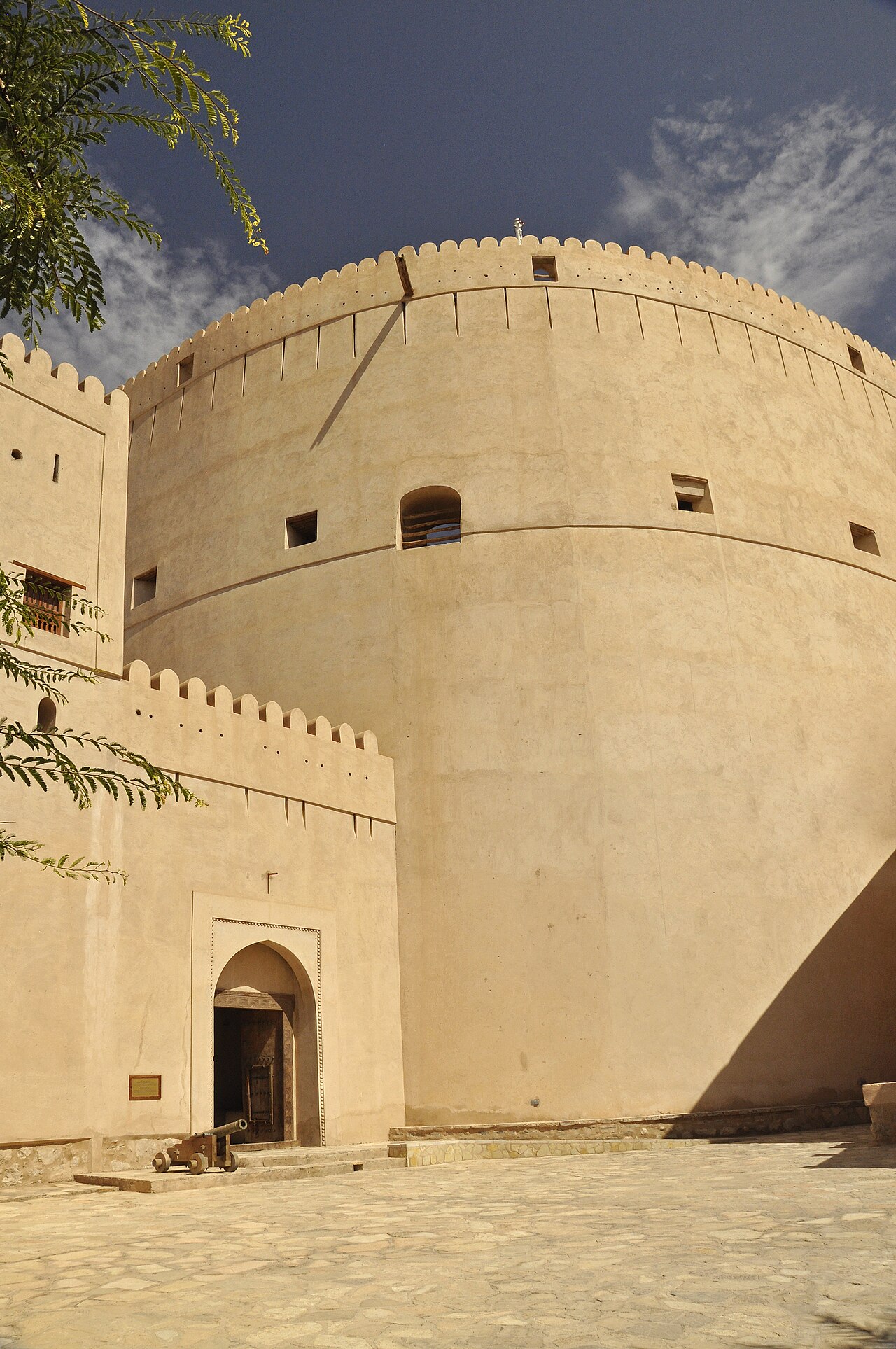
The living interior stands a short drive from those stones. Nizwa, the old capital, is guarded by the great round-towered fort raised in the mid-17th century under the early Yaruba imams, its corridors built with traps for invaders and its Friday livestock market still run in the open ground below. Jabreen Castle, built in the late 17th century, was designed as a residence and seat of learning rather than a fortress, with painted ceilings and a scholar-imam's court. East and south, the land itself becomes the sight: the Sharqiyah Sands — the Wahiba — cover 4,800 square miles (12,500 km²), running 110 miles (180 km) north to south, their dunes named for the Bani Wahiba tribe; and the separate northern exclave of Musandam, cut off from the rest of Oman by the United Arab Emirates, drops fjord-like khors into the Strait of Hormuz.
The south closes the arc with the trade that made Oman famous before oil. The Land of Frankincense, inscribed in 2000, binds four places into one story: the frankincense trees of Wadi Dawkah, where the resin of Boswellia sacra is still tapped; the caravan oasis of Shisr; and the two ports, Khor Rori and Al-Baleed, that shipped the resin to the ancient world — Khor Rori fading in the 5th century, Al-Baleed lasting until European sea trade arrived in the 15th. On the east coast the Ancient City of Qalhat, inscribed in 2018, adds the medieval chapter: a port of the 11th to 15th centuries whose surviving emblem is the domed Bibi Maryam Mausoleum.
Picture the place
At Al-Ayn the beehive tombs stand in a line along a ridge, each a dry-stone tower of the Bronze Age, with the green cone of the oasis below and Jebel Misht's cliff wall closing the horizon behind them.
The easily missed detail
The aflaj are not ruins. The five inscribed channels are working infrastructure inside a national network of about 3,000, dividing water to farms by timed shares as they have for some fifteen centuries — which means the correct way to see one is in a living oasis village in the early morning, when the channels run full, not at a monument gate.
A practical rhythm
- Interior loop — Give the forts and tombs two days based in Nizwa: Bahla and Jabreen on one day, the town's own fort and market on the other, timed for a Friday if the livestock auction matters to you.
- Eastward — Add the sands as the loop's second half, entering the Wahiba from its northern edge after the mountains, so the trip moves from stone to sand in one direction.
- Southern extension — Fly to Salalah for the frankincense sites rather than tacking Dhofar onto a driving itinerary; Al-Baleed and Khor Rori deserve a day of their own.
What could complicate the plan
The Bronze Age sites are unshaded, unfenced landscapes rather than developed attractions — Bat and Al-Ayn reward travelers who arrive with the context already in mind and punish those expecting a museum. Distances quietly govern everything: Bahla, Bat and the sands sit in different directions from Nizwa, so the interior needs a car and a driver or confident self-driving, not taxis between sights. Qalhat, for all its inscription, is an archaeological field beside the highway — a stop of an hour, best paired with the coast road south from Muscat rather than a destination in itself.
What to do next
Anchor the interior days in Nizwa, then eat your way through the regional map in the next answer — Oman's kitchens divide along the same lines as its landscapes.
Sources
- UNESCO World Heritage Centre, Oman States Parties page — five cultural properties: Bahla Fort (1987), Bat, Al-Khutm and Al-Ayn (1988), the Land of Frankincense (2000), the Aflaj Irrigation Systems (2006) and the Ancient City of Qalhat (2018), with Bahla's danger listing from 1988 to 2004 and the aflaj network of some 3,000 systems
- Oman Ministry of Heritage and Tourism — Nizwa Fort as a mid-17th-century Yaruba stronghold with its Friday livestock market, and Jabreen Castle as a late-17th-century seat of learning
- The Sharqiyah Sands — 12,500 km² stretching 180 km north to south, named for the Bani Wahiba tribe