Palau country guide When to visit
When is the best time to visit Palau for Rock Islands?
The short answer
March — the driest month of Koror's year (about 200–210 mm of rain, against about 450 mm in July) inside the February–April dry window, when the Rock Islands' lagoon is glassiest, Blue Corner's visibility peaks, the manta season is still running, and Jellyfish Lake's golden jellies are at their fullest.
The answer, with local context
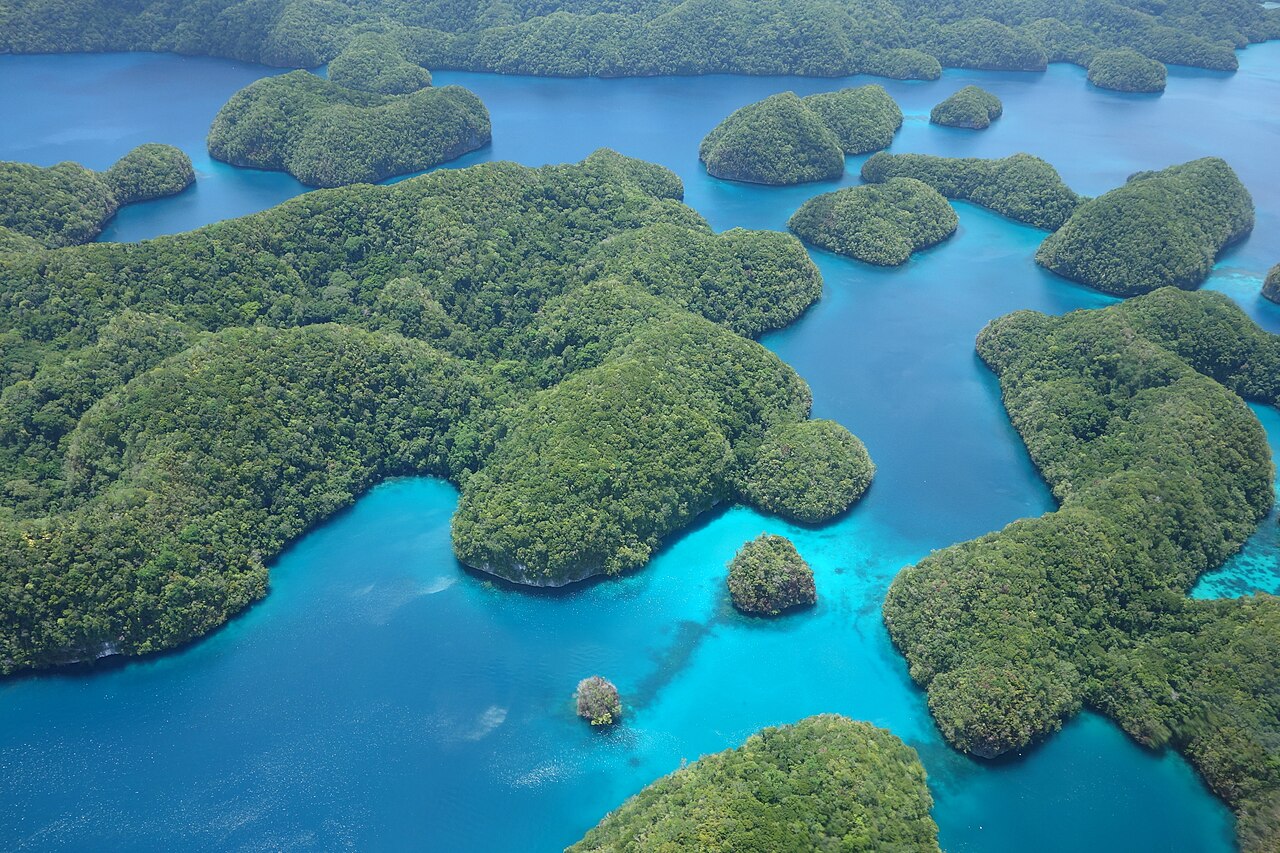
Palau sits in the West Pacific Warm Pool at 7°N, which means 2 things at once: the temperature barely moves (about 82°F / 28°C all year, with barely 1.5°F between the hottest and coolest months) and it rains in every month — Koror averages around 3,660 mm a year — so "best time" is a question of degree, answered by the published climate record: February, March and April are the driest months (the Pacific climate profile for Palau names them exactly), July is the wettest, and the main wet season runs from about May to October under the southwest monsoon. March is the sweet point inside the dry window: the northeast trades have settled the lagoon into its calm season, boat days to the far southern sites run reliably, and underwater visibility on the outer reef walls reaches its annual best — the condition the Rock Islands are really about. The anchor deserves its numbers stated plainly, because they are the published authority this trip is built on: UNESCO inscribed the Rock Islands Southern Lagoon in 2012 as a mixed cultural and natural property (criteria iii, v, vii, ix, x), covering 100,200 hectares and 445 uninhabited coralline limestone islands, with 52 marine lakes (more than any site on Earth), over 385 coral species, at least 13 species of sharks and rays, 7 species of giant clam, and human occupation reaching back some 3,100 years. March serves every line of that citation: the mushroom islands' mirror-calm anchorages, the marine lakes, and the reef.
The season's other clocks favour March. Manta rays work German Channel through the November–May mating season, so March still has them; grey reef sharks crowd Blue Corner year-round; and Jellyfish Lake (Ongeim'l Tketau, on Eil Malk island) — the lagoon's famous stingless golden Mastigias lake — was counted by the Coral Reef Research Foundation's September 2026 survey in its top band (over 100,000 jellyfish, green forecast), and the dry months bring its most reliable snorkelling. Entry is as welcoming as the Compact allows: U.S. citizens need no visa for stays up to 1 year (U.S. State Department), with a passport valid 6 months; every visitor files the Palau Entry Form online within 72 hours before arrival, signs the Palau Pledge (stamped into the passport — the world's first such eco-pledge, law since 2017), and pays the $100 Pristine Paradise Environmental Fee built into the air ticket. Then the lagoon's own tolls, which are the answer's MUST-carry facts: Koror State's published permit schedule charges $50 for the Rock Islands Use Permit and $100 for the Jellyfish Lake Permit (which includes the Rock Islands), for visitors aged 6 and up, valid 10 days, bought through your operator — rangers check them at sea.
March also dodges the 2 crowding spikes of the dry season: Christmas–New Year and the Lunar New Year weeks, when Koror's hotels and dive boats fill with regional holiday traffic and prices peak. By March the boats have space, the water is at its clearest, and the Rock Islands give their full performance.
Picture the place
A March morning inside the lagoon: 3 mushroom islands mirrored so exactly in the flat water that the boat seems to float in sky, and a reef shark's fin stitching the surface between them.
The easily missed detail
The Rock Islands are a cultural landscape wearing a nature costume: the UNESCO citation includes the abandoned stone villages (occupied in their built form from about 950 to 500 years ago, deserted in the 17th–18th centuries as populations consolidated on Koror and Babeldaob), the burial caves and rock art, and — most wonderfully — the quarries on islands like Ulong where Yap's stone money discs were cut and embarked for the 400-km raft voyage west. A boat day that only snorkels has read half the property. The second detail is tidal and practical: Jellyfish Lake's jellies follow the sun across the lake on their daily migration, and the famous density is a late-morning phenomenon — early boats find a lake that looks emptier than its reputation, so take the mid-morning departure.
A practical rhythm
- Lagoon days in sequence — Blue Corner and German Channel first while the trades hold, Jellyfish Lake on the calmest morning
- A kayak day between dive days — The mushroom islands read best at paddle height and paddle speed
- Evenings in Koror — The permits, the Pledge and the town's restaurants arranged around a 6 a.m. boat culture
What could complicate the plan
The permits have fine print that changed recently and may change again: Koror State's fact sheet states 10-day validity, while several operators reported a cut to 5 days from December 2024 — confirm at purchase, especially on a 10-day stay, and note Peleliu charges its own separate state permit (about $30) on top. Jellyfish Lake is a living system, not a fixture: its jellyfish crashed in the 2016 El Niño and the lake has closed before; the Coral Reef Research Foundation publishes current counts, the September 2026 survey was strong, but the same survey noted an El Niño phase — check the lake's status the week you travel, not the month you book. Safety has an official edge too: the State Department rates the Rock Islands and outlying islands Level 2 (exercise increased caution) specifically because there is no emergency medical infrastructure beyond Koror and Babeldaob — divers should carry DAN or equivalent evacuation insurance, and the nearest full care is Guam or Manila. Finally, March is peak season by Palau standards: rooms and liveaboards are finite, the best boats book out, and prices sit at their annual ceiling.
What to do next
Book the Koror hotel and 3 boat days for March, buy the $100 Jellyfish Lake permit through your operator, and file the Palau Entry Form 72 hours before you fly.
Sources
- UNESCO World Heritage Centre — Rock Islands Southern Lagoon (inscribed 2012; mixed criteria iii, v, vii, ix, x; 100,200 ha; 445 islands; 52 marine lakes; 385+ coral species; 3,100 years of occupation)
- Koror State Government / Palau Visitors Authority — permit schedule (Rock Islands Use $50; Jellyfish Lake $100 including the Rock Islands; ages 6+; 10-day validity)
- Palau climate profile (Pacific Climate Change programme / national met record) — February–April the driest months at Koror; main wet season May–October; annual rainfall about 3,660 mm; temperatures about 82°F year-round
- U.S. Department of State, Palau — U.S. citizens: no visa for up to 1 year; passport valid 6 months; Entry Form within 72 hours; $100 environmental fee in the ticket; Level 2 caution for the Rock Islands (no emergency medical infrastructure)
- Coral Reef Research Foundation — Jellyfish Lake survey, September 16, 2026 (population in the top band, over 100,000)