Palermo / Italy Things to do
What are the most worthwhile things to do in Palermo on a first visit?
The short answer
One morning inside the Palazzo dei Normanni for the Cappella Palatina, one market morning in Ballarò, the Quattro Canti at the center of the old city's cross, and a half-day up to Monreale's golden cathedral — Palermo's first visit is Norman gold, Arab stone and market noise.
The answer, with local context
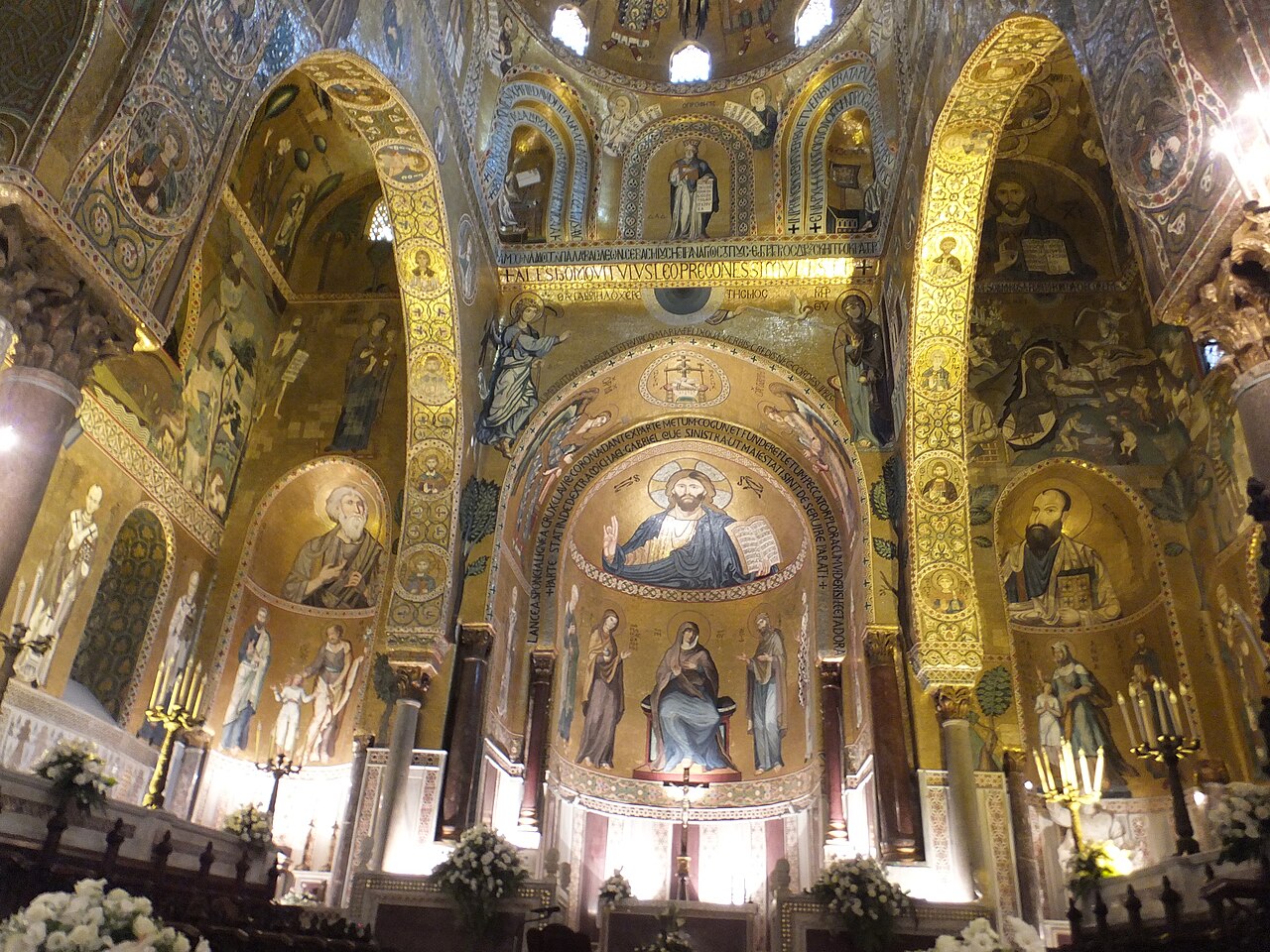
The Cappella Palatina is the single greatest room in Sicily. Inside the Palazzo dei Normanni — the royal palace, seat today of the Sicilian Regional Assembly — Roger II's chapel (consecrated 1140) fuses the three cultures of Norman Sicily in one small space: Byzantine gold mosaics under a dome of Christ Pantocrator, a painted wooden muqarnas ceiling carved by Fatimid craftsmen from Cairo, marble inlay floors, and inscriptions in Latin, Greek and Arabic. It is the jewel of the UNESCO listing "Arab-Norman Palermo" (2015, nine sites), and its neighbours in the palace and the old town keep the theme: the red-domed San Giovanni degli Eremiti (1130s), the Martorana church (1143) with its coronation mosaic of Roger II, San Cataldo's triple domes, and the Zisa, the Norman kings' pleasure palace built by Arab craftsmen (begun 1165). Book the palace for the morning: visiting is timed around the Assembly's sittings, and the chapel deserves the first, quietest entry.
The city's second register is its streets. The Quattro Canti (1608–1620) — the octagonal Baroque crossroads where the Cassaro meets Via Maqueda, four curved facades stacked with seasons, kings and patron saints — is the old town's compass point; from it, the Cathedral (begun 1185, an Arab-Norman core beneath Catalan towers and a neoclassical dome; climb to the roofs for the city's panorama), the Pretoria fountain's marble crowd, and the Palazzo Steri complete the walkable core. Then give the ear its turn: the historic markets. Ballarò, the oldest, runs from the palace quarter down through the Albergheria in a roar of abbanniate — the vendors' sung cries — over stalls of swordfish, prickly pears and street-food fryers; the Capo and the Vucciria (immortalised in Guttuso's 1974 painting) divide the locals' loyalty. A market morning, eaten standing up, is Palermo's second museum.
The afternoons go outward and upward. Monreale, eight kilometers up the Conca d'Oro slope, holds William II's cathedral (founded 1174): some 6,300 m² of gold mosaics — the largest cycle of its age in Italy — and a cloister of 228 paired columns, each capital different. Back in the city, the Teatro Massimo (1897) runs tours by day and opera by night; the Capuchin Catacombs hold their famous, sobering galleries of the preserved dead (some 8,000, among them Rosalia Lombardo, the child "Sleeping Beauty" of 1920 — photography is forbidden and the visit is not for everyone); and Monte Pellegrino and Mondello wait for the day's end. Palermo rewards two full days minimum; the city is a capital, not a stop.
Picture the place
Inside the Palatina at opening: gold ground glowing in the half-light, Arabic honeycomb overhead, Greek saints on the walls, and twenty visitors holding the silence the room imposes.
The easily missed detail
Look down in the palace quarter, not up: the Cassaro beneath your feet is the Phoenicians' street plan, the decumanus of Panormos laid out over 2,500 years ago, and it still organizes the city — the cathedral, the palace and the sea gate stand on its line. The Quattro Canti's four facades, incidentally, hide a clock of stone: each facade is lit in turn through the day (the Palermitani call the crossing "the theater of the sun"), so the crossroads performs from dawn to dusk without a single actor. Time your two passes — morning and evening — to different facades.
A practical rhythm
- Palace first, always — The Cappella Palatina's entries are limited and the Assembly's calendar rules; book the earliest slot of the trip
- Market before monuments, once — Ballarò by 9 combines breakfast, shopping and theater; repeat at the Capo for comparison
- Monreale on a clear afternoon — The mosaics are interior, but the Conca d'Oro view from the town is half the excursion
What could complicate the plan
The palace complex is a working parliament: the Cappella Palatina and royal apartments close or restrict on sitting days and official events, and security queues are airport-grade — passport-grade patience and the online booking are essential. Dress codes apply in the churches (covered shoulders and knees), several Arab-Norman churches keep short, split visiting hours with a midday closure, and the catacombs forbid photography entirely. Palermo's traffic makes its own law: base in the centro storico and walk the sights; the car is for Monreale and Mondello only.
What to do next
Book the Cappella Palatina for the first morning, walk the Cassaro to the Quattro Canti by noon, and hold Monreale for the clearest afternoon.
Sources
- UNESCO World Heritage List — Arab-Norman Palermo (2015): the Palatine Chapel (consecrated 1140), San Giovanni degli Eremiti, the Martorana, San Cataldo, the Zisa among the nine components
- Fondazione Federico II / Sicilian Regional Assembly — visiting the Palazzo dei Normanni and Cappella Palatina, subject to the Assembly's calendar
- Monreale Cathedral (Diocese of Monreale) — William II's cathedral of 1174, its ~6,300 m² of mosaics and the cloister's 228 columns
- Comune di Palermo — the Quattro Canti (1608–1620) and the historic markets of Ballarò, Capo and Vucciria