Palermo / Italy When to visit
When should I visit Palermo, Italy, for the best experience?
The short answer
October — the Tyrrhenian is still swimmable, the sirocco heat has broken, the markets are at their harvest loudest, and the capital has its streets back from the summer exodus.
The answer, with local context
Palermo is Sicily's furnace and its feast, and October is when the feast outlasts the furnace. The city sits in the Conca d'Oro, the golden shell of citrus plain between Monte Pellegrino and the sea — Goethe called that promontory the most beautiful in the world — and its summer is the Mediterranean's full sentence: 95°F (35°C) afternoons, the sirocco pushing dust-laden air off Africa, and August's evacuation of the Palermitani themselves to Mondello and the coast. October rewrites it: days of 73–81°F (23–27°C), evenings built for the passeggiata along the Cassaro (Corso Vittorio Emanuele, the Phoenicians' street, the city's oldest), and a sea that held its heat — 73°F (23°C) water at Mondello, the Liberty-era beach resort fifteen minutes from the center, with its 1912 bathing establishment on the pier and the crowds gone home.
The calendar fills the month rather than emptying it. The vendemmia runs in the Monreale and Alcamo DOC hills behind the city; the markets — Ballarò, the Capo, the Vucciria — hit their harvest register of grapes, prickly pears, chestnuts and the first new oil; the Teatro Massimo, Italy's largest opera house (opened 1897), opens its autumn season; and the Arab-Norman monuments keep full hours without July's queues at the Cappella Palatina. October also keeps Palermo honest: it is a working capital (of the Sicilian Region) all year, and autumn is when its students, courts and kitchens return — the street-food fryers at full voice, the university quarter loud again.
The named exception is July — not for weather, which is the year's worst, but for the Festino di Santa Rosalia (July 14–15), the night procession for the city's patroness, whose relics were credited with ending the plague of 1624 and whose festival (held since 1625) moves a triumphal chariot through a city of fireworks and devotion; go then for the Festino alone and accept the heat as the ticket price. Spring (April–May) is the other serious bidder: pasta con le sarde season, when wild fennel and the sardine catch coincide, and the city in jasmine. But October gives the sea, the harvest and the city in one trip, without spending any of it on survival. Take the second half of the month, and give Mondello one warm afternoon before the lidos close their umbrellas for the year.
Picture the place
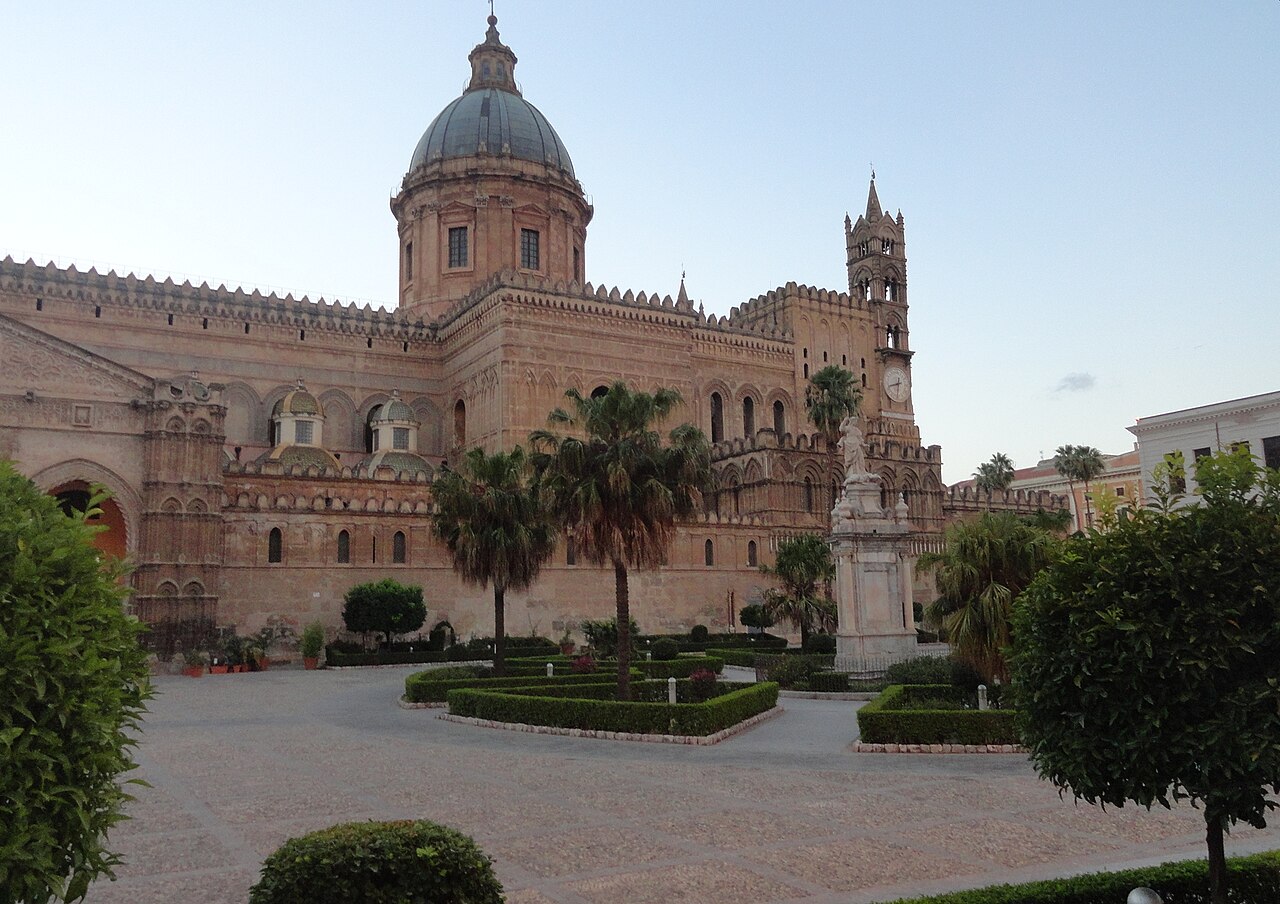
The Cassaro at dusk in October: the Quattro Canti's facades lit amber, students pouring from the university streets, and the smell of fried panelle drifting up from the Capo market as the heat finally lets go.
The easily missed detail
October carries a second, quieter feast: on the first weekends of the month the hill towns behind Palermo run their sagre — and the capital's own mountain, Monte Pellegrino, holds the sanctuary of Santa Rosalia, reached by the pilgrim road the faithful climb (many barefoot, in September for her September 4 feast day and year-round by the devout). Do what the Palermitani do on an October Sunday: the bus or the winding drive up the mountain at golden hour, the sanctuary in its grotto of votive offerings, and the whole Conca d'Oro — city, harbor, citrus plain, sea — laid out in one sweep below. It is the city's true viewpoint, and the tourists are all at the cathedral.
A practical rhythm
- Second half of October — The heat breaks decisively by mid-month; the sea and the lidos hold on longest at Mondello
- Markets in the morning — Ballarò and the Capo peak before noon; October's produce is the year's best argument for an early start
- Monreale in the afternoon — The cathedral above the city catches the Conca d'Oro light late; pair it with the cloister before closing
What could complicate the plan
October is the Mediterranean's hinge, and Palermo's rain arrives in it — short, theatrical downpours rather than grey weeks, but the street markets and the Mondello plan both need a dry-day shuffle. The Festino temptation cuts the other way: visitors set on Santa Rosalia's night must accept July wholesale. Autumn also trims some beach infrastructure (lido services wind down through the month), and the city's sights begin their winter pattern of Monday closures and earlier last entries late in October — the Palatine Chapel's visiting hours, tied to the regional parliament's calendar inside the Palazzo dei Normanni, deserve a same-week check at any season.
What to do next
Book the second half of October in the centro storico, put Mondello on the first warm afternoon and Monreale on the first clear one, and leave the Festino for a dedicated July pilgrimage.
Sources
- UNESCO World Heritage List — Arab-Norman Palermo and the Cathedral Churches of Cefalù and Monreale (inscribed 2015): the Palazzo dei Normanni and Palatine Chapel among the nine components
- Teatro Massimo, Palermo — Italy's largest opera house, opened 1897, and its autumn season
- Comune di Palermo — the Festino di Santa Rosalia (July 14–15, since 1625) and the Mondello borough
- Servizio Meteorologico dell'Aeronautica Militare — Palermo's October temperatures and sea conditions