Palermo / Italy Food and drink
Where should I eat in Palermo, and which local food or drink is worth trying?
The short answer
In the markets, standing up — panelle, crocchè, arancine and a spleen sandwich at the fryers of Ballarò and the Capo — then pasta con le sarde and sfincione at the old taverns, with cassata and cannoli at the historic pasticcerie: Palermo is Europe's street-food capital and it eats accordingly.
The answer, with local context
Begin where Palermo begins: the fryer. The city's street canon, much of it born in the markets' poverty and genius, is a checklist the locals enforce: panelle, chickpea-flour fritters fried to order and eaten in a sesame bun with crocchè (potato croquettes with mint); arancine — and note the spelling, for in Palermo the rice ball is feminine, arancina, pointed at the top like the orange it is named for, a civic fact defended against Catania's masculine arancino with complete seriousness; stigghiola, lamb intestines grilled over street braziers in the Vucciria's evening smoke; and the supreme test, pani ca meusa — a veal spleen and lung sandwich, simmered in lard, served schietto (single, with lemon) or maritatu (married, with caciocavallo and ricotta) — whose most famous counter is the Antica Focacceria San Francesco (founded 1834), facing the church of San Francesco in the Kalsa. Eat one market meal standing, at Ballarò or the Capo, and you have eaten Palermo's history: Arab chickpeas, Norman offal, Spanish tomatoes, all fried within sight of the stalls that sold the ingredients.
The seated table keeps the same fusion at higher polish. Pasta con le sarde is the city's signature plate — bucatini with sardines, wild fennel, pine nuts, raisins and saffron, the Arab-Norman treaty in a bowl (spring is its true season, when fennel and sardines coincide); sfincione is Palermo's own pizza: a spongy, oil-rich focaccia under tomato, onion, anchovy, caciocavallo and breadcrumbs, sold by the slice from carts and bakeries, and the centrepiece of the December 7–8 Immacolata feasts and Christmas tables. In the old town's trattorias and the Kalsa's small restaurants, add caponata made properly (the aubergine sweet-sour with celery and capers), sardine a beccafico (stuffed and rolled), and the day's swordfish from the market. The register runs from market bench to white tablecloth without changing cuisine — Palermo's fine dining mostly plates these same dishes with better light.
The sweet course is a civilisation: cassata siciliana — ricotta cream, sponge, marzipan and candied fruit, born in Arab Palermo when sugarcane met sheep's ricotta — and the cannolo, filled to order so the shell stays crisp, carry the pasticceria tradition the convents founded (the nuns of the Martorana and Santa Caterina sold sweets through a grille for centuries; Santa Caterina's cloister bakery, I Segreti del Chiostro, sells from its recipes today). Iris (a fried brioche ball of ricotta or chocolate cream) is the morning's warm handful; the granita and gelato-in-brioche run the summer. For the glass, drink the city's own hills — the Monreale DOC and Alcamo DOC whites from behind the Conca d'Oro, and Tasca d'Almerita's Regaleali estate (founded 1830) bottles — and finish where the fryers began: a cold Birra Messina on a Ballarò evening, with the abbanniate fading and the spleen man's queue still forming.
Picture the place
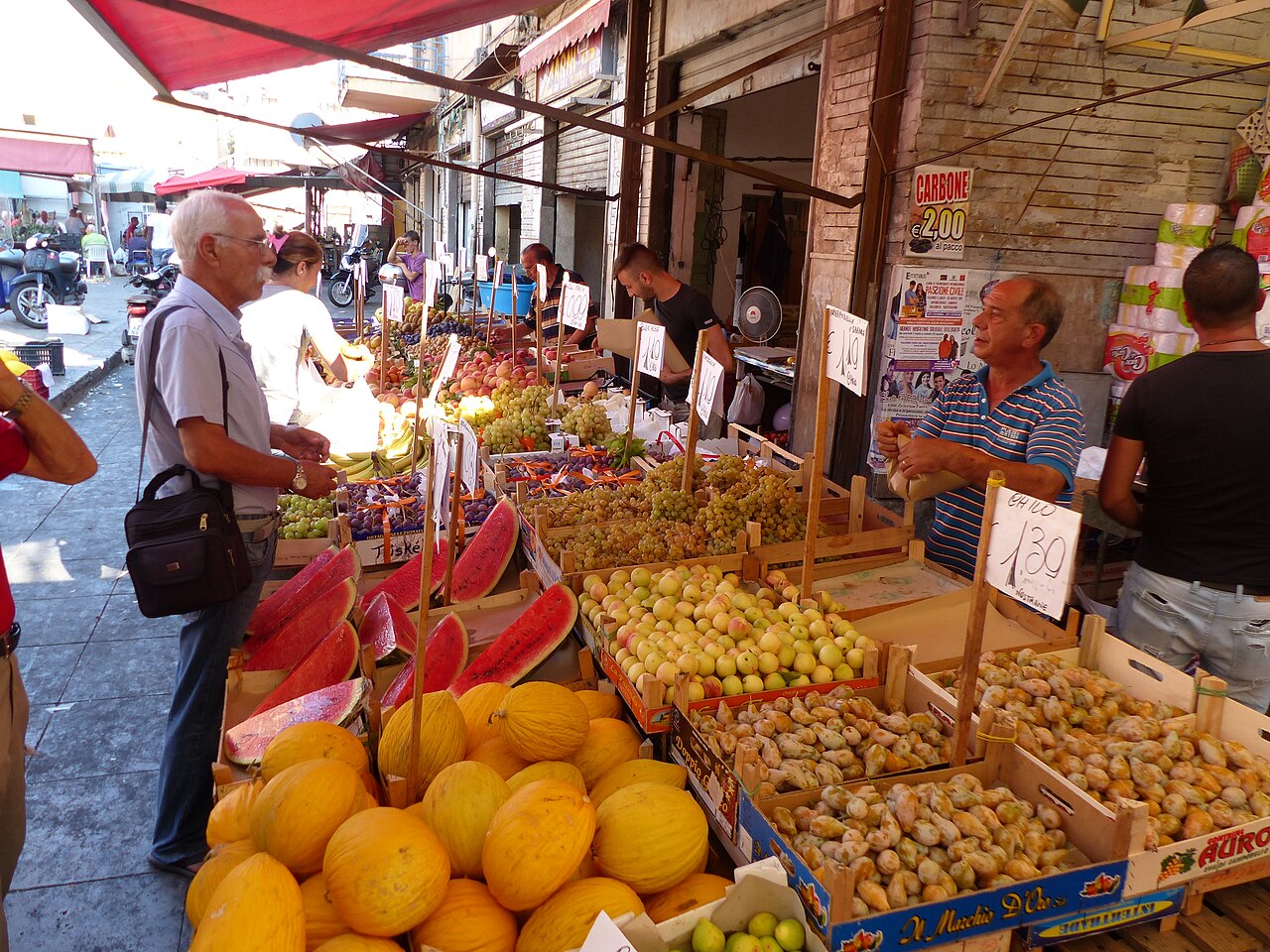
Ballarò at midday: a fryer lifting panelle from the oil with a spider, buns split and waiting, the stallholder already calling the next order over a wall of swordfish and prickly pears.
The easily missed detail
The meusa sandwich encodes a whole history in its two versions. Spleen was the payment-in-kind of the city's medieval butchers — many of them from Palermo's Jewish community before the 1492 expulsion — who sold the offal cooked from street carts, the origin of the focacceria tradition; "maritatu" (married) means the spleen has taken cheese for a wife. Order it maritatu at the Focacceria San Francesco, in business since 1834, seated in the little piazza where the sandwich has been served through six generations of the Conticello family: it is the rare street food with a dining room older than Italy.
A practical rhythm
- Graze the market at 11 — One of each: panelle e crocchè, an arancina, then the meusa — the full canon costs less than a sit-down starter
- Book the tavern for the sarde — Pasta con le sarde is a lunch dish in its houses; spring fennel season is its peak
- Sweets at the convent — Santa Caterina's cloister bakery for cannoli filled at the counter; cassata by the slice at the old pasticcerie
What could complicate the plan
The market meal has an hour and the markets keep it: Ballarò and the Capo are morning trades whose fryers work to the stalls' rhythm, so an afternoon arrival finds shutters and swept cobbles where this answer promised a queue. Two dishes are seasonal rather than permanent — the sardine-and-wild-fennel pasta is at its real self in spring, when the fennel and the sardines overlap, and the sponge-based pizza belongs to the Immacolata feast of December 7 and 8 more than to the rest of the year. Expect to need cash at the fryers and the carts. And the spleen sandwich is a decision, not a dare: it is simmered offal served either plain with lemon or married to cheese, the counter will not talk anyone into it, and the queue at the 1834 focacceria moves at its own speed.
What to do next
Eat tomorrow's lunch standing up in Ballarò, book a Kalsa trattoria for the evening, and order the cannolo wherever they fill it in front of you.
Sources
- Comune di Palermo / Palermo Street Food tradition — the markets of Ballarò, Capo and Vucciria and the fryers' canon (panelle, crocchè, arancine, pani ca meusa)
- Antica Focacceria San Francesco — the focacceria of 1834 and the schietto/maritatu meusa
- I Segreti del Chiostro (Monastero di Santa Caterina) — the convent bakery selling the nuns' historic recipes
- Consorzio Monreale DOC / Tasca d'Almerita — the wines of the hills behind Palermo; the Regaleali estate (1830)