Papua New Guinea country guide Places and experiences
What should a first-time traveler see in Papua New Guinea beyond the obvious highlights?
The short answer
The Sepik River's spirit houses and crocodile culture, Rabaul's volcano-buried harbor town, the Trobriand Islands' yam houses, Milne Bay's war-and-reef coast, and the Kuk swamp where farming is 9,000 years old: PNG beyond Kokoda is a dozen civilisations sharing 1 flag, and no 2 of them resemble each other.
The answer, with local context
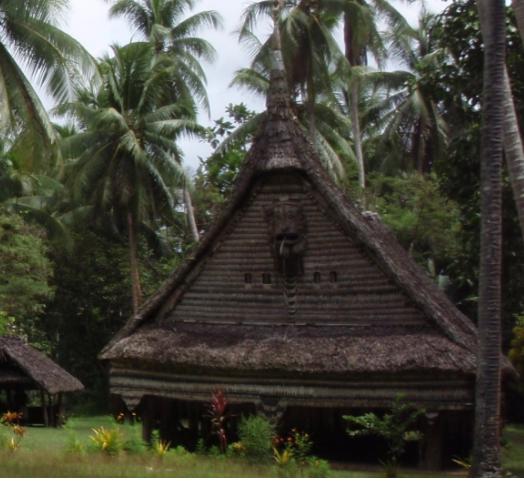
Scale first: 462,840 km² of some of Earth's roughest geography, around 10 million people (the 2024 census counted roughly 10.2 million), more than 850 living languages — the most linguistically diverse country on Earth — and no road between the capital and most of the country. A first trip chooses regions, not sights. Start with the Sepik, PNG's Amazon: a 1,126-km river winding from the central ranges to the Bismarck Sea, lined with villages whose men's spirit houses (haus tambaran) carry the Pacific's most powerful carved art — ancestor figures, crocodile motifs, slit-gong drums — and whose initiation culture marks young men's backs with crocodile-pattern scarification. The middle Sepik villages (Kanganaman, with one of the great haus tambaran; Palimbei; Chambri Lakes) are reached by motor-canoe from Wewak via Pagwi, in multi-day river trips run by specialist operators; the Ambunti Crocodile Festival (usually August) gathers the river's cultures in one town.
Then the islands. New Britain's east end holds Rabaul and Kokopo: a working harbor inside a volcanic caldera, a town destroyed by Tavurvur and Vulcan's 1994 eruption (ash buried Rabaul; the capital moved to Kokopo), Japanese WWII tunnels and barges in the hillsides, a volcano observatory, dolphin-filled Simpson Harbour and some of the country's best war-relic diving. The Trobriand Islands (Kiriwina and its sisters, off the eastern tip) run on a different logic entirely: matrilineal, yam-wealth islands where carved yam houses display the harvest like banks, the Milamala festival season celebrates the yam, and the famous Trobriand cricket (an indigenised, ritualised version of the game with unlimited players and war-dance bowling actions) plays out in the dry months. Milne Bay at the mainland's tail pairs the 1942 battle (the first Japanese land defeat of the war, August–September 1942, around the airstrips at Alotau) with island reefs — Samarai's old trading streets, the d'Entrecasteaux group, and liveaboard diving toward the Louisiades; the Kenu and Kundu Festival (canoes and drums, usually November) is Alotau's gathering.
The Highlands beyond the shows hold the country's deepest surprise: Kuk Early Agricultural Site near Mount Hagen, PNG's only UNESCO World Heritage property (inscribed 2008), where drainage channels in a high-altitude swamp document plant exploitation reaching back about 10,000 years and organized drainage farming by roughly 7,000 years ago — agriculture invented here independently, among the earliest farming landscapes on Earth, still under cultivation as sweet-potato gardens today. Port Moresby's own register completes the first trip: the National Parliament (1984, built in haus tambaran form), the National Museum and Art Gallery, Port Moresby Nature Park, Bomana cemetery, and — for divers — the wrecks and walls off Loloata and the Kimbe Bay reefs of West New Britain (some of the Pacific's richest coral, by liveaboard from Walindi). Bougainville (autonomous since the 2001 peace, 97.7% for independence in the 2019 referendum) is the country's future and its present exception — central Bougainville sits inside the State Department's do-not-travel advice, and the island belongs to a later, carefully advised trip, not this one.
Picture the place
Dawn on the middle Sepik: mist on black water, a canoe sliding past a haus tambaran whose carved gable watches the river, and herons lifting off the bank in silence.
The easily missed detail
Access in PNG is a calendar of charters and cargo runs, and the Sepik is its purest case: there is no road to the middle river — Wewak's flights, then a road to Pagwi, then days by canoe — so the "sight" includes its logistics, and operators build Sepik trips of 5–8 days minimum for good reason. The second detail is the Highlands Highway's lesson in national geometry: the only road spine runs Lae–Hagen–Goroka and never reaches Port Moresby at all (the capital is connected to the rest of PNG by air and sea only), so every region in this answer is a separate flight, a separate plan and a separate security picture — PNG is toured as an archipelago that happens to share an island.
A practical rhythm
- 1 region per week — Sepik, islands or Highlands: depth over the national checklist
- Shows as anchors, villages as substance — Pair any festival with village stays arranged through local operators
- Reef days at the end — Kimbe or Milne Bay diving as the trip's decompression
What could complicate the plan
Every itinerary in PNG is provisional in ways visitors from roaded countries underestimate: domestic flights (Air Niugini and PNG Air) cancel and retime with weather and operational moods; river levels rule the Sepik (too low in late dry season for upper reaches, too wild in the wet); and the Highlands carry the security exclusions already flagged (the FCDO advises against all but essential travel to Hela, Southern Highlands and Enga) plus road journeys that require operator judgement day by day — Hagen and Goroka are visitable inside organized structures; the provinces around them may not be. Small-scale piracy has been reported in waters around Madang and Milne Bay (the State Department names it), so inter-island boating belongs to reputable operators on known routes. Cultural access is negotiated, not purchased off a shelf: haus tambaran are men's sacred houses (entry, photography and women's access follow village rule and your guide's introductions), artefacts are governed by export law (the National Museum clears genuine cultural exports; carved objects bought without papers can be confiscated at Jacksons Airport), and compensation culture (customary payments when disputes arise) is a real feature of travel that good operators manage quietly. Health: malaria is present in lowland PNG year-round (prophylaxis and bite discipline), dengue too, and medical evacuation insurance is as essential here as anywhere in this guide series.
What to do next
Pick 1 region beyond Kokoda — Sepik for culture, New Britain for war-and-reef, Milne Bay for islands — and give it a full week with a PNG Tourism Industry Association operator.
Sources
- UNESCO World Heritage Centre — Kuk Early Agricultural Site (inscribed 2008; drainage agriculture documented over millennia; plant exploitation to about 10,000 years ago)
- PNG Tourism Promotion Authority — the Sepik and haus tambaran culture; the Ambunti Crocodile Festival; the Kenu and Kundu Festival (Alotau); Rabaul/Kokopo and Tavurvur (1994 eruption)
- Historical record — the Battle of Milne Bay (1942); the Trobriand Islands' yam culture and cricket; Bougainville's autonomy and 2019 referendum (97.7%)
- U.S. Department of State — piracy reports around Madang and Milne Bay; central Bougainville exclusion; malaria presence