Papua New Guinea country guide When to visit
When is the best time to visit Papua New Guinea for Kokoda Track?
The short answer
July — the deepest month of the May–October dry season, when the Kokoda Track's river crossings are lowest, its mud is at its most merciful, and the whole country (Highlands shows ahead, calm seas, Port Moresby at its driest) runs on the same calendar: the one season a first PNG trip should be built around.
The answer, with local context
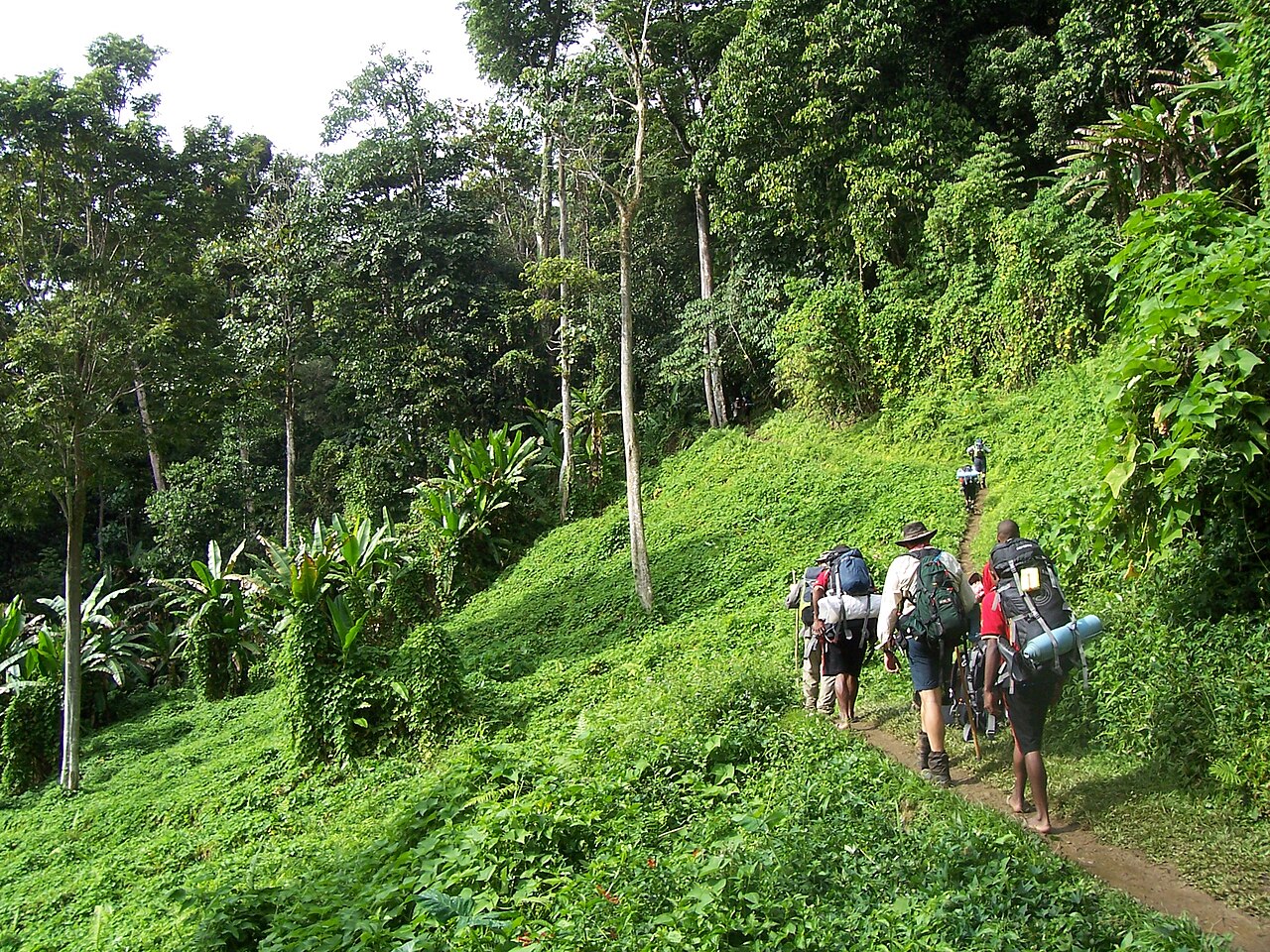
Papua New Guinea's year divides by monsoon, not temperature: the northwest monsoon brings the wet season roughly December to March/April, and the southeast trades bring the dry from about May to October — cool nights in the Highlands (Goroka sits at about 1,600 m, with nights in the 50s°F), hot coasts year-round, and microclimates that swing by valley (Port Moresby is a famously dry enclave at about 1,000 mm a year; Lae, across the mountains, takes some 4,500 mm). The Kokoda season follows the dry exactly: licensed operators run the trek from late April to the end of October, with June–August the most reliable window. The Track itself, in the published record of the Kokoda Track Authority, is 96 km of single-file trail over the Owen Stanley Range from Owers' Corner (about an hour's drive east of Port Moresby) to Kokoda village in Oro Province — over Mount Bellamy at 2,490 m, through Isurava, Brigade Hill and the villages of the 1942 Kokoda campaign, when Australian and Papua New Guinean forces (the carriers remembered as the Fuzzy Wuzzy Angels) fought the Japanese advance to within sight of Port Moresby. The Authority's rules are the answer's MUST-carry facts: every trekker must hold a Kokoda Track Authority trek permit — K350 for international trekkers, usually folded into the trek price — and every trek must be arranged through a licensed tour operator; independent trekking is not permitted, on a trail that crosses customary land the whole way. A guided crossing takes 7–10 days.
July's position mid-season is the point: by July the track has dried from the wet season's damage, bridges and crossings are established, and the trek runs in the year's most predictable weather — while the alternatives bookend it honestly. Late April carries the emotional summit — the Anzac Day (April 25) dawn service at Bomana War Cemetery outside Port Moresby, the largest war cemetery in the Pacific (some 3,800 burials) — but treks then start on a still-wet trail. September is the country's festival crown (the next answer takes it up) and still dry enough to trek. But a warning must share this answer's frame, because it governs all 4 of them: the U.S. State Department rates Papua New Guinea Level 3 — Reconsider Travel (advisory of April 29, 2025) for crime, civil unrest and piracy, advises against travel to central Bougainville and to the Highlands except Mount Hagen and Goroka, and the UK advises against all but essential travel to Hela, Southern Highlands and Enga provinces. Kokoda trekkers go nonetheless — inside licensed operators' security structures, with Port Moresby handled by arrangement — and this guide is written for travelers who proceed on exactly those terms, eyes open. Entry mechanics: passport valid 6 months, onward ticket and proof of funds required; obtain the visa or eVisa in advance through PNG's Immigration and Citizenship Authority, and since October 1, 2025 every traveler also files a free Digital Arrival Card within 72 hours of arrival.
Picture the place
The track at Isurava in July dawn: mist in the kunai grass around the 4 granite pillars of the memorial — Courage, Endurance, Mateship, Sacrifice — and porters' bilums already strung along the trail below.
The easily missed detail
The 96 km is the map distance; the walking is another arithmetic — the trail's cumulative climbs and descents total well over 10,000 m of vertical work across the crossing (every ridge is descended to a creek and climbed again), which is why fit trekkers still take 8 days and why the "shorter" dry-season choice of direction matters: most operators rate Owers' Corner→Kokoda the harder direction (the climbs come late), Kokoda→Owers' the reverse. The second detail is seasonal and lovely: July is also when the track villages' gardens are fullest between harvests — the porters' home tables along the way (kaukau, bananas, pineapple) are at their best exactly when the mud is at its least.
A practical rhythm
- Trek mid-window — July dates with a licensed operator, 8–9 days, permit inside the price
- Port Moresby by arrangement — Bomana and the National Museum on transfer days, never on foot at night
- Buffer days at both ends — Domestic PNG connections forgive nothing; hold 1 spare day before the international flight
What could complicate the plan
The advisory is the headline complication and this guide will not soften it: violent crime (carjacking, armed robbery, sexual assault) is a documented risk in Port Moresby, Lae, Madang, Mount Hagen and Goroka; travel is conducted through operators, hotel vehicles and pre-arranged transfers; walking after dark in towns is against every government's advice; and the Highlands carry episodic tribal fighting that has closed roads and prompted the provincial exclusions listed above — a Goroka or Hagen show trip runs inside a reputable operator's current local knowledge, reviewed the week of travel, not the month of booking. On the track itself: dry season is a relative term (rain falls in July; the mud never fully leaves), river crossings can still close after storms, evacuation from the Owen Stanleys is by charter when weather allows, and malaria prophylaxis is standard advice for the lowland ends. Standard travel insurance may exclude travel against a Level 3 advisory — buy a policy that explicitly covers PNG and trekking to 2,500 m, and read its government-advice clause before paying. Permits, operators and fees also move: the KTA's K350 and licensed-operator rule are the current published position; verify both at booking.
What to do next
Choose a KTA-licensed operator for a July departure, confirm the K350 permit is inside the price, and arrange every Port Moresby movement through the operator before you buy flights.
Sources
- Kokoda Track Authority — the 96 km Owers' Corner–Kokoda record; trek permits (K350 international trekkers); licensed-operator requirement
- U.S. Department of State — Papua New Guinea advisory (Level 3: Reconsider Travel, April 29, 2025; crime, civil unrest, piracy; central Bougainville and Highlands exclusions except Mount Hagen and Goroka); entry requirements (passport 6 months; onward ticket; visa/eVisa in advance)
- UK FCDO — advice against all but essential travel to Hela, Southern Highlands and Enga (except Wabag District); Digital Arrival Card from October 1, 2025
- Commonwealth War Graves Commission — Bomana War Cemetery (some 3,800 burials; the Pacific's largest war cemetery)
- Licensed operator record — trekking season late April–October; Mount Bellamy 2,490 m; 7–10 day crossings