Paraguay country guide Food and drink
What local dishes should I try in Paraguay, and where should I look for them?
The short answer
Chipa, sopa paraguaya (which is not a soup), mbejú and vorí vorí — all washed in tereré, the iced yerba rite UNESCO lists: Paraguay eats from the cassava-and-corn Guaraní base, grilled like Argentina, and drinks its mate cold enough to survive its own summer.
The answer, with local context
The Guaraní foundation is starch and ingenuity: chipa (the ring-shaped cheese bread of cassava starch and cornmeal, sold warm from baskets at every terminal and bus window — chipa Barrero and the Asunción bus terminal's chiperas are institutions; Easter week is its high season, when chipa-making is a national household rite), mbejú (a crisp-edged cassava-starch and cheese flatbread, fried in a pan and folded — breakfast and merienda royalty), chipa guazú (the sweet-savoury corn-and-cheese casserole, asado's obligatory partner) and sopa paraguaya — the country's beloved false friend: not a soup at all but a rich cornmeal, cheese, milk and onion loaf (the legend blames a 19th-century presidential cook who thickened the soup into a cake for Carlos Antonio López; the country kept the name and the cake). Vorí vorí is the soup that is one: a golden chicken broth with little balls of cornmeal and cheese, winter's champion. The grill pillar is asado — Sunday's beef liturgy (Paraguay is cattle country; costilla and vacío off the parrilla, morcilla, mandioca hervida — boiled cassava — as the side) — with river fish (surubí and dorado from the Paraguay and Paraná) grilled or in caldos, and the empanada and milanesa sandwich (lomito completo) as street staples.
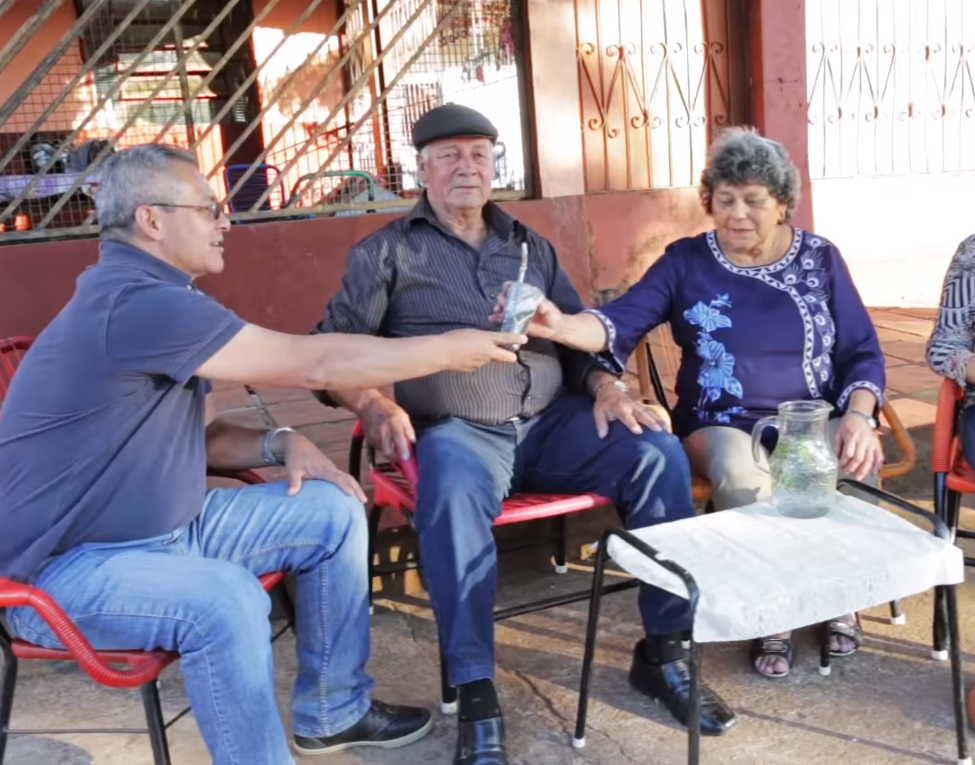
The drink system is the culture: tereré — yerba mate infused in ice water, usually charged with pohã ñana (medicinal herbs pounded fresh at market stalls — burrito, cedrón, mint) and passed in a circle from a shared guampa with its metal bombilla. UNESCO inscribed "the cultural practices and traditional knowledge of tereré in the culture of pohã ñana" on its Intangible Heritage list in 2020 — Paraguay's first ICH entry and the rare drink with a UNESCO citation. Its hot sibling cocido (yerba brewed with milk and burnt sugar) runs mornings. Where: Mercado 4 in Asunción (the vast market whose comedor stalls do the canon cheaply and superbly — chipa guazú, vorí vorí, grilled meats), the Lido Bar (since 1949, facing the Panteón — the classic downtown counter for empanadas and chipa guazú), Bolsi (the 1960-born institution), Ña Eustaquia (traditional Guaraní kitchen), Tierra Colorada (the chef's-table register), Lo de Osvaldo for asado, and everywhere the chiperas pass. In the Chaco, Mennonite kitchens add German-Russian baking and dairy; in Encarnación, the riverfront does chipa and fish.
Picture the place
A Mercado 4 stall at 11 a.m.: a wheel of sopa paraguaya coming out of the oven golden and dense, chipa steaming in a basket by the till, and the stallholder already pouring your tereré refill without asking.
The easily missed detail
Tereré etiquette is a system, and the visitor who learns it is adopted on the spot: 1 person (the cebador) pours and serves each drinker in turn; you drink the whole guampa and hand it back — never pass it on yourself; saying "gracias" means you are finished for good (it is the exit word, not politeness); and the circle is the country's true social network — offices, workshops and bus stops all pause for it around 10 a.m. and 3 p.m. Refusing a first offer is fine; hovering outside the ritual is the only real error. The second detail is breakfast: Paraguay's day often starts with cocido and chipa or mbejú rather than coffee and toast — order accordingly and the mornings taste right.
A practical rhythm
- Mercado 4 lunch — The comedor crawl: vorí vorí, chipa guazú, something grilled
- Tereré at 10 and 3 — Join the circle wherever your day puts you; learn the exit word
- Sunday asado — Lo de Osvaldo or any estancia day: beef, chipa guazú, mandioca
What could complicate the plan
The shared bombilla is tereré's soul and the modern germophobe's dilemma — in the post-2020 years many circles accept a personal cup or a polite first-round-only participation; follow your host's lead rather than announcing rules, and know that declining entirely reads colder here than almost anywhere on Earth. Heat governs appetite: in summer the country's eating shifts (light lunches, late dinners, tereré by the liter) — the winter trip in this guide eats at full power year-round-hours. Vegetarians fare better than the asado myth suggests (the cassava-corn-cheese canon is naturally meatless — chipa, mbejú, chipa guazú, sopa paraguaya — though kitchens cook with lard and beef stock at times; ask). Guaraní-only menus in the countryside and Spanish in the cities mean food Spanish earns its keep; chipa from bus-window chiperas is safe, hot and glorious, while market hygiene is the usual busy-stall rule (hot, fresh, high turnover). River fish carries a mercury-and-season note (dorado has closed seasons — restaurants know; surubí is the reliable order).
What to do next
Lunch once at Mercado 4 and once at the Lido Bar, buy chipa from a terminal chipera, and never say gracias in a tereré circle until you mean it.
Sources
- UNESCO Intangible Cultural Heritage — Tereré in the culture of Pohã Ñana, Guaraní ancestral drink (inscribed 2020)
- Paraguayan culinary record — chipa; sopa paraguaya; mbejú; chipa guazú; vorí vorí; the asado canon; the Carlos Antonio López soup legend
- Asunción listings — Mercado 4 comedor stalls; Lido Bar (since 1949); Bolsi; Ña Eustaquia; Tierra Colorada; Lo de Osvaldo
- SENATUR — chipera traditions; Encarnación's riverfront; Mennonite kitchens of the Chaco colonies