Penang / Malaysia When to visit
When should I visit Penang, Malaysia, for the best experience?
The short answer
January — the driest month in George Town's WMO climate normals, when the old town's streets, Penang Hill and the festival calendar all work at once.
The answer, with local context
Penang never cools down; what changes is the rain. George Town's 1991–2020 normals, kept by the World Meteorological Organization for the Penang airport station, record January as the driest month of the year at 3.16 inches (80.3 mm) of rain spread over about 6.8 wet days, against an annual total of 91.8 inches (2,331 mm). October is the mirror image: 13.25 inches (336.6 mm) falling on 18.3 days, when the inter-monsoon downpours flood low streets in the heritage zone and turn afternoon sightseeing into café time. Temperatures barely move between those extremes — January afternoons average about 89°F (31.6°C) with nights near 76°F (24.4°C), and even March, the warmest month, only adds a couple of degrees — so the calendar decision in Penang is purely about water, not heat.
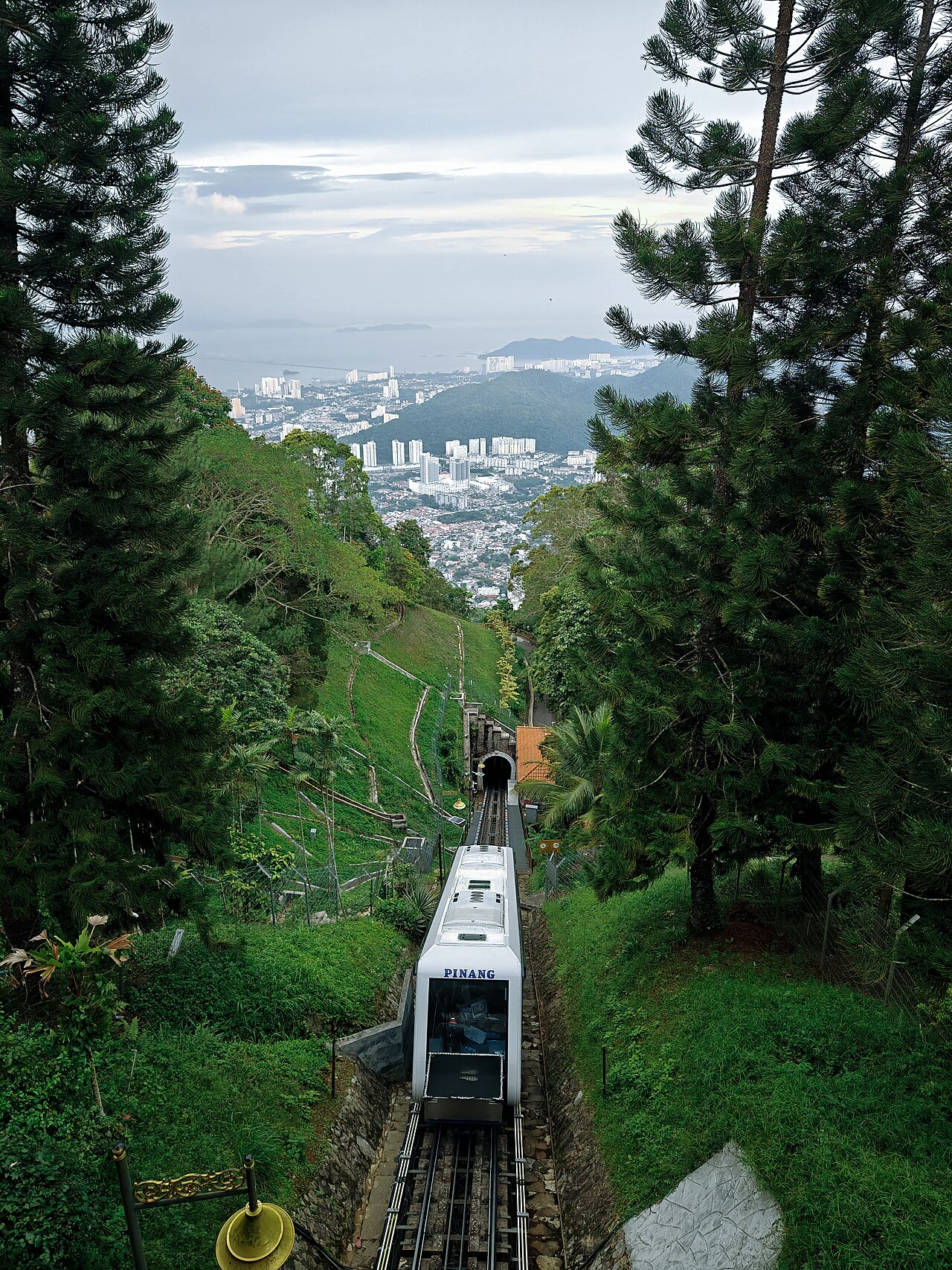
January is also when the island performs. In most years the month catches either Thaipusam, when the silver chariot procession climbs toward the Waterfall Hilltop Temple and devotees carry kavadis through George Town's streets, or the run-up to Chinese New Year, when Kek Lok Si Temple in Air Itam switches on its annual display of lights and the complex glows on its hillside for roughly a month of evenings. The northeast monsoon's dry window, roughly December to March, is also when the sea off Batu Ferringhi is at its calmest and when Penang Hill earns its keep: the funicular, running since October 1923 up a 1.24-mile (1,996 m) track, lifts visitors to a ridge whose highest point, Western Hill, stands 2,733 feet (833 m) above the strait, where the air runs noticeably cooler than the streets below and the view back over George Town is at its clearest of the year.
The honest cost of January is that everyone else has read the same chart. It is peak season: heritage hotels inside the World Heritage zone — George Town was inscribed with Melaka in 2008 under criteria (ii), (iii) and (iv) as a historic city of the Straits of Malacca — charge their top rates, the famous hawker stalls draw their longest queues, and weekends bring domestic visitors up from Kuala Lumpur. Travelers who trade a little rain for relief should aim at the shoulders of the dry window — December, before the holiday peak, or March, accepting about 5.7 inches (145.5 mm) of rain for thinner crowds. What no month offers is cool weather; Penang's gift in January is simply the highest number of fully usable days.
Picture the place
On a January morning the five-foot ways of Armenian Street are dry and sun-striped, the clan-house roofs throw hard shadows, and the whole old town smells of charcoal smoke and kopi before the day's heat settles in.
The easily missed detail
Penang's rain is convective, not frontal: outside the wettest weeks, a "rainy season" day usually means one violent afternoon burst rather than a washed-out day, which is why locals plan sightseeing for the morning and treat the downpour as a lunch break rather than a cancellation. Judging Penang by monthly totals alone overstates how much weather actually interferes.
A practical rhythm
- Mornings outside — Walk the heritage core and ride up Penang Hill before noon, when streets are driest and the summit view is sharpest.
- Afternoons at tables — Put the hawker circuit and the mansion tours in the hot, possibly wet middle of the day, under cover.
- Evenings for festivals — Keep nights loose in January for the Kek Lok Si lights or a Thaipusam procession, which are scheduled after dark and cannot be moved.
What could complicate the plan
Chinese New Year, which lands in late January or February, closes many family-run stalls and shophouses for several days at exactly the moment the weather is best — the town is festive but some famous kitchens go dark. Haze from regional burning can drift over the strait in the dry months of some years and dull the hill views. And January's popularity means the Penang Hill funicular queues at weekends can stretch past an hour unless the first cars of the morning are taken.
What to do next
Book a George Town heritage-zone hotel for January, and read the next answer to order the sights — the UNESCO core first, the hill and temples around it.
Sources
- World Meteorological Organization — the 1991–2020 climate normals for the Penang/Bayan Lepas station: January the driest month at 80.3 mm over 6.8 rain days, October the wettest at 336.6 mm over 18.3, annual rainfall 2,331 mm, January highs near 31.6°C
- UNESCO World Heritage Centre — Melaka and George Town, Historic Cities of the Straits of Malacca, inscribed under criteria (ii), (iii) and (iv) by decision 32COM 8B.25 in 2008
- Penang Hill Corporation — the funicular operating since October 1923, its 1,996 m track among the longest in Asia, and Western Hill at 833 m as the island's highest point
- Kek Lok Si Temple, Air Itam — the temple's annual Chinese New Year display of lights running for about a month of evenings