Porto / Portugal Food and drink
Where should I eat in Porto, and which local food or drink is worth trying?
The short answer
Order tripas à moda do Porto and a francesinha in the city, and taste Port on the Vila Nova de Gaia bank — the fortified wine is a legally demarcated product of the Douro region, regulated by the Instituto dos Vinhos do Douro e do Porto under Portuguese Decree-Law No. 173/2009.
The answer, with local context
Porto's two signature dishes are both the opposite of light. Tripas à moda do Porto is a slow stew of tripe with white beans, cured pork, carrot and cumin — a dish so identified with the city that its inhabitants are nicknamed tripeiros, tripe-eaters. The francesinha is a layered sandwich of bread, steak or ham and sausage, covered in melted cheese and then flooded with a dark beer-and-tomato sauce, usually with a fried egg and a mound of chips. Neither is a tourist invention; both belong to the working city rather than the riverside terraces.
Behind them sits the cod tradition. Bacalhau — salt cod, rehydrated and then baked, shredded or fried — is the national preserve, and in the north it appears in versions built on potato, onion and egg. Alongside it the bifana, a thin pork cutlet in a roll with garlic and bay, is the cheap standing lunch, and the pastel de nata is the custard tart that closes almost any meal.
Port itself is the reason Porto's name travels. The wine is made from grapes grown in the demarcated Douro region inland and brought downriver, and Portuguese law places its regulation, certification and the control of its designations of origin with the Instituto dos Vinhos do Douro e do Porto, the body restructured by Decree-Law No. 173/2009 published in the Diário da República. The lodges where the wine is aged sit on the Vila Nova de Gaia bank, the same side of the river as the Monastery of Serra do Pilar, which is itself named in Porto's World Heritage inscription. Upriver, the Alto Douro Wine Region is a separate UNESCO World Heritage cultural landscape — terraced vineyards cut into schist slopes above the river.
Picture the place
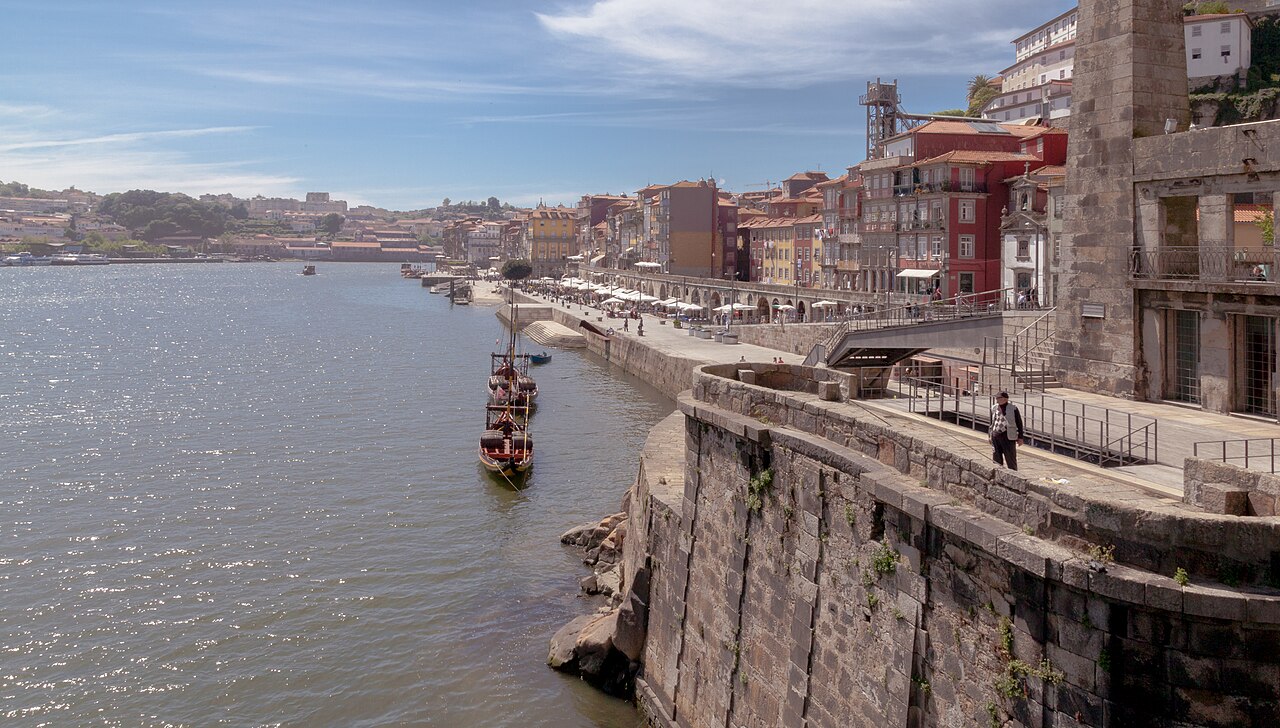
The Gaia bank is a wall of lodge buildings facing the city across the water, their company names painted large on the roofs and river-facing walls so they could be read from the Porto side. Inside, the ageing halls are cool and dim with rows of wooden casks; outside, the quay is at water level and the terraces climb behind it.
The easily missed detail
Gaia is a different municipality, not a district of Porto, and the distinction is the reason the lodges are there. Historically the aged and blended Port was held on the south bank while the trade was conducted from the north, which is why "Porto" wine is matured in Vila Nova de Gaia. For a visitor it means the tasting half of the day happens across the bridge from the eating half — and the upper deck of the Luiz I Bridge, named in the World Heritage listing, is the direct walking route between them.
A practical rhythm
- Midday, Porto bank — Bifana or bacalhau as a working lunch, where the city eats rather than where the river views are.
- Afternoon, Gaia bank — Lodge tastings, with the Monastery of Serra do Pilar above them for the view back across.
- Evening, Porto bank — Tripas à moda do Porto or a francesinha. Both are substantial enough to be the only course.
What could complicate the plan
The climate explains why the eating season is not the same as the sightseeing season: IPMA's Porto normals put 5.94 inches (151.0 mm) of rain into January across 12.8 wet days, and the Gaia quay and the bridge crossing are both fully exposed. Porto's annual mean daily maximum of 66.7°F (19.3°C) means there is no month too hot for tripe stew, but plenty too wet for an open-air lunch. The lodges on the Gaia side keep their own hours and most require booked tasting slots in the busy months. Tripas à moda do Porto is also a dish many visitors order once and do not finish — it is genuinely offal-forward, and the francesinha is the safer first choice for anyone unsure.
What to do next
Read the Porto when-to-visit answer in this group for the full monthly rainfall picture, and the Porto things-to-do answer for the walking route through the inscribed historic center that links the two banks.
Sources
- Diário da República (Government of Portugal) — Decree-Law No. 173/2009 establishing the remit of the Instituto dos Vinhos do Douro e do Porto over the Douro demarcated region and the Port designation of origin
- UNESCO World Heritage Centre — inclusion of the Monastery of Serra do Pilar and the Luiz I Bridge in the Porto World Heritage property, and the city's river-oriented commercial history
- Instituto Português do Mar e da Atmosfera (IPMA) — January precipitation and rain-day normals, annual mean daily maximum temperature