Qatar country guide Food and drink
What local dishes should I try in Qatar, and where should I look for them?
The short answer
Machboos, the saffron-and-lime rice that anchors every Qatari table, then the Ramadan pair of harees and thareed, luqaimat in date syrup for sweet, and a glass of karak — eaten in Souq Waqif, the fishing towns and the country's cafeterias rather than its hotel dining rooms.
The answer, with local context
Qatari cooking is Gulf cooking built from three cupboards: the rice sack, the spice box and the sea. The spice box has a name — bezar, a toasted, ground blend of cumin, coriander, cinnamon, cardamom, black pepper, turmeric, fennel and dried chili that seasons almost everything. At the center stands machboos, Qatar's national dish: basmati rice cooked in spiced stock with lamb, chicken or fish until it takes the bezar's deep color, sharpened with loomi, the dried black lime that gives Gulf rice its smoky sourness, and served on a communal platter with the meat arranged on top. The fish version, made with hamour, the Gulf's prized grouper, is the one to order in the coastal towns — Al Wakrah and Al Khor, whose fish markets land the catch that Doha's restaurants buy. Friday lunch is machboos's home fixture, eaten communally after prayers.
The older dishes run softer and slower. Harees beats cracked wheat and meat together into a smooth porridge finished with ghee; thareed soaks crisp regag bread in a lamb and vegetable stew until the bread carries the sauce; madrouba mashes rice, chicken and spices into a spiced porridge of its own. All three belong to Ramadan's iftar table and to home kitchens more than to restaurants, which is why a winter trip that overlaps the holy month, or a heritage restaurant in Souq Waqif that keeps them on the menu, is the visitor's opening. Breakfast reverses the palate: balaleet, sweet saffron vermicelli under a thin omelet, eaten with chebab pancakes and date syrup. The sweet to hunt at any season is luqaimat — crisp fried dumplings drowned in dibs, date syrup, or saffron-cardamom sugar syrup — sold hot from stalls in Souq Waqif, where the annual Local Dates Festival also celebrates the country's own date harvest.
Drink runs on two tracks. Gahwa, the pale cardamom coffee poured from a dallah into handleless cups with dates on the side, is the hospitality ritual — Qatar was one of the four states that inscribed Arabic coffee on UNESCO's Intangible Cultural Heritage list in 2015, and the cup is refilled until the guest shakes it empty. The everyday fuel, though, is karak: strong black tea boiled down with evaporated milk, sugar and cardamom, a legacy of the South Asian workers who built modern Qatar, sold for small change at cafeterias and drive-through windows in every town in the country. A road trip north to Zubarah that does not stop for karak at a highway cafeteria has missed the national rite of the road.
Picture the place
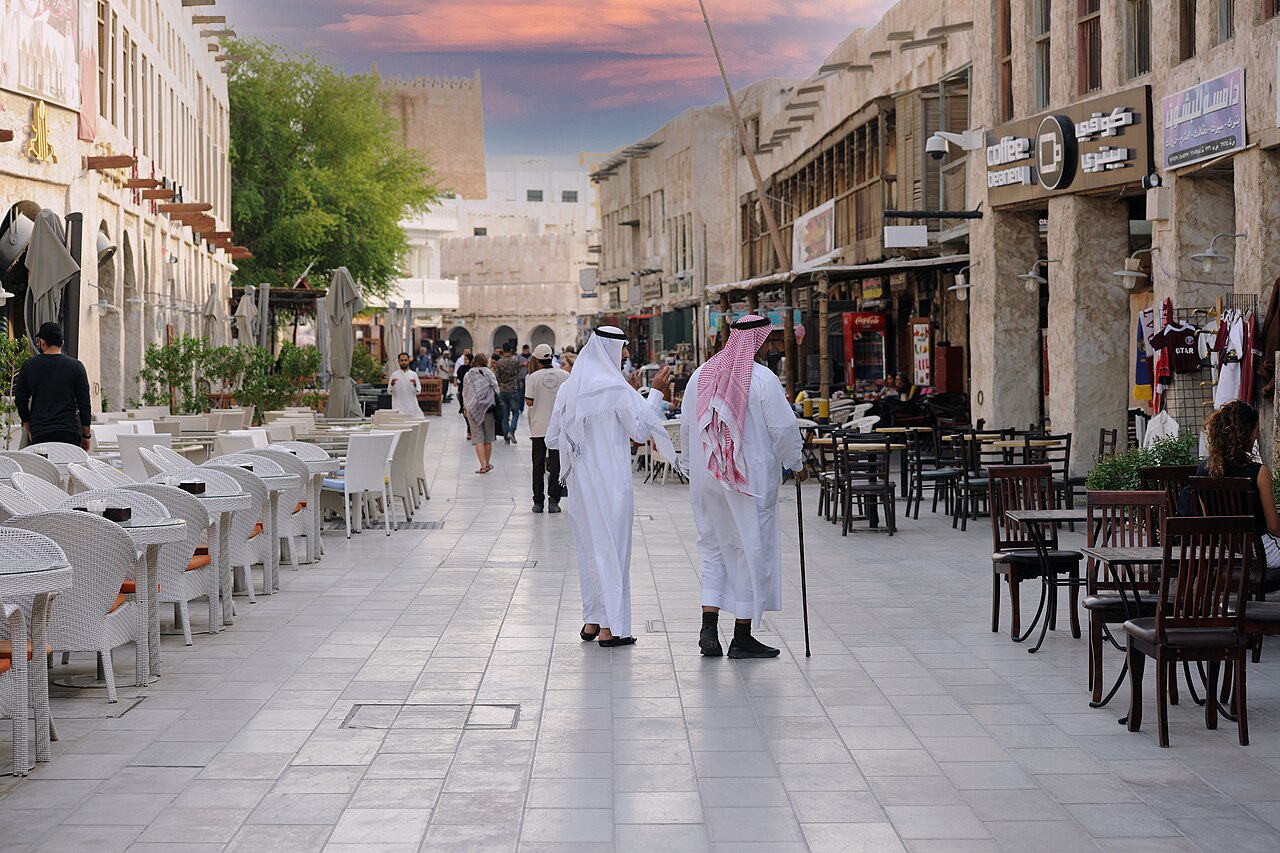
In Souq Waqif at night the luqaimat fryer works a cauldron of oil with a slotted spoon, dumplings rising gold in batches, tipped straight into syrup while the queue holds out paper trays and the air smells of cardamom and hot sugar.
The easily missed detail
The dallah pour is a conversation with its own grammar: the server stands, pours a third of a cup, and keeps refilling while the guest drinks; the signal that you have finished is to shake the empty cup side to side as you hand it back. Accepting endless refills by simply holding the cup still is how visitors end up drinking six coffees at a five-minute stop.
A practical rhythm
- Friday lunch — Machboos in company, at a Qatari kitchen in Souq Waqif or Msheireb, when the dish is cooked for the week's main gathering.
- Coastal detour — Fish machboos or grilled hamour in Al Wakrah or Al Khor, beside the market that landed it.
- Evening sweet — Luqaimat and karak as a walking dessert through Souq Waqif after dark, when both stalls and tea windows are open.
What could complicate the plan
True home dishes — harees, thareed, madrouba — are seasonal and domestic; outside Ramadan they appear on heritage menus rather than everywhere, so expectations should be set by the calendar. Alcohol is served only inside licensed hotel venues, which shapes where a celebratory dinner can happen at all. And in Ramadan the daytime city fasts: the great food of the year exists, abundantly, but only after sunset, and booking iftar in the souq becomes its own small competition.
What to do next
Eat the canon in this order — cafeteria karak, souq luqaimat, Friday machboos, one coastal fish lunch — and use the planning answer next to build the days around those tables.
Sources
- UNESCO Intangible Cultural Heritage — Arabic coffee, a symbol of generosity, inscribed 2015 by Qatar with Saudi Arabia, the United Arab Emirates and Oman
- Qatari culinary tradition — machboos as the national dish seasoned with bezar and loomi; harees, thareed and madrouba as Ramadan staples; balaleet as the sweet breakfast
- Souq Waqif, Doha — luqaimat stalls and the annual Local Dates Festival celebrating the Qatari date harvest