Qatar country guide When to visit
When is the best time to visit Qatar for Doha?
The short answer
February — Doha sits at 74°F (23°C) under dry winter sun, the whole country from the Inland Sea to the northern mangroves is in season, and the summer that makes Qatar one of the hottest inhabited places on earth is still months away.
The answer, with local context
Qatar's year divides brutally. The Qatar Meteorology Department's long-term normals for Doha give February an average high of 74.1°F (23.4°C) and a low of 57.7°F (14.4°C); July averages 107.4°F (41.9°C) by day, the national record stands at 122.7°F (50.4°C), set in July 2010, and the law itself concedes the season — outdoor work is banned between 11:30 a.m. and 3:00 p.m. from June 1 to September 15. Rain is a rounding error: 2.96 inches (75.2 mm) in a whole year, with February, the wettest month, managing 0.67 inches (17.1 mm) across about two days. The traveling season is therefore November to March, and February is its center of gravity — warm enough for the Corniche and the sea, cool enough for full days in the desert.
The anchor city shows why the month matters. In February, Doha's 4.3-mile (7 km) Corniche can be walked end to end, from the Museum of Islamic Art's island to West Bay, in the middle of the day; the dhow harbor is busy, Souq Waqif's lanes fill from morning rather than only after dark, and the winter event calendar — food festivals, the Web Summit, jewellery and design exhibitions — runs at full strength. The same month unlocks the country behind the capital: the camel-racing season at Al Shahaniya is in its Friday rhythm, the Al Thakira mangroves near Al Khor hold their wintering flamingos, and the Inland Sea's dunes can be camped on without the night staying hot. Qatar also carries exactly one UNESCO World Heritage inscription — Al Zubarah, listed in 2013 — and February is when that open, shadeless archaeological site on the northwest coast is genuinely pleasant to walk.
The season has two honest exceptions, and both are worth naming. The whale sharks that gather in the Al Shaheen field off the north coast — one of the largest aggregations on earth — are a May-to-October phenomenon, so February's traveler trades them away entirely. And Qatar National Day, December 18, with its Corniche parades and fireworks, belongs to the month before; a December trip runs slightly cooler and noticeably more patriotic. Neither changes the verdict for a first visit built around Doha: February is the month when the capital, the desert and the north coast all say yes at once.
Picture the place
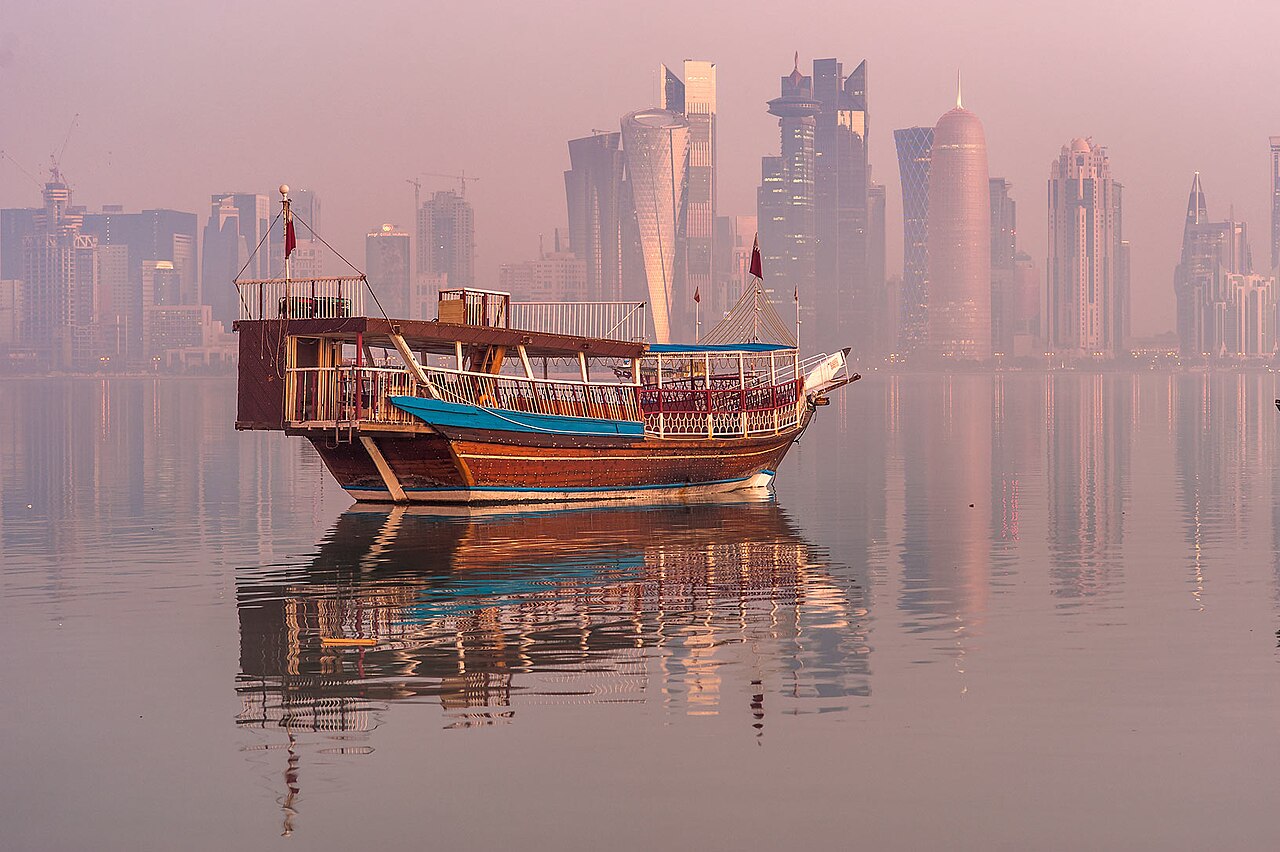
On a February evening the Corniche promenade is full of families, the dhows in the harbor are strung with lights, and across the black water the West Bay towers burn against a sky that stayed blue and mild all day.
The easily missed detail
February is Doha's fog season as much as its sun season: warm Gulf water under cool night air regularly wraps the coast in early-morning fog that can erase the skyline until mid-morning. Photographers should schedule the skyline for late afternoon, and anyone with an early desert departure should expect the first hour to be driven through white air.
A practical rhythm
- Days outdoors — Give February's middays to the Corniche, the souq and the desert, the hours summer reserves for malls and museums.
- One northern day — Al Zubarah and the mangroves while the heat allows a full day in the open north.
- Evenings in the souq — Souq Waqif after dark, when the lanes, the falcon shops and the restaurant courtyards all peak together.
What could complicate the plan
Ramadan moves about eleven days earlier each year and periodically lands inside the winter window, quieting daytime cafés and shifting the country's life to the night — glorious after dark, but a real constraint on daytime eating. Shamal winds can blow dust across the peninsula for a day or two in late winter, grounding the views and gritting the desert trips. February is also peak pricing: the same events calendar that fills the city fills its hotels, and the best desert camps at the Inland Sea book out on weekends.
What to do next
Lock February flights into Doha, and use the next answer to range beyond the capital — Qatar's best sights are deliberately scattered to its four corners.
Sources
- Qatar Meteorology Department climate normals for Doha — February high 23.4°C and low 14.4°C, July high 41.9°C, annual rainfall 75.2 mm with February the wettest month at 17.1 mm, and the national record of 50.4°C in July 2010
- State of Qatar labour regulations — the ban on outdoor work from 11:30 a.m. to 3:00 p.m. between June 1 and September 15
- UNESCO World Heritage Centre — Al Zubarah Archaeological Site, inscribed 2013, Qatar's sole World Heritage property