Rio de Janeiro / Brazil Things to do
What are the most worthwhile things to do in Rio de Janeiro on a first visit?
The short answer
Do the two summits first — Christ the Redeemer by the 1884 cog railway and Sugarloaf by its 1912 cable car — then read the city through its listings: the UNESCO Carioca Landscapes, the Maracanã, the Selarón Steps, and the Valongo Wharf, where close to a million enslaved Africans were landed.
The answer, with local context
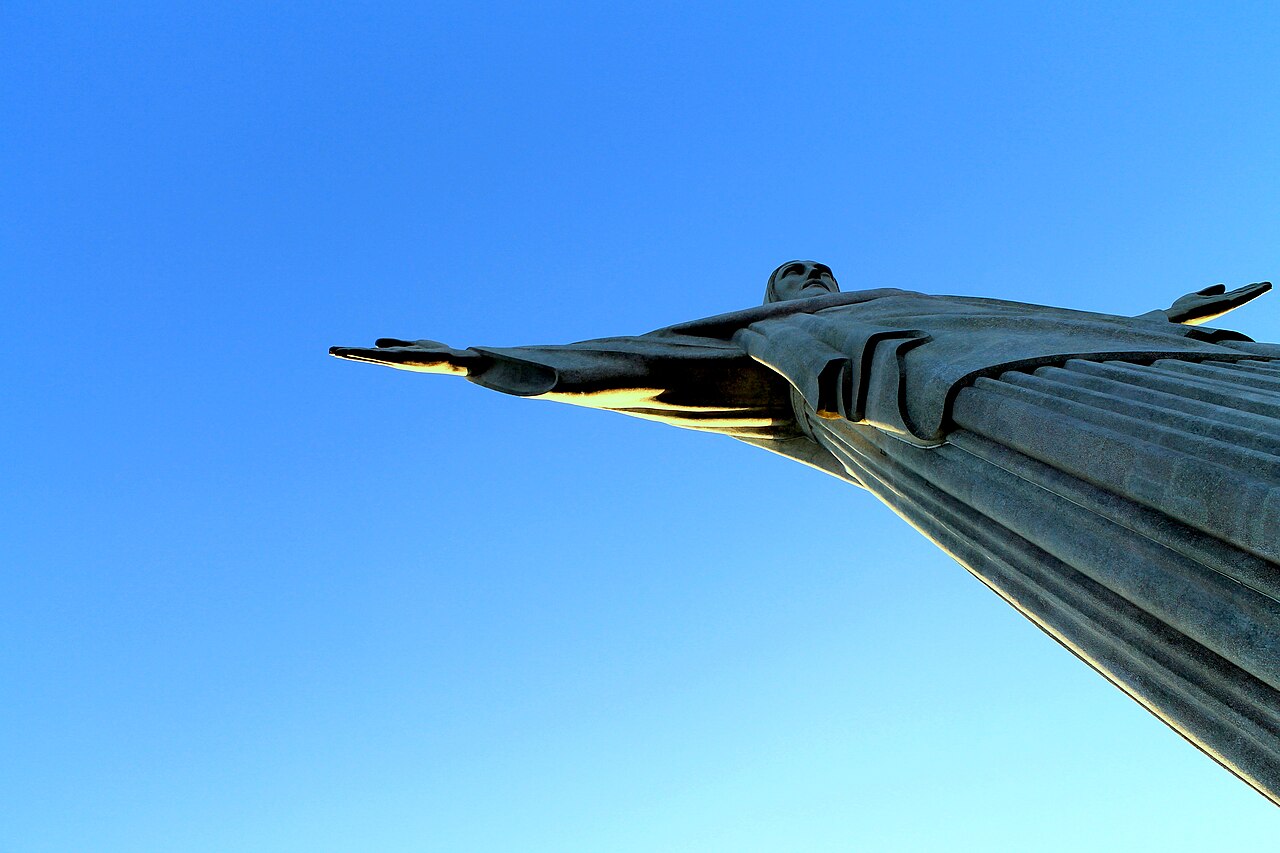
Rio is a UNESCO World Heritage site as a whole composition — in 2012 the "Carioca Landscapes between the Mountain and the Sea" became the first urban cultural landscape inscribed — and the first visit should follow its logic from the top down. On Corcovado, 2,329 feet (710 m) above the bay, Christ the Redeemer spreads arms 92 feet (28 m) wide: the Art Deco statue stands 98 feet (30 m) tall on its 26-foot (8 m) pedestal, 125 feet (38 m) and 635 tons in all, built between 1922 and 1931 to designs by the engineer Heitor da Silva Costa and the sculptor Paul Landowski, and inaugurated on October 12, 1931. The way up is half the monument: the Corcovado cog railway, opened in 1884 under Emperor Pedro II and electrified in 1910, climbs 2.4 miles (3.8 km) through Tijuca forest in about 20 minutes — it hauled the statue's own materials to the summit. In 2007 the statue was named one of the New7Wonders of the World, a popular vote that merely confirmed the obvious.
Sugarloaf answers from the water's edge: the granite dome of 1,299 feet (396 m) at the mouth of Guanabara Bay, reached by a cable car opened in 1912 — the first in Brazil and only the third in the world — running in two stages, from Praia Vermelha to Morro da Urca at 722 feet (220 m) and on to the summit. Between the icons sits the working city. The Maracanã, opened on June 16, 1950, holds football's most unbreakable record: 199,854 spectators at the deciding match of the 1950 World Cup on July 16, when Uruguay beat Brazil 2–1 in the silence Brazilians still call the Maracanaço; today's stadium seats 78,838, hosted the 2014 World Cup final and the 2016 Olympic ceremonies, and saw Pelé score his 1,000th career goal in 1969. In Lapa, the Chilean artist Jorge Selarón spent from 1990 until his death in 2013 tiling the 215 steps to Santa Teresa with more than 2,000 tiles collected from over 60 countries — a staircase that is also an autobiography. And in the port zone, the Valongo Wharf, UNESCO-listed in 2017, preserves the stone landing where close to a million enslaved Africans arrived — the largest slave port in the Americas, and the necessary counterweight to every postcard in this answer. The Botanical Garden, founded in 1808 by King João VI, and the beaches themselves — Copacabana's 2.5-mile (4 km) crescent under its wave-pattern promenade, designed by Roberto Burle Marx — fill the hours between.
Picture the place
At the top of the Selarón Steps the city sorts itself into sound: samba from a Lapa bar below, the Santa Teresa tram's bell above, and on the steps a mosaic river of red — Selarón's chosen color — running down through tiles from sixty countries, each one somebody's journey poured in ceramic.
The easily missed detail
The Christ was almost French in more than design: Landowski's head and hands were modeled in Paris, cast in sections, shipped across the Atlantic and hauled up the mountain on the little cog railway, then clad on site in thousands of small triangular soapstone tiles, applied by hand — the statue's soft, matte glow is a mosaic, not a surface, which is why its fingertips and head, struck by lightning several times a year, can be repaired tile by tile.
A practical rhythm
- Morning — Summits in the morning, always: take the first cog trains up Corcovado while the summit is clear, and do Sugarloaf on a separate morning rather than stacking the two views into one hazy race.
- Midday — The center in the middle of the day: Valongo and the port zone, the grand cafés of Rua Gonçalves Dias, the Botanical Garden's shade — the historic city is a working-hours city and rewards a weekday.
- Evening — The shore takes the evening: sunset from Arpoador or the Sugarloaf descent, then the botecos and the samba of Lapa, with the Selarón Steps lamplit on the way between them.
What could complicate the plan
Both summits are weather-hostage: Corcovado's platform can sit in cloud while the beaches bake, and tickets sold days ahead cannot be re-rolled for a clear morning — leave a spare day at the trip's end as insurance. The Maracanã's tour schedule yields to its match calendar, and on game days the neighborhood becomes a river of fans. Finally, the first-visit list is long and the city is large: the port zone, Lapa and the South Zone beaches are three separate geographies, and trying to thread them in one day turns Rio into transit.
What to do next
Book the Corcovado train for your first morning, Sugarloaf for the second, and give the third day to the center — Valongo, the cafés, the steps — so the city reads as history and not only as scenery.
Sources
- UNESCO World Heritage Centre — "Rio de Janeiro: Carioca Landscapes between the Mountain and the Sea," inscribed 2012 as the first urban cultural landscape; Valongo Wharf Archaeological Site, inscribed 2017, the landing point for close to a million enslaved Africans
- Trem do Corcovado — the cog railway opened in 1884, electrified in 1910, climbing 2.4 miles (3.8 km) in about 20 minutes; the monument's dimensions (98-foot / 30 m statue on a 26-foot / 8 m pedestal; 92-foot / 28 m arm span) and inauguration on October 12, 1931
- Bondinho Pão de Açúcar — the Sugarloaf cable car, opened in 1912 as Brazil's first and the world's third, in two stages via Morro da Urca to the 1,299-foot (396 m) summit
- FIFA / Maracanã official records — the stadium's opening on June 16, 1950; the record crowd of 199,854 on July 16, 1950; present capacity 78,838; Pelé's 1,000th goal, 1969