Rio de Janeiro / Brazil When to visit
When should I visit Rio de Janeiro, Brazil, for the best experience?
The short answer
May — the rains have drained out of the year, the sea is still warm from the summer, the highs sit at a humane 82°F (27.8°C), and both of Rio's crowd machines, Carnival and New Year's Eve, are months away in either direction.
The answer, with local context
Rio's seasons are decided by rain, not temperature, and INMET's climate normals for the city-center station lay the pattern out plainly. February is the furnace: a mean high of 90°F (32.2°C). January is the deluge: 5.40 inches (137.1 mm) of rain across 11 rainy days. Between December and March the city collects roughly half of its 42.1 inches (1,069.4 mm) of annual rain, in the violent afternoon storms of the southern summer. Then the tap closes. By May the monthly rain has fallen to 2.75 inches (69.8 mm) over just six rainy days, the mean high has eased to 82°F (27.8°C), and even July — the driest month at 1.65 inches (41.9 mm) and four rainy days — shows what the dry season is building toward, at a cooler 79°F (26.4°C). No month of the year has a mean low below 66°F (18.7°C): this is a city that is never cold, only wetter or drier.
What May adds to dry is the sea. Rio's water peaks at 79°F (26°C) in February and March and slides to 72°F (22°C) from July to October; in May it is still holding the summer's warmth, swimmable in the way Cariocas mean it. The forest trails to Corcovado and the Gávea rock run firm instead of slick, the views from the two great summits — statistically clouded and storm-washed all summer — come into their clear season, and the beach neighborhoods settle into their local rhythm between the holiday tides.
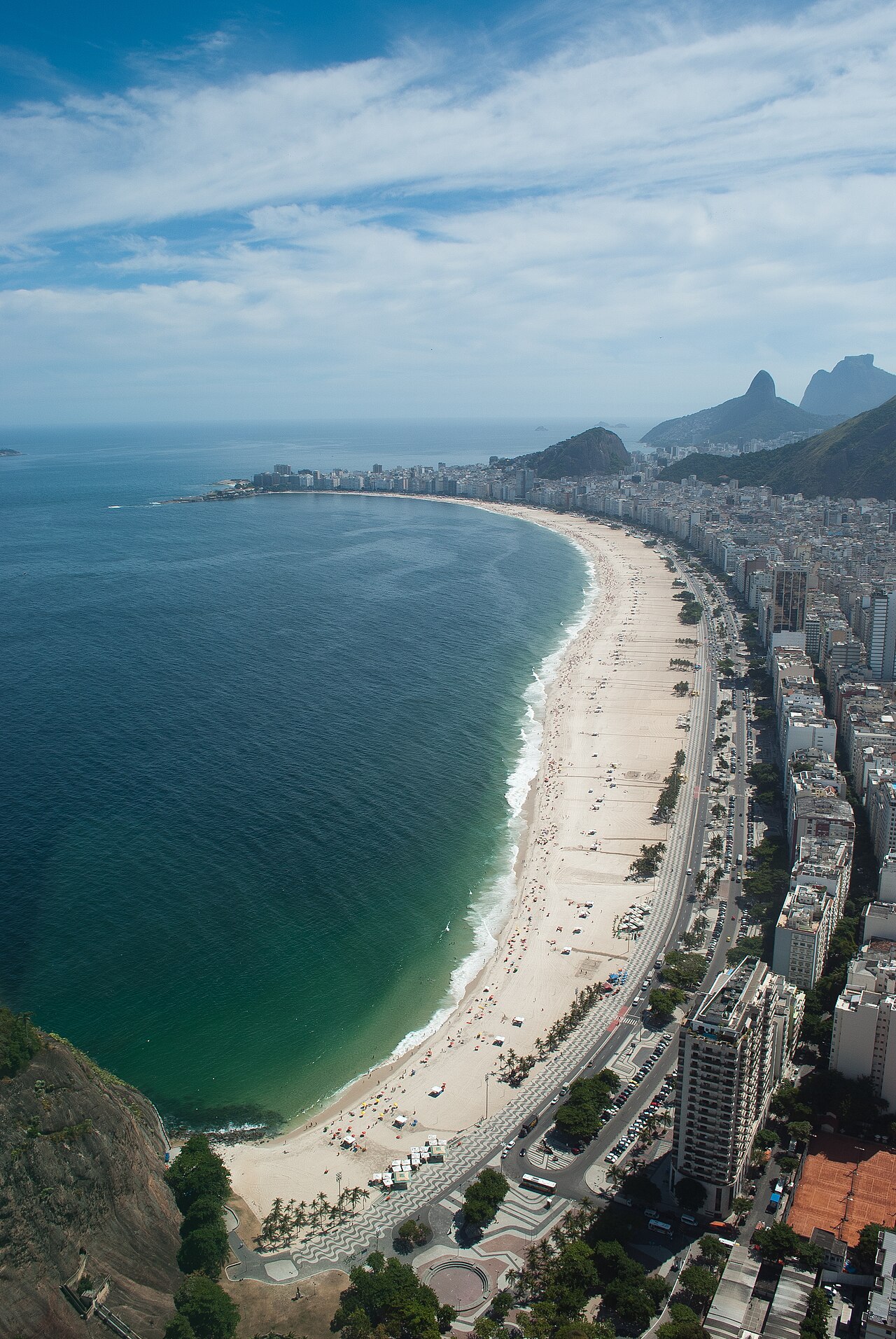
The trade is explicit: May contains neither of the city's two world-famous dates. Carnival belongs to February or early March — LIESA, the samba-school league, lists the 2027 Sambadrome parades for February 7–9 — and Réveillon, the New Year, packs Copacabana beach with an estimated 2.5 million people in white on December 31. If either spectacle is the point of the trip, go then and pay its prices and weather gladly. For the city itself — the summits, the beaches, the old center, the botecos — May is the connoisseur's month, and September, this library's Brazil-wide pick, is its spring mirror.
Picture the place
From the Arpoador rock at the end of Ipanema on a May evening the light does the whole show: the Two Brothers peaks darkening over Leblon, the surfers holding for the last set in bronze water, the beach lamps coming on along a shore that — for once in the year — belongs mostly to the people who live beside it.
The easily missed detail
Rio's "winter" is a fiction of the calendar, and its own records prove it: the coldest mean low of the year is 66°F (18.7°C), in July, while the city's real seasonal hazards are hydrological — the 24-hour rainfall record, 13.76 inches (349.4 mm), was set on February 26, 1971, in high summer. Travelers pack for the wrong season twice over when they fear a Rio winter and shrug at a Rio February.
A practical rhythm
- Morning — Dry-season mornings are the summit window: Corcovado and Sugarloaf before the day's haze and the tour buses, while the light is still raking across the bay.
- Midday — Midday belongs to the shaded city: the historic center's museums and grand cafés, the Botanical Garden's palm avenues, and lunch — always lunch — as the main meal, the way Rio itself eats.
- Evening — May evenings cool to the high 60s Fahrenheit (around 20°C): the boteco hour stretches long, the samba circles in Lapa and Pedra do Sal fill their squares, and a light layer replaces the summer's surrender to air conditioning.
What could complicate the plan
The summer alternative carries a documented risk beyond crowds: December to March is the flood-and-landslide season in a city of steep granite, and a single storm can close roads, trails and the Corcovado railway — build slack into any summer itinerary. Carnival and Réveillon multiply hotel rates and demand booking months out, with minimum stays imposed across the beach districts. And May itself has one honest lack: the cultural calendar idles between the two great festivals, so travelers who want a Rio in full ceremonial dress should choose the spectacle months instead and accept their weather.
What to do next
Book May, take a beach-district base in Ipanema or Leblon, and put both summit trips in the first clear mornings — then let the rest of the trip run at the pace the season invites.
Sources
- INMET (Instituto Nacional de Meteorologia), Rio de Janeiro station 83743 normals — February mean high 90°F (32.2°C); rainfall from 5.40 inches (137.1 mm) in January to 1.65 inches (41.9 mm) in July; May at 2.75 inches (69.8 mm) over six rainy days; annual total 42.1 inches (1,069.4 mm), about half falling December to March; the 24-hour record of 13.76 inches (349.4 mm) on February 26, 1971
- LIESA (Liga Independente das Escolas de Samba) — the 2027 Sambadrome parade dates listed for February 7–9
- Prefeitura do Rio / Riotur — Réveillon on Copacabana beach drawing an estimated 2.5 million people each December 31