Russia country guide Food and drink
What local dishes should I try in Russia, and where should I look for them?
The short answer
Pelmeni with smetana, the soup liturgy (shchi, solyanka, ukha), blini with caviar, beef Stroganoff and Olivier in their Moscow birthplaces, shashlik in the Caucasus tradition, stroganina in Yakutia and omul at Baikal — a continental table read through stolovayas, markets and regional capitals.
The answer, with local context
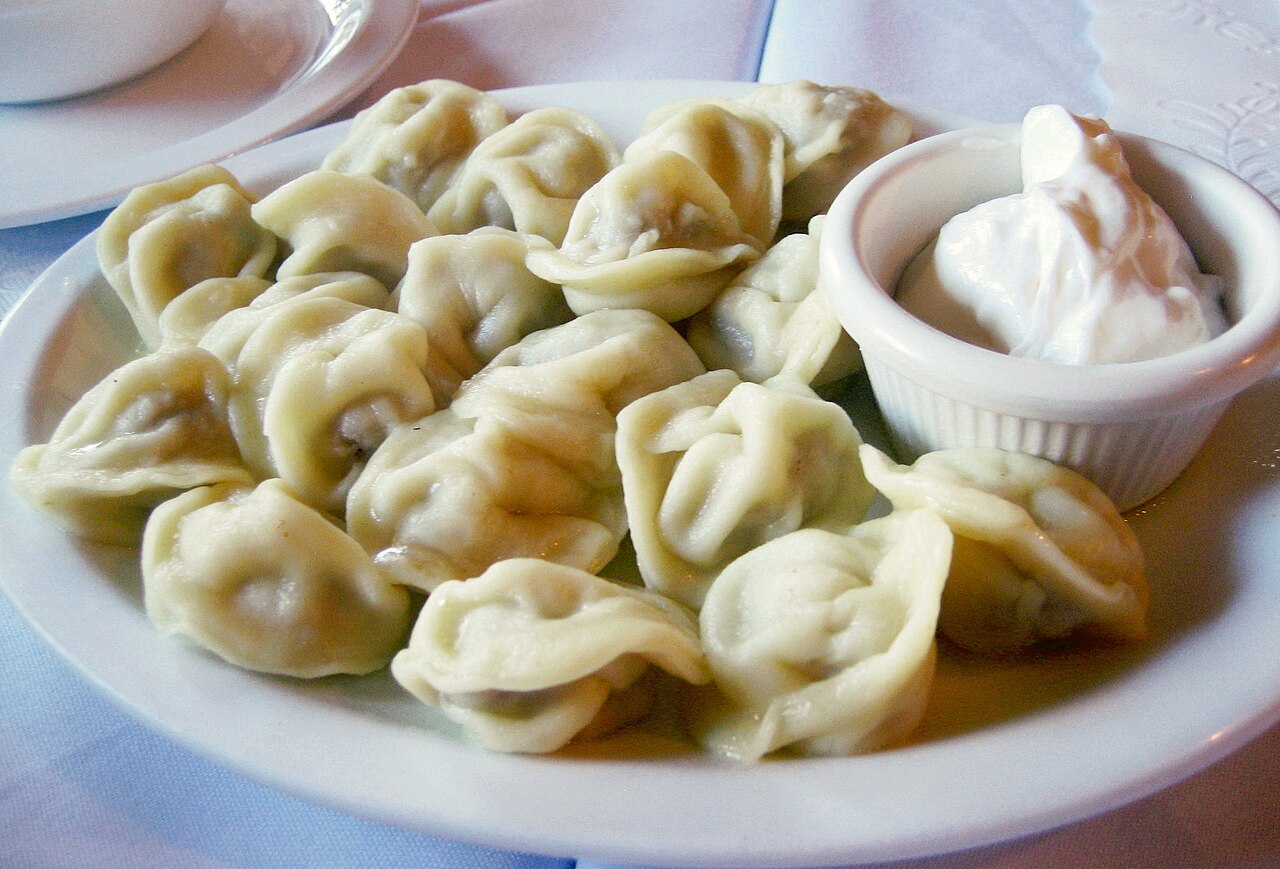
Russia's kitchen scales with its map. The dumpling is the unit: pelmeni, small meat dumplings of Ural-Siberian pedigree, served in broth or with butter, smetana, vinegar and pepper — Siberians freeze them by the thousand on winter balconies — with vareniki (the Ukrainian-shared dumpling of potato, curd or cherry) and Caucasus-ward manti and khinkali marking the empire's edges on the plate. The soups are a liturgy of 4: shchi (cabbage soup, sour or fresh, the proverb's thousand-year staple), borshch (the beetroot soup whose homelands argue across the Ukrainian border — in Russia it arrives Moscow-style with a garlic pampushka and a beef base), solyanka (the briny, lemony soup of cured meats or fish, the legendary hangover cure) and ukha (the clear fisherman's fish soup, cooked outdoors over fire in its Volga and Siberian heartlands). The festive shelf is 19th-century Moscow: beef Stroganoff (created for the Stroganov family, canonised in Elena Molokhovets's 1861 cookbook, the era's household bible), Olivier salad (invented in the 1860s by Lucien Olivier at Moscow's Hermitage restaurant — Russia's New Year sacrament in its mayonnaise-bound modern form), kulebyaka (the great layered fish pie), and blini with red caviar and smetana, the Maslenitsa (Butter Week) pancake that marks the week before Lent.
The regions hold the extremes. The Caucasus brings shashlik (marinated skewer grilling, an institution with its own etiquette) and Georgian-Armenian restaurant culture that has colonised every Russian city; Tatarstan counters with chak-chak (honey-soaked fried dough), echpochmak pastries and horse-meat qazy sausage; Yakutia and the far north eat stroganina — fish (or meat) planed in curls from the deep-frozen raw fish, eaten with salt and pepper at −40°F and below — and Baikal sets out omul, its endemic whitefish (commercial fishing has been banned since 2017 to protect the stock; what reaches the table legally is licensed and limited), smoked over alder at Listvyanka's market. Drinks: kvass (the bread-fermented summer pour, sold from street barrels in the old days), mors (hot or cold berry infusions), compote in every stolovaya, and vodka with its full zakuski protocol (pickles, herring under a fur coat — the beetroot-layered salad — salo and black bread), plus a serious modern tea culture east of the Urals.
Where: the stolovaya — the Soviet canteen, surviving everywhere as the honest, by-weight, cash-register lunch of working Russia — is the first institution; Danilovsky Market in Moscow is the polished food hall; Café Pushkin is the costume-drama splurge; and Saint Petersburg keeps 2 icons of its own: pyshki, the hot ring doughnuts at the Pyshechnaya on Bolshaya Konyushennaya Street (serving since 1958, dusted in sugar, eaten with sweet coffee) and the northern capital's own stolovaya-and-pelmeni bars. All of it, like the rest of this group, is written for the kept itinerary: the tables exist and serve Russians daily; the reader's seat at them waits on the same gate as everything else in this guide.
Picture the place
A Moscow stolovaya at 1 p.m.: trays sliding past steel rails of shchi and cutlets, a glass of compote at the register, and pelmeni being folded by hand in the open kitchen behind glass.
The easily missed detail
Pelmeni have a counting culture: they are ordered and boasted about by the dozen and the hundred (a Siberian serving is not a garnish but a pile), and the accompaniment is a declaration — smetana for the classicists, vinegar-and-pepper for the Siberian school, mustard for the volga romantics. The second detail is Olivier's calendar: the salad is so bound to New Year that Russians speak of "Olivier season" in December, and the traveler who orders it in July is eating a Christmas dish out of season — delicious, and quietly marked as a foreigner by the whole table.
A practical rhythm
- Stolovaya lunches — The working canteen as the daily baseline: soup, cutlet, compote, no ceremony
- 1 dish per region — Chak-chak in Kazan, stroganina in Yakutsk, omul at Baikal: the plate follows the map
- Pyshki as the Petersburg rite — The 1958 doughnut shop taken standing, with coffee, before the canals
What could complicate the plan
The advisory governs this answer too — and beneath it, the practical Russia of food has sanctions-era features worth knowing in advance: foreign cards do not work (cash and the domestic Mir system only), international chains have been replaced by domestic successors, and imported ingredients (cheeses, wines) have been substituted under the 2014 and 2022 embargoes — the table is, if anything, more Russian than it was. Lenten menus (postnoye) transform restaurant cooking for the 7 weeks before Orthodox Easter in observant houses (a gift for vegetarians, who otherwise work uphill in a meat-and-potato canon). Baikal's omul is protected: refuse grey-market fish. And alcohol service, vodka ritual and late hours are regional and shifting — in the Muslim-majority republics (Tatarstan excepted at its bars, Chechnya entirely), the table is dry by law or custom.
What to do next
Learn the canon by name (pelmeni, shchi, solyanka, ukha, Stroganoff, Olivier, chak-chak) and file the stolovaya as institution #1 — for the trip when it opens.
Sources
- Russian culinary canon — Molokhovets, A Gift to Young Housewives (1861); the Stroganoff and Olivier origin records of 19th-century Moscow
- Regional food authorities — Tatar chak-chak tradition; Yakut stroganina; the Baikal omul fishery ban (2017)
- Saint Petersburg institutions — the Bolshaya Konyushennaya Pyshechnaya (since 1958)
- U.S. Department of State / payment network notices — the Level 4 advisory and the suspension of foreign card networks in Russia