Russia country guide When to visit
When is the best time to visit Russia for Saint Petersburg?
The short answer
Not now: the U.S. Department of State rates Russia Level 4 — Do Not Travel (reissued December 29, 2025) with an explicit wrongful-detention warning — but in the conditional tense this guide has to use, the answer is the White Nights of late June, when Saint Petersburg never fully darkens.
The answer, with local context
The published facts come first again, because they govern the question. The State Department's Russia advisory (Level 4, reissued December 29, 2025, carrying the "D" wrongful-detention indicator) tells U.S. citizens to leave Russia and not to travel there, citing the war in Ukraine, the risk of wrongful detention (several Americans remain imprisoned; reporting based on State Department materials counted at least 7–8 in mid-2026), arbitrary enforcement of local laws, terrorism, and an embassy in Moscow reduced to a skeleton staff with all consulates suspended — consular help outside the capital is close to nonexistent. The UK's FCDO advises against all travel to Russia outright. The practical machinery matches: no direct flights from the U.S., UK or EU since 2022 (routings run through Istanbul, Belgrade or the Gulf), foreign-issued Visa, Mastercard and Amex cards do not work inside Russia, and Russia's e-visa — available to some 64 nationalities — excludes Americans, Britons, Canadians, Australians and New Zealanders, who would need a full consular visa. Drone attacks have reached Russian cities including Saint Petersburg itself (Pulkovo Airport closed for 8 hours in March 2026 after a drone incident, 1 of several such shutdowns). For EU citizens the door is closed from their own side as well: since January 1, 2026, EU law prohibits providing tourism services for Russia.
So the seasonal answer is a kept plan, and in peacetime terms it is unambiguous: late June, the White Nights. Saint Petersburg stands at 59.9°N, and from roughly June 11 to July 2 the sun's dip below the horizon is so shallow that true darkness never arrives — civil twilight runs all night, the Neva embankments stay luminous at 2 a.m., and the city's drawbridges rise in the silvery small hours (the navigation-season bridge openings, roughly 1–5 a.m., are the White Nights' nightly ceremony). The Scarlet Sails festival, the White Nights' peak party for school-leavers, fills the Neva with a brig under red sails in late June. Everything else in the country aligns: Peterhof's fountains (the Grand Cascade's 64 jets play roughly May to October) are at full song; the Baltic is at its least cold; Siberia and Lake Baikal are in their brief high summer; Moscow is warm and green. Russia holds 33 UNESCO properties (the World Heritage Centre's current count: 22 cultural, 11 natural), and late June is the single window that serves the most of them at once.
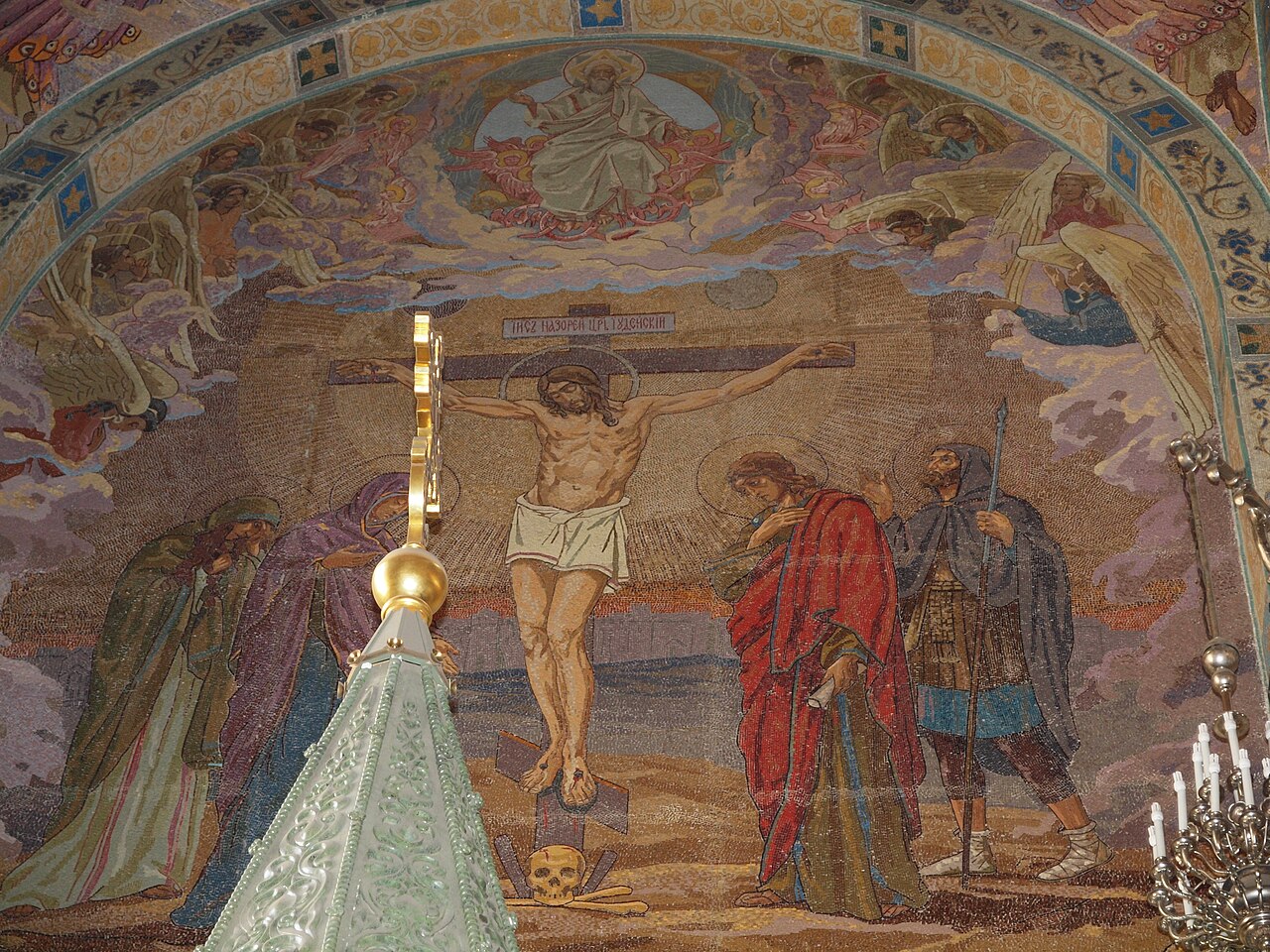
Now the anchor's substance, for the year this becomes usable. The Hermitage, founded by Catherine the Great in 1764 and holding some 3 million items across the Winter Palace complex, anchors Palace Square; the Church of the Saviour on Spilled Blood (built 1883–1907 over the spot where Alexander II was assassinated, its interior a single 7,065-m² mosaic) anchors the canals; the Peter and Paul Fortress (1703 — the city's founding date, May 27, is still celebrated as City Day) anchors the Neva's north bank. White Nights June packs all of them into 19-hour days of low golden light in which the city simply does not sleep — and in which hotel rooms, train berths and Hermitage slots, in any normal year, vanish months ahead. September is the conditional second (golden parks, the theater season opening, thinner crowds), and deep winter the connoisseur's third. But the city's defining phenomenon has dates, and they are late June.
Picture the place
The Neva at 1:40 on a June morning that never became night: the Palace Bridge rising in 2 leaves of light, students lining the granite, and the Winter Palace holding a rose-colored sky that belongs to no hour.
The easily missed detail
The White Nights have a technical core most visitors miss: at their peak the sun sets around 10:25 p.m. and rises before 4 a.m., and what fills the interval is not darkness but a continuous nautical twilight — bright enough to read a newspaper on the embankment at midnight in good weather. The practical twin is the bridges: when the drawbridges rise (roughly 1–5 a.m. in navigation season), the city's islands disconnect — a White Nights evening is planned by bank of the river, because after 1 a.m. you are sleeping on whichever side you are standing on until the bridges drop.
A practical rhythm
- Nights as the day — The late hours (embankments, bridge-raisings, the Neva) treated as the main programme, mornings slept through
- Palaces early in the week — Peterhof and Tsarskoye Selo on weekday mornings, the Hermitage in its late-opening evenings
- The anchor booked a year deep — In any normal June, Hermitage slots and Neva-view rooms are the first things reserved
What could complicate the plan
Everything in the first paragraphs: the Level 4 advisory itself, the detention record (cases have turned on a charity donation, a journalist's reporting, an athlete's luggage), the impossibility of paying with foreign cards or flying direct, the closure of consulates, drone-related airport shutdowns and the EU's own prohibition on its citizens' tourism services. Ordinary travel insurance excludes Level 4 war-adjacent travel; dual U.S.–Russian citizens are treated as Russian only, may be conscripted, and cannot count on consular access. Even the conditional plan carries caveats: White Nights is Russia's peak season in any era (prices and queues at maximum), and the south (the Ukraine border regions and the North Caucasus) carries its own advisories in peacetime too. Until the level falls, this answer is a wish with dates attached.
What to do next
Do not book, and do not route around the advisory with a third-country visa run — the detention risk is the advisory, not the paperwork. Keep the White Nights plan and re-check travel.state.gov first.
Sources
- U.S. Department of State — Russia Travel Advisory, Level 4 with wrongful-detention indicator (reissued December 29, 2025); U.S. citizens urged to depart; embassy and consulate limitations
- UK Foreign, Commonwealth & Development Office — advice against all travel to Russia; drone and air-defence disruptions including Pulkovo Airport
- UNESCO World Heritage Centre, Russian Federation — 33 properties inscribed (22 cultural, 11 natural)
- EU Council Regulation 2025/2033 — the prohibition on tourism services for Russia applying to EU persons from January 1, 2026