Salzburg / Austria Things to do
What are the most worthwhile things to do in Salzburg on a first visit?
The short answer
The fortress and the 2 Mozart houses, inside the old town UNESCO inscribed in 1996 under decision 20COM VIIIC and cultural criteria (ii), (iv) and (vi).
The answer, with local context
Hohensalzburg sells 4 ticket tiers and the difference between them is how you get up the hill. The all-inclusive ticket with the funicular is EUR 19.20 for adults and EUR 7.30 for children aged 6 to 14; the basic ticket with the funicular is EUR 15.50 and EUR 6.30; the all-inclusive footpath ticket is EUR 14.50 and EUR 5.60; the basic footpath ticket is EUR 12.00 and EUR 4.90. No family rate appears on that page. The inclusions listed cover the castle grounds — courtyards, bastions and chapel — a panorama tour, the princes' chamber, the magic theater and 4 museums: the Fortress Museum, the Rainer Regimental Museum, the Marionette Museum and the Armory.
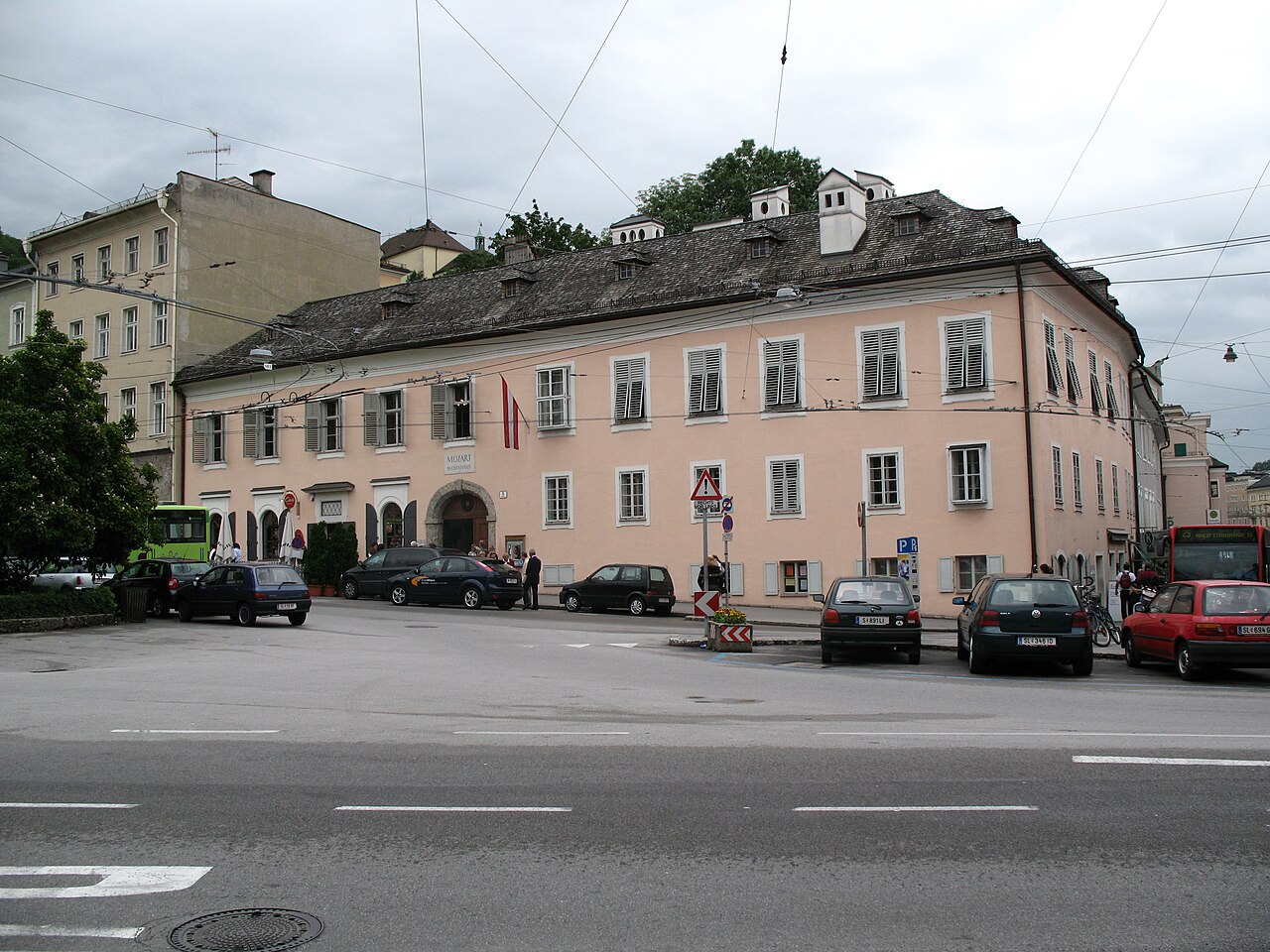
The Mozart Residence is the better of the 2 Mozart houses for anyone who wants rooms rather than relics. The International Mozarteum Foundation opens it daily from 9:00 to 17:30 with last admission 30 minutes before closing, at 17:00. Standard admission is EUR 18, reduced EUR 15 for groups of 10 or more, students up to 27 and seniors, EUR 7 for pupils aged 15 to 18, EUR 6 for children 6 to 14 and EUR 32 for a family of 2 adults with children, with under-6s free. The combined ticket with Mozart's Birthplace is EUR 25 at full price, EUR 22 reduced, EUR 10 for pupils, EUR 8 for children and EUR 50 for a family — and it is valid for 48 hours from the moment it is validated on site.
The apartment itself has a date. The Mozart family took its 8-room second-floor rooms in 1773, and Wolfgang Amadé Mozart lived there until the end of 1780, when he left Salzburg for good.
Picture the place
The building you walk into is largely a reconstruction. The Residence was partially destroyed in the Second World War and reopened to the public in 1996 — the same year UNESCO inscribed the old town around it, so the house and its World Heritage setting arrived in their present form in the same twelve months.
The easily missed detail
The 48-hour validity on the EUR 25 combined ticket is the single most useful fact on the Mozarteum's price list. It means the Birthplace and the Residence do not have to be done in one afternoon — you can split them across 2 days, which in a city where the fortress alone can absorb a morning is what makes a 2-day visit work.
A practical rhythm
- Decide funicular or footpath before you buy — It is the difference between EUR 19.20 and EUR 12.00 for an adult, and it is built into the ticket rather than bought separately.
- Fortress museums as one unit — Four museums, the princes' chamber and the magic theater sit behind the same ticket inside the walls.
- Split the Mozart houses — The combined ticket runs for 48 hours from validation, so the second house can wait for the next morning.
What could complicate the plan
The fortress's own ticket page lists identical inclusions for all 4 tiers and names 2 of them "footpath" while still listing funicular ascent and departure among their contents, and it does not explain what separates "all-inclusive" from "basic". Confirm at the desk what each tier actually buys rather than assuming the cheaper footpath ticket excludes the railway. Austria sits inside the Schengen Area, and the Commission's arithmetic is the thing to settle before booking: on any single day of the visit, the Schengen days already used across the preceding 180 must not total more than 90. Of the 29 participating countries, 4 lie outside the European Union — Iceland, Norway, Switzerland and Liechtenstein — while Cyprus and Ireland are not in the area at all, so an Austria-plus-Ireland itinerary splits into 2 separate sets of rules.
What to do next
The Salzburg when-to-visit answer in this group covers the fortress's seasonal hours and the Festival calendar, and the food answer deals with Salzburger Nockerln and the city's shop-opening rules.
Sources
- UNESCO World Heritage Centre — the 1996 inscription, decision 20COM VIIIC and cultural criteria (ii), (iv) and (vi)
- Salzburger Burgen und Schlösser, Hohensalzburg Fortress — the 4 ticket tiers with adult and child prices, the listed inclusions and the 4 named museums
- International Mozarteum Foundation — daily hours and last admission, the full price list, the combined ticket and its 48-hour validity, the 8-room apartment from 1773, Mozart's departure at the end of 1780, the wartime damage and the 1996 reopening
- European Commission, Directorate-General for Migration and Home Affairs — the 90/180 rule, the 29-country Schengen Area and its composition, the count-back method, the exclusion of Cyprus and Ireland