Santiago / Chile Things to do
What are the most worthwhile things to do in Santiago on a first visit?
The short answer
Climb the city's two hills — Cerro Santa Lucía and Cerro San Cristóbal — because Santiago's founding, its 19th-century reinvention and its best orientation to the Andes are all written into them.
The answer, with local context
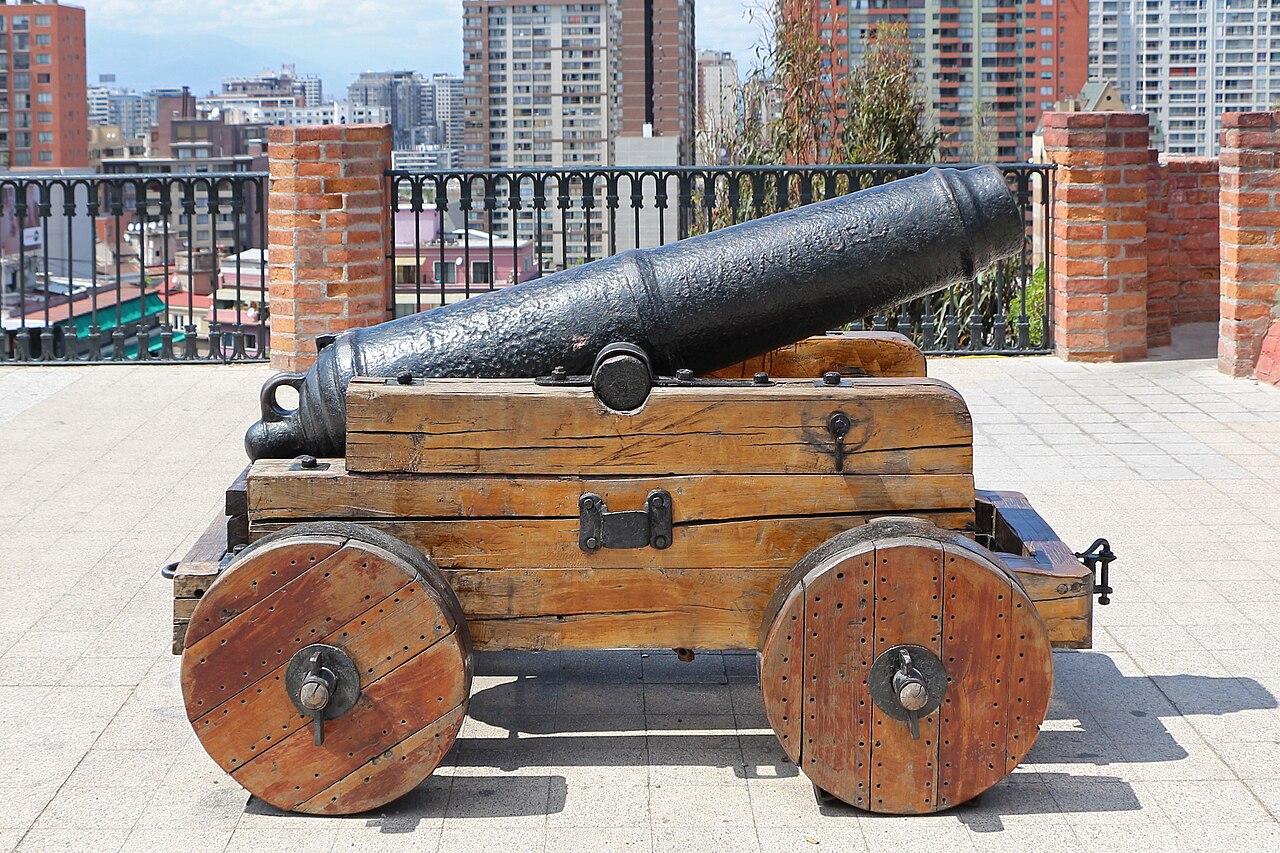
Cerro Santa Lucía is the older story, and Chile's Biblioteca Nacional has documented it in unusual detail. The hill was Huelén before the Spanish arrived. Pedro de Valdivia founded Santiago at its foot in 1541, held the first Catholic mass in the territory at its base, and performed the founding ceremony from its summit. In 1816 Francisco Casimiro Marcó del Pont ordered the Marcó and Santa Lucía batteries built on it to defend the city against independence forces. Charles Darwin used it as an observation point after arriving on 27 August 1834, and in 1849 James Melville Gilliss built an observatory on the summit that the national library describes as the first in Latin America; the government of Manuel Montt acquired it by decree in 1856 and moved it to the Quinta Normal.
What a visitor actually walks on is the work of one man and 2 years. In April 1872 Benjamín Vicuña Mackenna halted the quarrying of the slopes and banned their use as a dump and a cemetery; works on the promenade began that June under the engineer Ernesto Ansart, and a public fundraising campaign started in September. The promenade was finished in 1874, the year a Santa Lucía subdelegation was created on 1 January and the Álbum del Santa Lucía was published. A periodical called El Santa Lucía ran from 15 March to 10 May 1874. The south entrance from the Alameda was completed in 1903 with a new Neptune fountain, and the promenade was renewed again in 1910 for the centenary.
Cerro San Cristóbal, the hill inside the Parque Metropolitano, is the second half of the day. Chile's national tourism portal sets out a 6 km route across it: the main trail to the summit takes 60 to 90 minutes on foot, the historic funicular covers the climb in about 10 minutes, and the cable car runs from the Cumbre station down to Oasis, a short walk from the Japanese Garden. The summit is crowned by the statue of the Virgen de la Inmaculada Concepción.
Picture the place
Vicuña Mackenna described Santa Lucía as standing less than 500 meters from the main plaza, which is the whole point of it — a quarried crag of rock rising straight out of the grid, with stairs and terraces cut into stone that used to be sold for paving.
The easily missed detail
Santa Lucía was a working cemetery and a quarry before it was a park, and it was briefly a commune of its own: the Ley de Comuna Autónoma of 22 December 1891 created the Comuna de Santa Lucía, which lasted until 1930. The terraces you walk are therefore not landscape dressed up as history — they are the actual surface left behind when the extraction stopped in 1872.
A practical rhythm
- Morning, Santa Lucía — Start at the Alameda entrance completed in 1903 and climb through the terraces; the hill is small enough to cover before the day heats up.
- Midday, across the city — The main access to the Parque Metropolitano is on calle Pío Nono, a short walk from Metro Baquedano on Lines 1 and 5.
- Afternoon, San Cristóbal — Ride the funicular up and the cable car down to Oasis, which puts you at the Japanese Garden and within walking distance of Bellavista.
What could complicate the plan
Chile's national tourism portal recommends buying tickets online for the funicular and cable car rather than queueing, particularly at weekends and on holidays, and notes that operating hours for the park and both lifts vary — that is a standing warning on the operator's own guidance, not a guarantee the lifts run on a given day. The portal's page was last updated on 14 January 2026. On the wider city, the US Department of State's Chile page advises travelers to exercise increased caution because of crime and civil unrest, which matters most around the central avenues at the foot of Santa Lucía.
What to do next
The Santiago when-to-visit answer in this group explains the declared air-quality season that decides how far you will actually see from either summit, and the food answer covers what to drink once you are back down in Bellavista.
Sources
- Biblioteca Nacional de Chile, Memoria Chilena, El cerro Santa Lucía (1541-1910) — the Huelén name, the 1541 founding, the 1816 batteries, Darwin's 1834 visit, the 1849 observatory and its 1856 removal, Vicuña Mackenna's 1872-1874 works, the 1891 commune and the 1903 and 1910 renovations
- Chile Travel, Chile's official national tourism portal, Parque Metropolitano itinerary — the 6 km route, walking time, funicular and cable-car sections, Metro access, the summit statue and the ticketing advice
- US Department of State, Chile international travel country information — advisory wording on crime and civil unrest