Santiago / Chile When to visit
When should I visit Santiago, Chile, for the best experience?
The short answer
Late September through early December, or March into April — Santiago's official air-quality emergency season runs from 1 May to 31 August inclusive, and those two windows sit cleanly outside it.
The answer, with local context
Most cities are planned around rain. Santiago is planned around air. Chile's Ministry of the Environment operates a Gestión de Episodios Críticos — a critical-episode management regime — for the Metropolitan Region, and article 119 of the governing atmospheric decontamination plan fixes its period as 1 May to 31 August, both days included. That plan, Supreme Decree No. 31, has been in force since 24 November 2017. For 4 months of the year, in other words, the region runs on a declared pollution calendar.
The declarations are not vague. Measured as a 24-hour moving average, fine particulate between 80 and 109 micrograms per cubic meter triggers an Alerta; 110 to 169 triggers a Preemergencia; 170 or above triggers an Emergencia. The coarse-particulate thresholds sit at 180, 230 and 330. Each step brings its own restrictions: residential wood-burning appliances are banned from the Alerta level, wood pellets are added to the ban at Preemergencia and Emergencia, stationary industrial sources are shut down at those two higher levels, and school physical education and sports activities are curtailed at all 3. Vehicle restrictions apply at every level.
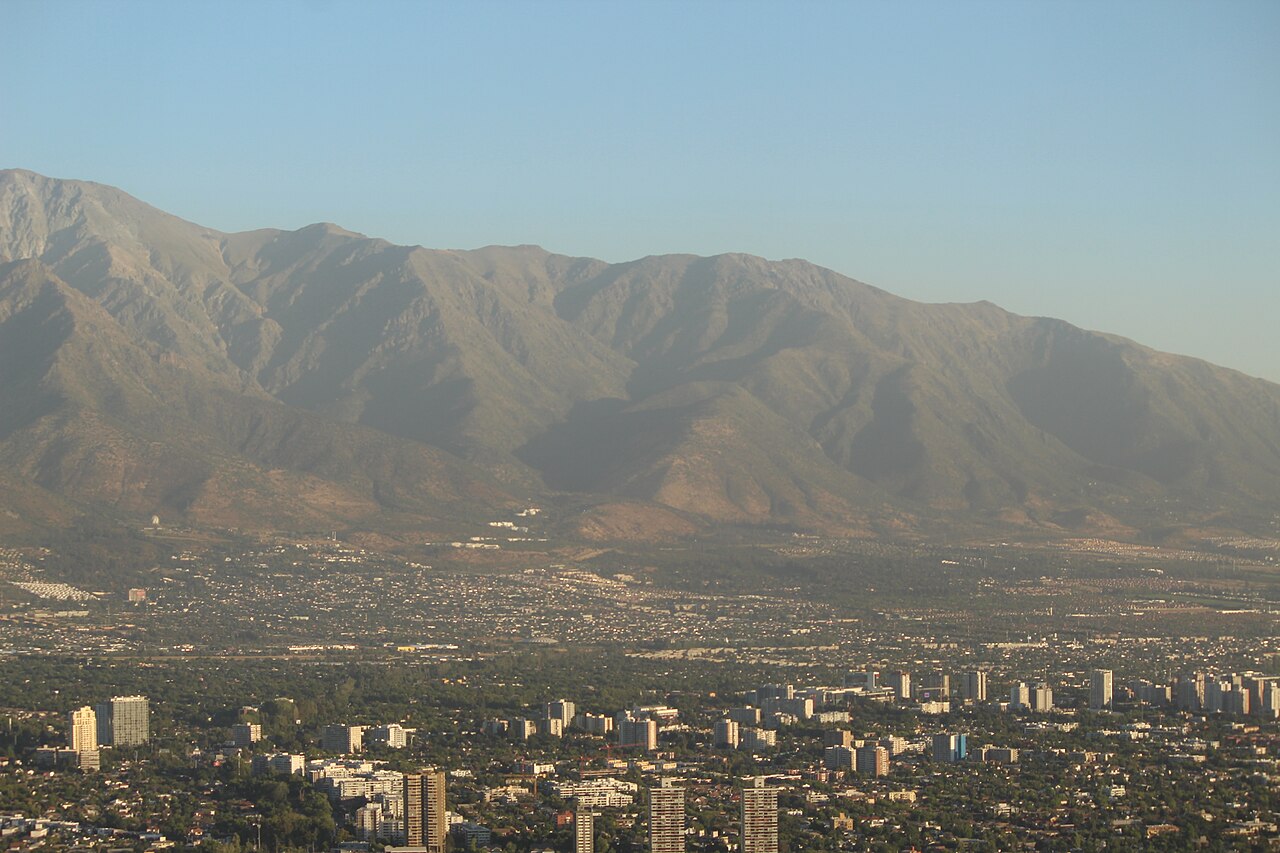
None of that applies in October or in March. The practical consequence is that a spring or early-autumn visit gives you the long sightlines that make Santiago's setting legible, while a July visit can hand you a week where the mountains behind the city are a rumor.
Picture the place
The Dirección Meteorológica de Chile's long-standing city station, Quinta Normal, carries national code 330020 and stands at 520 m (1,706 ft) in Region XIII. That elevation is the clue to the whole regime: the city sits high but enclosed, and an entire ministerial decree exists because the air above it does not reliably move.
The easily missed detail
The restrictions are not aimed at tourists, but one of them lands on them squarely. Because vehicle restrictions apply at all 3 declared levels, a self-drive itinerary built around day trips out of the city in June or July can lose a day with little notice. The wood-burning ban has a quieter effect too: a great deal of Santiago's winter charm is bound up with heated interiors, and a Preemergencia day extends the prohibition to pellet appliances as well as logs.
A practical rhythm
- Spring, late September to December — Outside the critical-episode period entirely, with no declared vehicle restriction days on the calendar.
- Autumn, March to April — The other clean window, ending as the 1 May start of the management period approaches.
- Winter, May to August — Plan around the possibility of a declaration rather than assuming one; the thresholds are published, the days are not.
What could complicate the plan
Entry is straightforward for US passport holders but not free of conditions. The US Department of State's country information for Chile records that a visa is not required for stays of 90 days or less on a tourist passport, that at least 1 page is needed for the immigration entry stamp, and that tourists must be able to prove sufficient daily funds of a minimum of 46 US dollars. Extending the Tourist Card by a further 90 days costs 100 US dollars at the Chilean immigration office. The same page carries the advisory wording "Exercise increased caution in Chile due to crime and civil unrest," with no numbered level printed. The page itself notes only that it was reissued with obsolete COVID-19 page links removed, so it carries no update date.
What to do next
The Santiago things-to-do answer in this group covers Cerro Santa Lucía and the Parque Metropolitano, both of which reward the clear-air months; the Santiago food answer explains the Maipo Valley wine areas that sit inside the city's own administrative region.
Sources
- Chile, Ministerio del Medio Ambiente, Plan Operacional de Gestión de Episodios Críticos 2024 — the 1 May to 31 August period, the particulate thresholds for each level, the wood and pellet bans, stationary-source shutdowns and vehicle restrictions, and Supreme Decree No. 31
- Dirección Meteorológica de Chile, Ficha de Estación, Quinta Normal — station name, national code 330020, elevation and region
- US Department of State, Chile international travel country information — visa exemption, blank-page requirement, minimum daily funds, Tourist Card extension fee and advisory wording