São Paulo / Brazil Food and drink
Where should I eat in São Paulo, and which local food or drink is worth trying?
The short answer
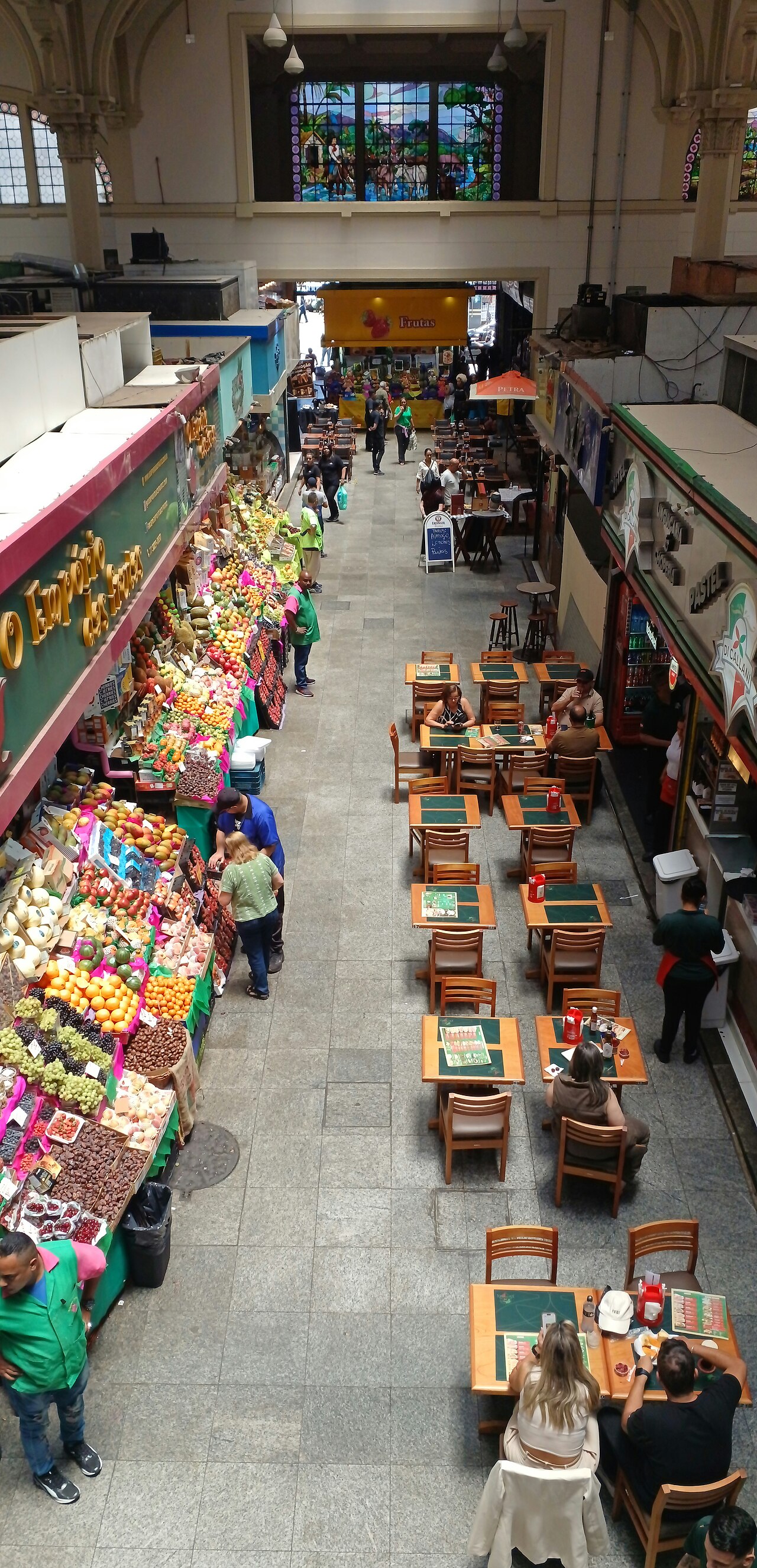
Eat São Paulo's own inventions: the virado à paulista — state-registered heritage since 2018 and the traditional Monday plate — the bauru at the Ponto Chic that invented it in the 1930s, a mortadella sandwich of absurd proportions in the 1933 Mercado Municipal, and a Sunday-night pizza in the Italian cantinas of Bixiga.
The answer, with local context
São Paulo cooks like the immigrant metropolis it is, but its signature dishes are its own. The virado à paulista is the city's plate in the most literal sense: tutu de feijão — beans mashed and thickened with manioc flour — rice, a pork chop, linguiça sausage, torresmo crackling, braised collard greens, a fried egg and a fried banana, all on one dish. Its name comes from virar, to turn: the bandeirantes, the explorer-pathfinders who pushed inland from São Paulo in the 17th and 18th centuries, carried beans, corn flour and dried meat in their packs until the road jostled the rations into one another. In 2018 the state's heritage council, CONDEPHAAT, registered the virado as intangible cultural heritage of São Paulo state, and tradition still assigns it to Monday lunch in the city's old-school restaurants — order it then, and plan a slow afternoon in its honor.
The sandwich is São Paulo's other genre, and it has a birthplace you can still eat in. At the Ponto Chic — a diner founded in 1922 on the Largo do Paissandu — a law student named Casimiro Pinto Neto, nicknamed "Bauru" after his hometown, dictated a sandwich in the 1930s: roast beef, melted cheese, tomato and pickles inside a hollowed-out pão francês roll. The bauru propagated across Brazil; the original counter still serves it. Across the center, the Mercado Municipal — the Mercadão, opened in 1933 — runs the same play at market scale: at stalls like Bar do Mané, itself inaugurated in 1933 inside the market and now in its fourth generation of the Loureiro family, the sanduíche de mortadela stacks some 12 ounces (350 g) of thin-sliced mortadella on a roll, a delicious absurdity that began as a staff joke in the 1970s and became the market's emblem; the pastel de bacalhau, the fried codfish pastry, is the hall's other rite.
Pizza is where the city's Italian century speaks loudest. Sunday-night pizza is a paulistano family institution, and the local style is its own dialect: generous toppings over the Naples inheritance, calabresa sausage and rivers of catupiry, the soft Brazilian cream cheese — eaten with knife and fork, unhurried, in the cantinas of Bixiga, the old Italian quarter, where the Tarallo family's Speranza has baked its Margherita since the neighborhood's cantina era. The street adds its own liturgy: the pastel de feira, a crisp fried pastry from the open-air market stalls, washed down with caldo de cana, freshly pressed sugarcane juice — the breakfast of market mornings across the city. And Liberdade, the Japanese district, completes the triangle with its ramen counters and its Sunday fair's stalls, the edible record of the largest Japanese community outside Japan.
Picture the place
At the Mercadão's counters at noon the theater is vertical: a cook behind a mountain of mortadella, slicing to order, the sandwich rising layer over layer past any plausible bite, while at the next stall a pastel de bacalhau crackles out of the fryer and the stained glass pours colored light over the whole delicious negotiation.
The easily missed detail
Two of the city's three emblematic dishes are protected or documented acts of individual appetite: the bauru survives because one student's order was written down by the counter that received it, and the virado's heritage registration in 2018 cited exactly the recipe's fixed composition — the plate is not a genre but a formula, and a kitchen that drops the fried banana or the torresmo is, by the state's own heritage standard, serving something else.
A practical rhythm
- Morning — Market mornings first: a pastel and sugarcane juice at a neighborhood feira, or the Mercadão early, when the fruit halls are at full theater and the sandwich counters have not yet drawn their lines.
- Midday — Lunch is the main ceremony: the virado on its Monday, the bauru at Ponto Chic, the mortadella mountain in the market hall — paulistano portions assume this is the day's serious meal, and they are right.
- Evening — Evenings divide by tribe: pizza in Bixiga on the Sunday-night ritual or any night you like, ramen in Liberdade, and the city's fine-dining rooms — São Paulo carries Brazil's deepest restaurant bench — booked well ahead on weekends.
What could complicate the plan
The calendar runs the kitchen: the virado's Monday is a tradition, not a guarantee, and the old-center institutions keep lunch hours and close early — the Mercadão winds down by late afternoon and the Ponto Chic's original room is a daytime pleasure. Portions are the second system to respect: a full mortadella sandwich is a two-person instrument, and a virado followed by a business afternoon is a rookie error. Finally, the famous names draw queues precisely when you will arrive — go at eleven, not one, and let the Paulistanos' own lunch rush validate your choice from behind you in line.
What to do next
Eat the three signatures in their birthplaces — Ponto Chic for the bauru, the Mercadão for the mortadella, an old-school downtown restaurant on a Monday for the virado — and save one Sunday night for Bixiga pizza.
Sources
- CONDEPHAAT (Conselho de Defesa do Patrimônio Histórico, São Paulo state) — virado à paulista registered as intangible cultural heritage of São Paulo state in 2018; the dish's bandeirante-era origins and fixed composition of tutu de feijão, pork, sausage, crackling, greens, egg and fried banana
- Ponto Chic — founded in 1922 at Largo do Paissandu; the bauru created there in the 1930s to law student Casimiro Pinto Neto's specification of roast beef, melted cheese, tomato and pickles in a hollowed roll
- Mercado Municipal Paulistano — the market opened in 1933; Bar do Mané, inaugurated in 1933 inside it, and its mortadella sandwich of some 12 ounces (350 g), a market emblem since the 1970s; the pastel de bacalhau as the hall's other classic