Seoul / South Korea Food and drink
Where should I eat in Seoul, and which local food or drink is worth trying?
The short answer
The old market streets — Gwangjang and Namdaemun — and eat seasonally, because Korean food still runs on a calendar — kimjang, the late-autumn making and sharing of kimchi, is inscribed by UNESCO precisely because it is tied to a time of year.
The answer, with local context
Kimjang, making and sharing kimchi in the Republic of Korea, entered UNESCO's Representative List of the Intangible Cultural Heritage of Humanity in 2013 by decision 8.COM 8.23 at the Committee's 8th session. The inscription describes a year-long cycle rather than a single event: shrimp and anchovy gathered in spring, sea salt bought in summer, red chilli peppers dried and ground in late summer, and the kimchi itself made collectively in late autumn in quantities meant to last the winter. Households check the forecast to pick a date and a temperature. Recipes vary by region and are treated as family inheritance, traditionally passed from a mother-in-law to a newly married daughter-in-law. Arriving in Seoul in November puts you in the middle of that.
The rest of the Seoul menu is similarly tied to the clock. Samgyetang, whole young chicken stewed with ginseng and jujube, is eaten in the hottest days of summer rather than in winter. Naengmyeon, buckwheat noodles in icy broth, belongs to the same months. Winter brings jokbal and bossam, gamjatang simmered with pork spine and potato, and street-corner hotteok filled with molten brown sugar. Year round there is tteokbokki in chilli sauce, Korean barbecue cooked at the table, and makgeolli, the cloudy unfiltered rice brew that is poured from a kettle rather than a bottle.
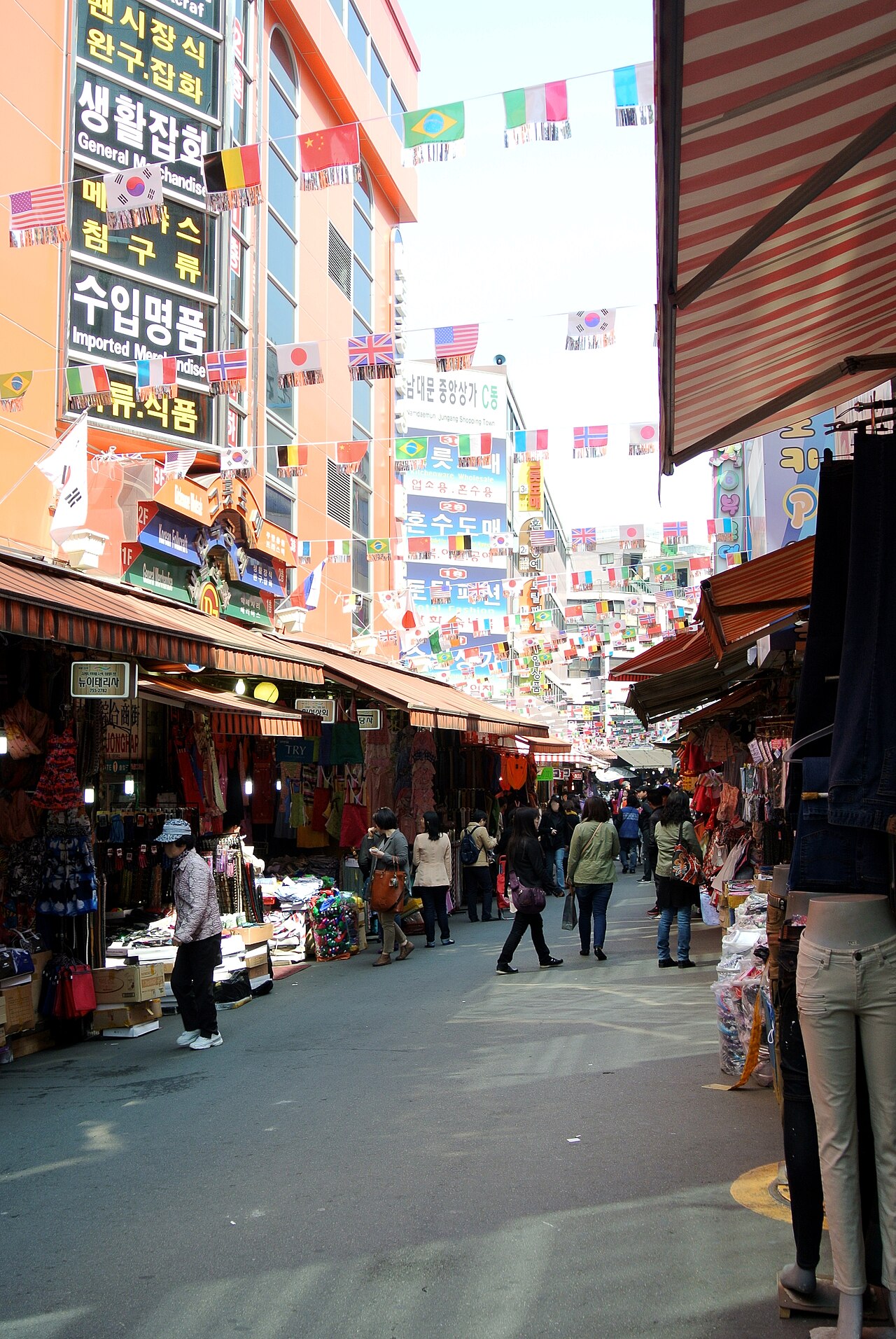
Market geography makes it navigable. Gwangjang, east of the center, is the oldest covered market and the place for bindaetteok mung-bean pancakes and knife-cut noodles eaten at shared counters. Namdaemun's alleys run on quick one-dish kitchens serving traders rather than tourists. Noryangjin's fish market handles the city's seafood, where the shop and the kitchen are separate transactions.
Picture the place
Namdaemun's alleys are narrow enough that the awnings on both sides nearly meet overhead, and the cooking counters sit directly on the walkway with stools pulled in against the traffic of carts.
The easily missed detail
Korean restaurant portions are commonly built for two, and a good many Seoul specialities — bossam, jokbal, gamjatang, barbecue — are priced and served that way. Markets solve this better than restaurants do: at a Gwangjang counter a single diner can order one pancake and one bowl and move on, which is the practical reason the markets belong at the top of a solo eating itinerary rather than at the bottom.
A practical rhythm
- Late morning — Gwangjang's food aisles, when the counters are cooking and before the lunch crush from the surrounding offices.
- Afternoon — Namdaemun's alley kitchens for a single dish, which is the cheapest and fastest eating in central Seoul.
- Evening — Barbecue or a stew, with makgeolli, which is the one meal in the day built around sitting still.
What could complicate the plan
The CDC's Global Measles notice of May 28, 2025 lists South Korea and advises full measles vaccination before international travel, which is worth settling before a trip spent in crowded indoor markets. Length of stay for US passport holders runs on the K-ETA exemption currently extended through December 31, 2026, with the alternative being a K-ETA application that carries a non-refundable fee. Market stalls often prefer cash, counters are small and shared, and the late-autumn kimjang season is also when the weather in Seoul turns sharply cold.
What to do next
For the months that put you in Seoul during kimjang rather than during the July rain front, see the Seoul timing question in this group.
Sources
- UNESCO Intangible Cultural Heritage, Kimjang, making and sharing kimchi in the Republic of Korea — element name, inscription year, decision number, annual cycle and transmission
- US Centers for Disease Control and Prevention, travel health notices — Global Measles notice date and vaccination advice
- Ministry of Foreign Affairs, Republic of Korea — K-ETA exemption period, arrival card and fee