Shanghai / China When to visit
When should I visit Shanghai, China, for the best experience?
The short answer
Late October — after the National Day crowds clear, Shanghai gets its driest, clearest month: 75°F (24°C) afternoons, rain down to 2.7 inches (70 mm), and the first hairy crabs of the season arriving in the markets.
The answer, with local context
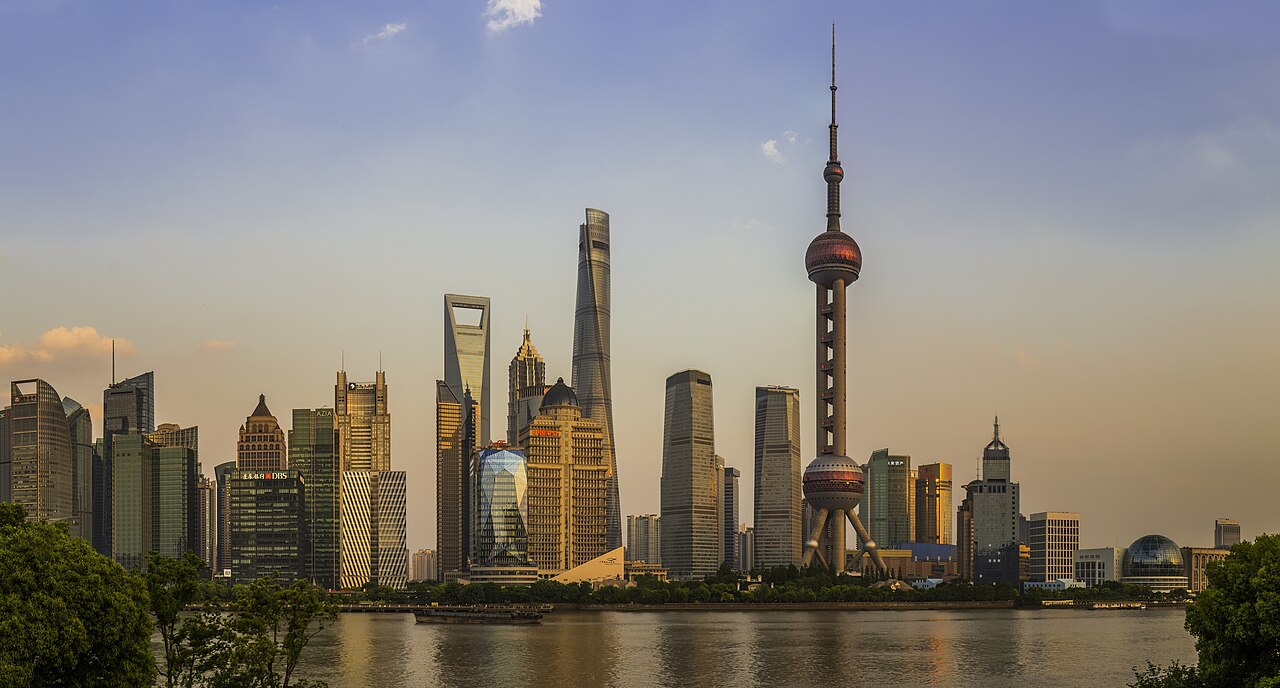
Shanghai is a damp city in every month — the China Meteorological Administration's 1991–2020 normals for the Xujiahui station never let average humidity fall below 69 percent — so the best month is the one that minimizes both water and heat, and that is October. The normals give it a high of about 75°F (24°C) and a low of 63°F (17°C), rainfall of 2.7 inches (70 mm) across roughly 7½ days, and the year's longest runs of blue sky. The city becomes a walking city: the Bund promenade, the plane-tree lanes of the former French Concession and the old-town alleys around Yu Garden are all comfortable in the same light jacket, and the Lujiazui skyline across the Huangpu reads sharp instead of dissolving into haze.
The year's problem seasons explain the verdict. From mid-June to mid-July the East Asian monsoon front stalls over the Yangtze delta in the famous meiyu, or plum rain: June alone averages 8.9 inches (225 mm) over 14 rain days of warm gray drizzle. July then turns the tap off and the furnace on — a 91°F (33°C) average high with lows stuck near 79°F (26°C) and humidity running 74–79 percent — and typhoon risk shadows the coast through September. January is the opposite trap: dry but raw, averaging about 46°F (8°C), a damp cold that central-heating-poor Shanghai interiors do little to soften.
October adds two bonuses no spreadsheet shows. Mid-October opens the hairy crab season, when Yangcheng Lake mitten crabs reach the tables full of golden roe (the females peak in the ninth lunar month, the males in the tenth), and crab-roe xiaolongbao and crab noodles appear across the city. And the plane trees of the Concession turn the color the Bund's stone deserves. The one discipline is the calendar: the National Day Golden Week, October 1–7, is the most crowded week of China's year, and the correct October starts after it ends.
Picture the place
An October evening on the Bund: the river carries its breath of coal smoke and water, the floodlights come on at seven along 52 treaty-port facades, and across the water the Oriental Pearl and the twisting Shanghai Tower light up in answer — the whole double skyline crisp enough to count windows.
The easily missed detail
Shanghai's spring is the seductive wrong answer. April is nearly as mild as October, but it is a rehearsal for the plum rain rather than an escape from it — humidity already climbing, showers thickening, and the city's famous magnolia-and-plane-tree bloom arriving between downpours. Autumn is the season Shanghai runs in reverse, drying and clearing as it cools, which is why locals hold their weddings then and the marathons run in November.
A practical rhythm
- Morning — The old town and Yu Garden at opening, when the lanes belong to breakfast queues rather than tour groups.
- Afternoon — The Concession's shaded streets and the Shanghai Museum's air-conditioned bronze galleries in the day's best light.
- Evening — The Bund at the floodlight hour, then a Huangpu riverfront walk south to the museum quarter at the former Expo site.
What could complicate the plan
Golden Week (October 1–7) is a genuine wall: hotel rates spike, the Bund becomes a standing crowd and domestic flights sell through. Late October can still catch the tail of a typhoon brushing the coast, bringing a day or two of wind and rain. And the crab season that graces the timing is priced like one — a serious hairy crab dinner is a reservation and a budget line, not a street snack.
What to do next
Book the week after Golden Week through to early November, choose a hotel in the former Concession or near the Bund, and read the food answer before arrival — the crab calendar waits for no one.
Sources
- China Meteorological Administration normals via Shanghai's Xujiahui station (1991–2020) — October high 23.5°C (74.3°F) and low 17.1°C (62.8°F) with 69.6 mm of rain over 7.5 days; June 224.9 mm over 14.3 days in the meiyu; July high 33.2°C (91.8°F); monthly humidity never below 69 percent
- The meiyu plum rain — the stalled East Asian monsoon front over the Yangtze delta from mid-June to mid-July
- Yangcheng Lake hairy crab season — peaking October into November, females prized in the ninth lunar month and males in the tenth