Shanghai / China Food and drink
Where should I eat in Shanghai, and which local food or drink is worth trying?
The short answer
Xiaolongbao where they were invented — Nanxiang dumplings at Yu Garden or Jia Jia Tang Bao on Huanghe Road — shengjianbao at 1932-vintage Da Hu Chun, a benbang dinner of red-braised pork and river prawns, and, in season, a hairy crab feast on Fuzhou Road.
The answer, with local context
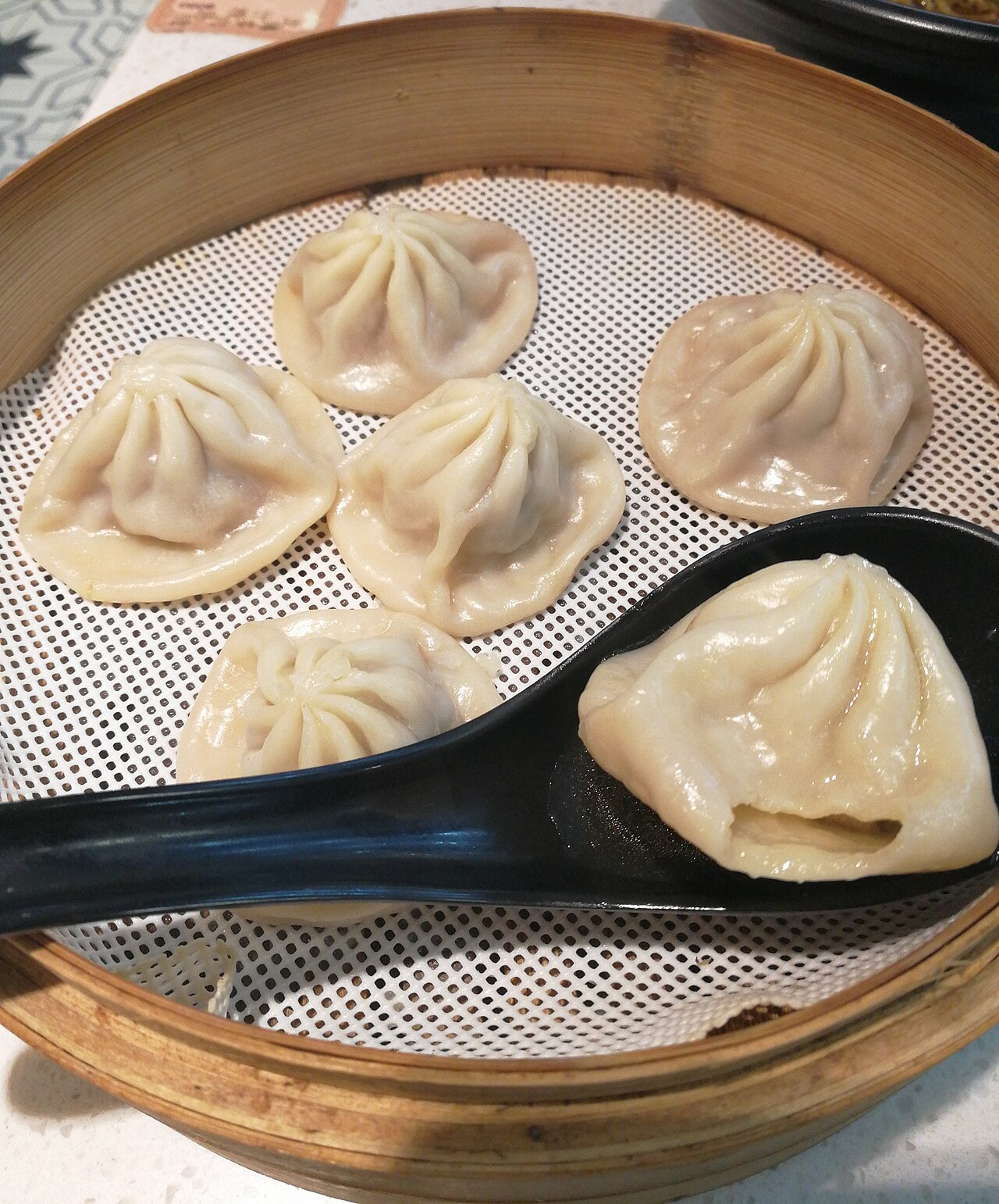
Shanghai's emblematic food was invented in a suburb. Xiaolongbao — pork and a cube of jellied broth folded into a wrapper pleated 18 times and about 1.5 mm thin, so the steamer melts the jelly into soup — came from the town of Nanxiang in Jiading district in 1871, where cook Huang Mingxian added the aspic trick to stand out in a crowded bun market. The dish reached the old town in 1900, when the Nanxiang Steamed Bun Restaurant opened beside Yu Garden's zigzag bridge; it trades there still, ground-floor baskets to go and a calmer room upstairs for crab-roe versions in autumn. The connoisseur's alternative is Jia Jia Tang Bao on Huanghe Road near People's Square, a plain shopfront whose pork-and-crab dumplings locals rank first — expect a queue at a plastic-table room and dumplings that justify it.
Breakfast belongs to the fried cousin. Shengjianbao — yeasted buns pan-fried sesame-side up until the bottoms crackle and the tops stay pillowy — arrived from Suzhou in the 1910s and filled Shanghai's teahouses by the 1920s. The styles split: Da Hu Chun, founded in 1932 and a Michelin Bib Gourmand, makes the traditionalist's bun, fully leavened, pleats up, less soup and denser pork; Yang's Fry Dumpling, founded by Mrs. Yang in 1994, built a hundred-plus-branch empire on the juicier half-leavened style. Both cost a few yuan per set of four, and the correct order of operations — vinegar ready, bite small, mind the spurting soup — is the same as for xiaolongbao and just as unforgiving.
Dinner is benbang, Shanghai's own "local" cuisine: sweet-dark and soy-deep. Order hongshao rou, pork belly braised to a lacquer in soy and rock sugar; you bao xia, river prawns flashed in oil and scallion; smoked fish served cold and caramel-edged; and scallion-oil noodles with a fried pork chop and rice cake (paigu niangao) at a noodle shop for the other meal. Institutions like Old Jesse (Lao Ji Shi) on Tianping Road cook benbang without compromise. Then the calendar's main event: hairy crab, October to November, Yangcheng Lake's roe-heavy females cracking open at old houses like Wang Bao He on Fuzhou Road, trading since 1744-era crab fame and serving crab with warm Shaoxing wine from just downriver — the pairing yellow wine was made for.
Picture the place
At Jia Jia Tang Bao the steamers stack head-high behind the counter, the room seats thirty on stools, and every table performs the same small ceremony: spoon, tear, sip, a thread of ginger in black vinegar, and the whole dumpling gone before the soup can escape.
The easily missed detail
Shanghai eats four breakfasts at once: the canonical "four kings" of the morning street stall — dabing (a sesame flatbread baked on a drum oven's wall), youtiao (fried dough sticks), cifantuan (a warm glutinous rice ball wrapped around pickles and pork floss) and doujiang (soy milk, sweet or defiantly savory). Hotels will not show you this layer; the corner stall between seven and nine will, for pocket change.
A practical rhythm
- Breakfast — Shengjianbao at Da Hu Chun or a stall breakfast of the four kings, eaten standing as the city does.
- Lunch — Xiaolongbao at Jia Jia Tang Bao before one o'clock, ahead of the deepest queue.
- Dinner — Benbang at a Tianping Road institution, or the crab house in season, with a Concession lane bar or teahouse to close.
What could complicate the plan
The dumpling greats run canteen rules: order and pay first, cash or QR code, tables shared, and the Yu Garden shop's ground floor is takeaway only. Crab season compresses demand into six weeks, with every famous house booked out and prices quoted per crab by weight and sex. Benbang's sweetness surprises palates expecting Sichuan fire — it is a soy-and-sugar cuisine, and its charms are structural rather than spicy. Most kitchens serve lunch early and close mid-afternoon.
What to do next
Eat the dumplings at both shrines and pick a side in the city's oldest argument, book the crab dinner the week the October trip is fixed, and leave one morning unstructured for a stall breakfast.
Sources
- Nanxiang xiaolongbao heritage records — the dumpling created in Nanxiang in 1871 with aspic set into the filling, reaching the Yu Garden area in 1900; a standard of 18 pleats and a wrapper of about 1.5 mm
- Da Hu Chun — shengjianbao house founded 1932, Michelin Bib Gourmand, serving the fully leavened qingshui style; Yang's Fry Dumpling founded 1994 with over a hundred branches
- Benbang cuisine — red-braised pork, oil-exploded river prawns, smoked fish and scallion-oil noodles as Shanghai's soy-and-sugar local canon, served at institutions such as Old Jesse
- Yangcheng Lake hairy crab — the October–November season, females prized in the ninth lunar month; Wang Bao He crab house on Fuzhou Road