Sierra Leone country guide Food and drink
What local dishes should I try in Sierra Leone, and where should I look for them?
The short answer
Hot-smoked fish and rice — the combination FAO identifies as the backbone of Sierra Leonean eating, with rice named the country's major food crop alongside roots and tubers, and smoking the dominant way the artisanal catch is processed.
The answer, with local context
FAO's fishery country profile is blunt about the role fish plays: it is the cheapest source of animal protein in Sierra Leone, with a stronger effect on food security on the coast than inland. In 2003 the national fish supply worked out at 19.0 kg per person per year, against an estimated demand of 35 kg — a gap the profile puts in national terms as an estimated supply of 95,000 tonnes against demand of 175,000 tonnes. Scarcity is why smoked fish, which travels and keeps, rather than fresh fish, is what most of the country actually eats.
The processing is specific. The profile records that artisanal landings go mainly into hot-smoked products, with smaller quantities salted and sun-dried, from a fleet of about 8,000 craft spread across 530 landing sites. Inland, the freshwater catch of roughly 16,500 tonnes a year brings in a different list of fish — tilapia, several catfish genera including Clarias, Chrysichthys, Bagrus and Synodontis, plus mormyrids, Hydrocynus and Alestes. The export trade targets other species again: industrial shrimp trawlers land Cynoglossus species as 50-60% of their catch and Pseudotolithus species as 20-30%, with sparids, Epinephelus groupers and lutjanids exported in smaller amounts. Pond aquaculture, about 60 tonnes a year from roughly 1,200 ponds, is almost entirely tilapia.
For the starch, FAO's cropping calendar names rice and roots and tubers as the major food crops within a March-to-October rainy season and a July-to-August lean season. That lean window is the thinnest point in the domestic food year and the time when imported rice matters most.
Picture the place
A landing site at dawn is where the national diet is assembled: unmotorized craft coming in — only 613 engines across roughly 8,000 boats — onto one of 530 landing points, with the catch going straight onto smoking racks rather than ice.
The easily missed detail
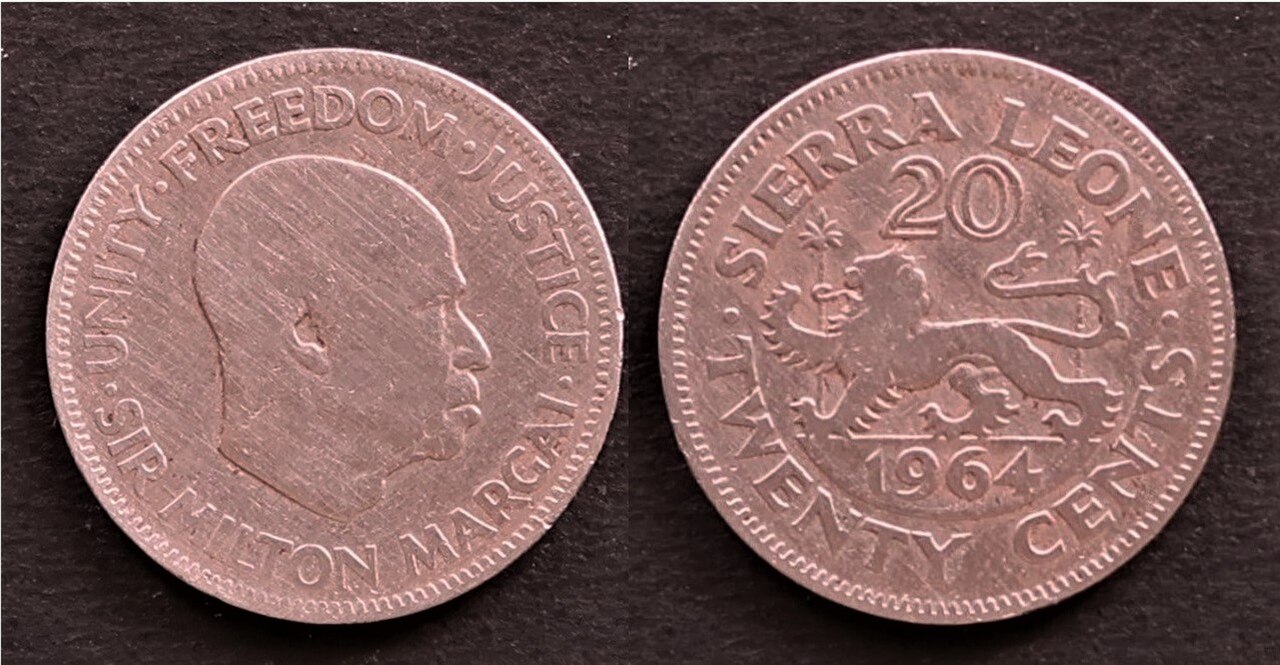
Buying food in Sierra Leone is a cash exercise, and the cash itself changed recently. The ITA guide records that the economy is primarily cash-based with a floating exchange rate, that redenominated leone banknotes were introduced in July 2022 with 3 zeroes removed, and that the old notes are no longer legal tender. Some hotels and businesses accept neither cards nor traveler's cheques. US dollars can be exchanged at banks and licensed bureaus, and the guide warns specifically against unlicensed roadside exchanges. Anyone arriving with more than US$10,000 must declare it.
A practical rhythm
- Coastal towns — Smoked fish is cheapest and freshest at the landing sites that handle the artisanal catch.
- Inland markets — Expect tilapia and catfish from the freshwater fishery rather than sea species.
- Lean months — July and August are the tightest weeks of the food year; range narrows and prices move.
What could complicate the plan
Water and ice are the real hazard, not the food. The ITA guide states that tap water is not potable in many areas, that hotels and restaurants may serve tap water unless bottled water is requested, and that ice may be made from tap water. It also reports that medical services are severely limited, often require immediate cash payment, and generally do not meet US standards, with the 117 emergency number not always operational and counterfeit medicines reported to be widespread; it strongly recommends insurance covering medical evacuation. On entry, the FCDO requires a certificate proving yellow fever vaccination, and warns of strict rules on goods taken into or out of the country, with anything potentially prohibited or dutiable to be declared. Note that FAO's own employment table and its later section disagree on industrial fishery jobs — 1,000 full-time in one place, 5,000 in the other — so treat sector-size claims with care.
What to do next
See the Sierra Leone places answer for the 530 landing sites and the forest reserves behind them, and the Sierra Leone when-to-visit answer for how the March-to-October rains govern road access to the coast.
Sources
- FAO Fishery Country Profile, Republic of Sierra Leone, May 2008 — fish as the cheapest animal protein, 19.0 kg per capita supply in 2003, the 95,000 against 175,000 tonne supply-demand gap, hot-smoking as the main artisanal process, fleet and landing-site counts, freshwater and export species lists, aquaculture volume and the internal employment discrepancy
- FAO GIEWS, Africa Report No. 3, Sierra Leone, December 2001 — rice and roots and tubers as major food crops, the March-to-October rains and the July-to-August lean season
- US International Trade Administration, Sierra Leone Country Commercial Guide, Business Travel — the cash economy, the July 2022 redenomination, exchange advice, the US$10,000 declaration threshold, water and ice warnings and medical-service limits
- UK Foreign, Commonwealth and Development Office, Sierra Leone entry requirements — yellow fever certificate and customs rules