Sigiriya / Sri Lanka Food and drink
Where should I eat in Sigiriya, and which local food or drink is worth trying?
The short answer
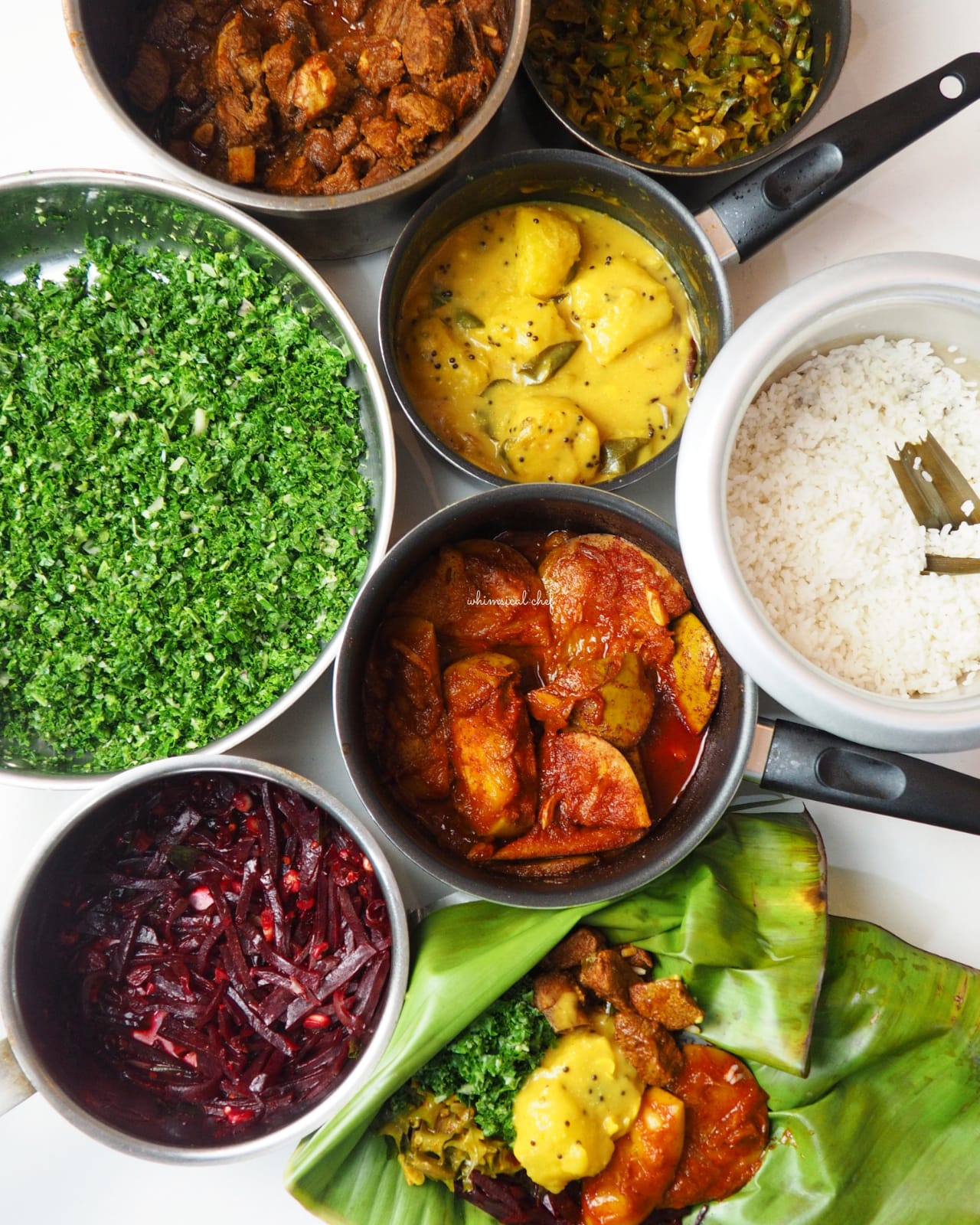
Rice and curry at a village restaurant on the main road — a banana-leaf spread of small curries around red or white rice — hoppers for breakfast, and a thambili, the king coconut drunk through a straw, as the post-climb ritual.
The answer, with local context
Sigiriya's food scene is a village scene: a string of family restaurants and guesthouse kitchens along the main road and the lanes toward Pidurangala, cooking the dry zone's version of the national meal. Rice and curry here is not one dish but an arrangement — a mound of rice, red kekulu or white, ringed with small curries that follow the tank-and-garden economy of the interior: dhal (parippu) in coconut milk, a chicken or river-fish curry, polos (young jackfruit) cooked down dark, gotukola sambol chopped green and sharp with lime, and papadam for crunch. In the dry zone the plates lean on what stores and grows around the irrigation tanks — lake fish, lotus root, and the fiery lunu miris of chili and onion that coastal versions tame. Ask for the village lunch spread rather than the menu's tourist page; the kitchens cook it for themselves at midday and it is the best food in town.
Breakfast is the hopper hour. Appa — bowl-shaped rice-flour pancakes with lacy crisp edges and a soft center, best with a fried egg set into the middle (biththara appa) — come off the small round pans in batches at dawn, with string hoppers (idiyappa), steamed rice-noodle nests, as the other staple, both served with kiri hodi, a mild coconut gravy, and that same lunu miris. After the climb, the drink is thambili: the orange king coconut, endemic to the island and richer in electrolytes than the green variety, lopped open at a roadside stand and drunk through a straw, then split so you can scoop the soft flesh — the dry zone's own sports drink, sold for a few hundred rupees at stands along the road to the rock.
The road east toward Habarana and the restaurants with Sigiriya views extend the repertoire: kottu roti chopped on twin cleavers at night (the sound carries down the main road — flatbread, egg, vegetables and chicken reduced to a sizzling hash), woodapple juice, the sour-sweet shake that divides opinion, and Ceylon tea from the island's estates served strong everywhere. Two places trade on the view: the restaurants terraced along the road opposite the rock serve ordinary food at extraordinary angles, which at sunset is the correct trade.
Picture the place
At midday the banana leaf lands with six small bowls steaming around the rice — jackfruit dark as beef, dhal the color of turmeric, a sambol green enough to read by — and the cook's mother comes out to check whether the foreigner is eating with fingers yet.
The easily missed detail
The dry zone's distinctive ingredient is tank fish and its by-products, and its distinctive heat is not the chili but the black pepper and goraka, the smoky sour fruit that darkens fish curries in the interior. If a curry arrives blackish and mouth-puckering, that is not a mistake — it is ambulthiyal-style souring, the preservation chemistry of a hot climate, and it is the taste that most distinguishes a Sigiriya village plate from a Colombo one.
A practical rhythm
- Breakfast — Hoppers and string hoppers at a guesthouse or village stall before the 7:00 climb, with kiri hodi and lunu miris.
- Lunch — The full rice-and-curry spread at a family restaurant on the main road, the day's main meal taken long in the shade.
- Evening — Kottu roti from a night stall and a thambili at sunset opposite the rock, or a lakeside dinner toward Habarana.
What could complicate the plan
Village kitchens cook to order and close early — many stop serving by 9 p.m., and the lunch spread is finished when it is finished, often by mid-afternoon. Spice levels are local by default: "medium" in a family restaurant on this road means something a coastal hotel would call hot, so the request to make is "mild, for a foreigner," made early and cheerfully. There is no food or drink sold inside the archaeological zone itself — the climb's water has to be carried from the gate, one more reason the king coconut waits at the bottom.
What to do next
Eat where the road's lunch rooms fill with drivers and guides at midday, order the spread rather than a single curry, and let the guesthouse cook one dinner — home kitchens are this village's real restaurants.
Sources
- Sri Lanka's rice-and-curry canon — parippu dhal, polos jackfruit curry, gotukola sambol and lunu miris as the standard arrangement around red or white rice
- Dry-zone cooking — goraka-soured fish curry (ambulthiyal style), tank fish, and hoppers (appa) and string hoppers with kiri hodi as the breakfast staples
- Thambili, the orange king coconut — the island's electrolyte-rich drinking coconut sold at roadside stands across the Cultural Triangle