Slovakia country guide Food and drink
What local dishes should I try in Slovakia, and where should I look for them?
The short answer
Bryndzové halušky with a glass of žinčica at a salaš, kapustnica and lokše in their seasons, Bratislavské rožky with coffee, and Small Carpathian Frankovka in the glass — a sheep-cheese, cabbage and vineyard cuisine eaten in koliby, salaše, wine cellars and Pressburg-era cafés.
The answer, with local context
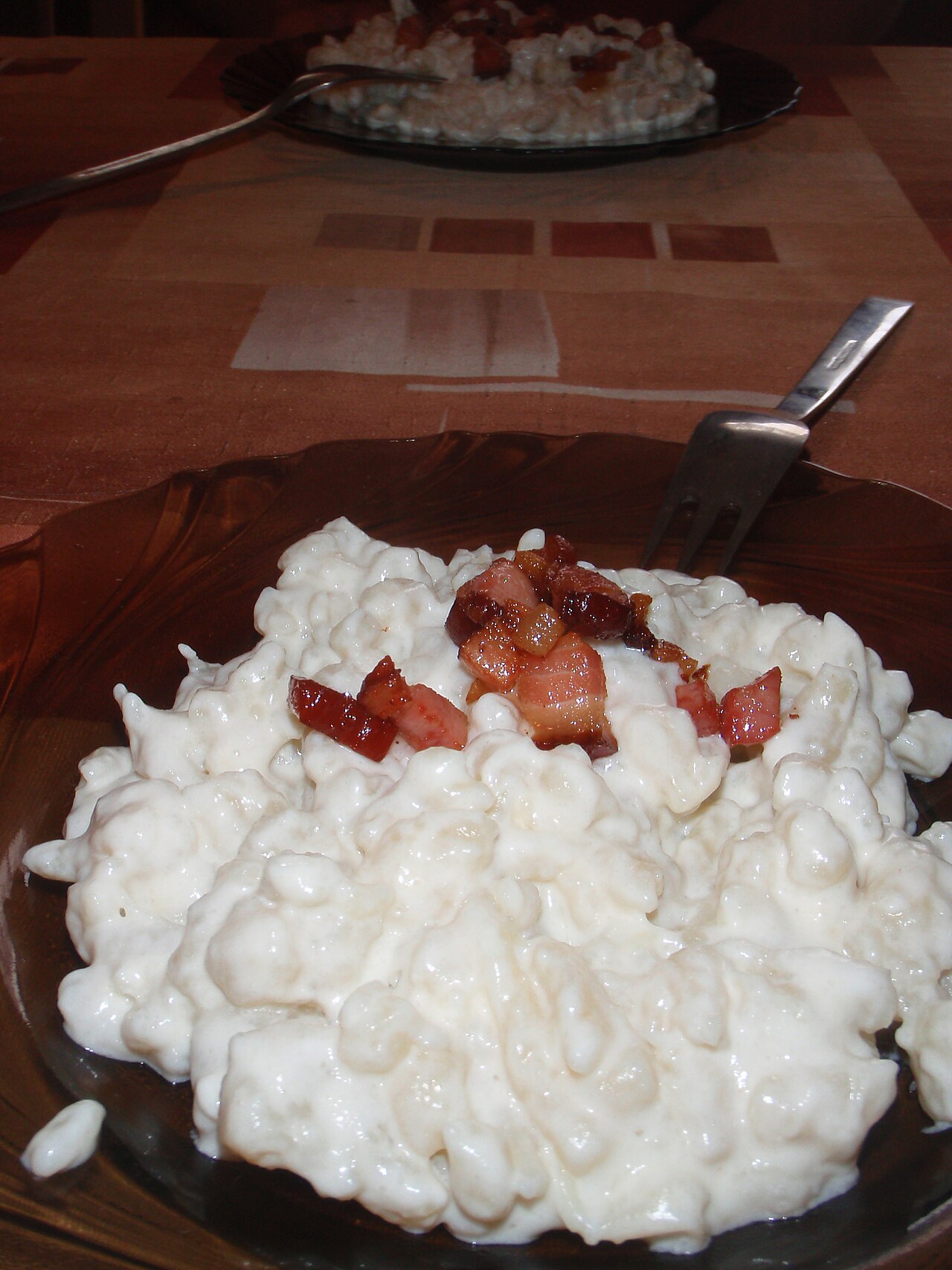
The national dish is bryndzové halušky: small potato dumplings folded through bryndza, the salty, tangy sheep's cheese (the Liptov sort carries EU protection), and finished with fried bacon bits — eaten at its source in a salaš, the shepherd's hut-restaurant of the Liptov and Orava hills, with žinčica (the warm, sour whey drink made alongside the cheese) as the correct accompaniment. The dish has a competitive afterlife: the village of Turecká hosts world championships in cooking and eating bryndzové halušky. Its cabbage twin, strapačky, swaps the cheese for sauerkraut and bacon. Soups run the seasons: kapustnica (sauerkraut soup with sausage, mushrooms and dried plums — the Christmas Eve bowl in its fasting, meatless form), fazuľovica (bean soup), cesnačka (garlic soup served in a bread loaf), and a Sunday guláš. The cafeteria classics are national too: vyprážaný syr (fried cheese with tartar sauce, the beloved canteen plate) and zemiakové placky (marjoram-flecked potato pancakes). Lokše, thin potato flatbreads, belong to the autumn goose feasts of Slovenský Grob and the villages around Bratislava, where the roast goose season runs September to November and the lokše are brushed with goose fat.
The sweet and baked shelf is Pressburg's legacy. Bratislavské rožky — the crescent rolls of poppy or walnut, their recipe tradition recorded since 1785 and the product protected as a traditional speciality — are the capital's edible emblem, eaten with coffee in the Old Town's cafés (the historic Café Mayer trades on the same era). Skalica, in the west, guards the Skalický trdelník, the spit-cake with EU geographical protection. Steamed buchty with poppy seeds or plum jam, šúľance (potato noodles with poppy), and honey medovníky at Christmas markets complete the canon.
The cellar is 3 wines deep. The Small Carpathian Wine Route strings Modra, Pezinok, Svätý Jur and Bratislava's own Rača district — Frankovka modrá (Blaufränkisch) reds and Veltlínske zelené whites, poured in vaulted cellars under the hills, with Modra's painted majolica ceramics as the tableware. The Slovak Tokaj, in the southeast, works the same Furmint and Lipovina grapes and putňové (aszú) method as Hungary's famous half: sweet wines aged in small tuff cellars filmed with black cellar mould. The south (Nitra, the Danube plain) adds Rizling and Müller-Thurgau. Spirits are juniper and plum: borovička, the juniper spirit of the hills; slivovica; Tatranský čaj, the 52% herbal liqueur born in the Tatras; and Demänovka from Liptovský Mikuláš. Beer keeps its own history (the Vyhne brewery, Steiger, dates to 1473, the country's oldest; Zlatý Bažant pours from Hurbanovo since 1969), and Kofola, the herbal cola devised in 1960, is the table's non-alcoholic institution. Where: koliba restaurants in the mountains (the Koliba at Kamzík above Bratislava, the salaše of Liptov and Terchová — Jánošík's village, beneath the folk hero's statue), Slovak Pub in the capital for the canon in 1 menu, Modra and Pezinok cellars on the Wine Route, and the goose-season villages in autumn.
Picture the place
A Liptov salaš at lunch: wooden bowls of halušky steaming with bryndza, a jug of žinčica, sheep bells from the pasture outside, and the Low Tatras filling the doorway.
The easily missed detail
Bryndza has a season with a name: májová bryndza, May bryndza, made from the first spring milk when the sheep reach the high pastures, is the connoisseur's batch — softer and milder than the winter sort — and salaše advertise it in late spring. The second detail is the rožky rule: a genuine Bratislavský rožok is judged by its horseshoe shape and its filling discipline (poppy means poppy, walnut means walnut, never a blend), and the capital's bakers treat the crescent's crackle — it should audibly snap — as the test.
A practical rhythm
- Halušky at a salaš — The national dish eaten in the hills that make the cheese, with žinčica
- Cellars on the Wine Route — Modra and Pezinok given an afternoon, Frankovka against the local cellar food
- Pressburg coffee hour — Bratislavské rožky and coffee in an Old Town café as the capital's daily ceremony
What could complicate the plan
Sheep's cheese is a strong flavour and the cuisine is hearty by design: portions at koliby assume a day of hiking, and the vegetarian traveler leans on strapačky without bacon, fried cheese and fasting soups — doable, but it takes asking. Goose feasts are a season, not a menu (September–November, weekends, booked out in Slovenský Grob), and the Tokaj and Small Carpathian cellars keep growers' hours — tastings are arranged, often for groups, not walked into at dusk. Salaše are summer institutions in the high valleys; winter reduces the map to the towns. And the halušky championship spirit extends to quantity: a full salaš portion is a main course and a half, which experienced eaters treat as the whole lunch.
What to do next
Put 4 plates on the itinerary: salaš halušky, a Modra cellar lunch, a Bratislava rožok coffee, and — in autumn — a Grob goose with lokše.
Sources
- Slovakia.travel / Slovak food authorities — bryndzové halušky and the salaš tradition; the Turecká halušky championships
- EU geographical indications — Liptov bryndza and Skalický trdelník protected status; Bratislavské rožky as a traditional speciality
- Small Carpathian Wine Route Association / Slovak Tokaj region — the wine villages, varieties and cellar traditions
- City of Bratislava — the Pressburg café culture and Bratislavské rožky tradition (recorded since 1785)