Slovakia country guide Places and experiences
What should a first-time traveler see in Slovakia beyond the obvious highlights?
The short answer
The UNESCO east and the karst underworld: Spiš Castle and Levoča, the mining town of Banská Štiavnica, the log village of Vlkolínec, Bardejov's square, the Slovak Paradise gorges, the ice and aragonite caves, and the Dunajec rafts in the Pieniny.
The answer, with local context
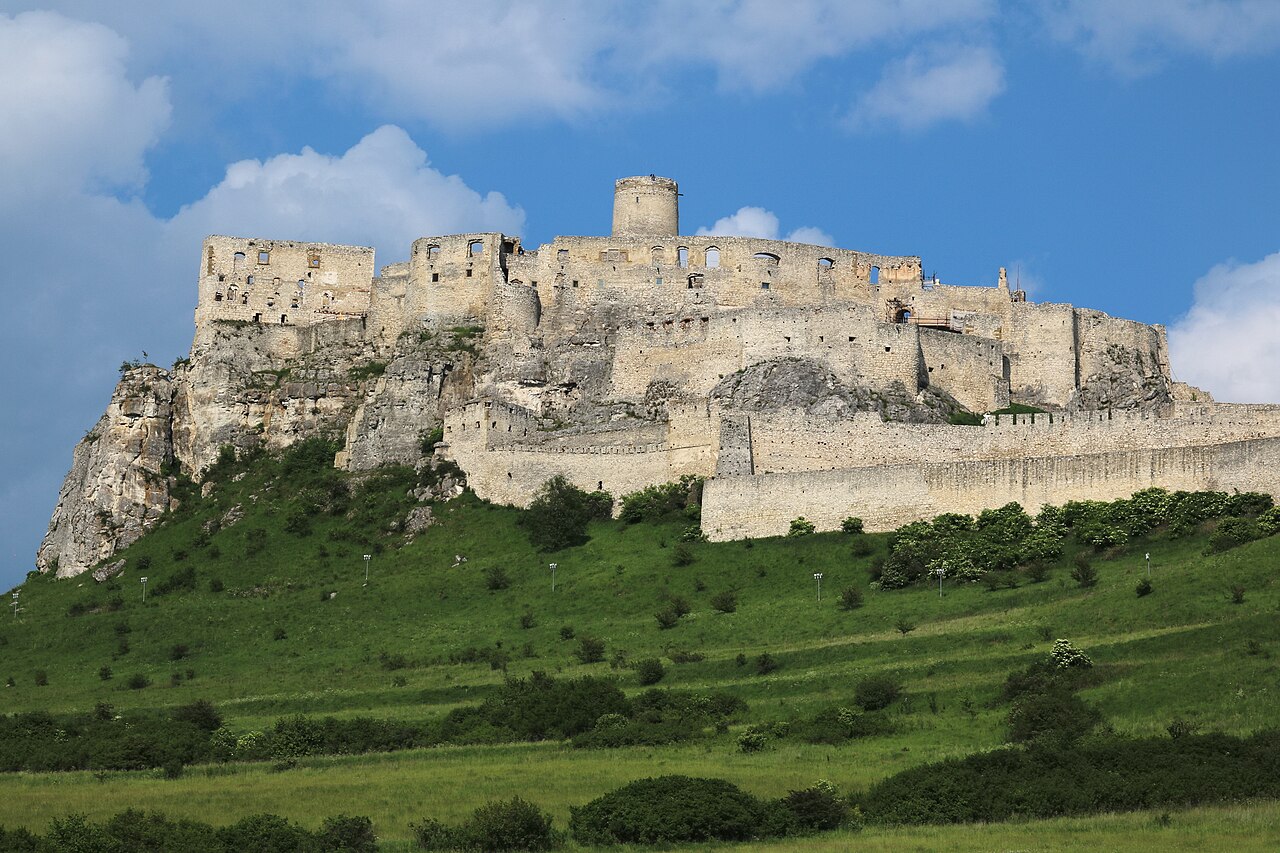
Slovakia's 8 UNESCO properties map the beyond-highlights trip almost exactly. East first: Spiš Castle, among the largest castle complexes in Europe, crowns its travertine hill over Spišské Podhradie, and its inscription (1993, extended 2009) takes in Levoča, whose Church of St. James holds Master Paul's altar of 1517 — at 18.6 m, the tallest wooden Gothic altar in the world — and Spišská Kapitula's walled church town. Banská Štiavnica, in the central mining hills, is a town built by silver: UNESCO-listed in 1993 with its technical monuments, ringed by the tajchy, the artificial reservoirs (some 60 built in the 18th century) that powered the mines, and home to the mining academy founded in 1762, celebrated as the world's first technical university. Vlkolínec (1993) is a living log village of 55 traditional buildings under the Veľká Fatra, still inhabited, and Bardejov (2000) keeps the country's most complete medieval square — burgher houses, a 1505 town hall, the Gothic basilica and an 18th-century Jewish quarter. The 8 wooden churches of the Carpathians (2008) scatter across the northeast: Hervartov's Catholic church of about 1500 and Kežmarok's great Protestant articular church of 1717, raised under rules that forbade stone and nails.
The natural Slovakia is equally specific. Slovak Paradise National Park threads its gorges — Suchá Belá, Prielom Hornádu — with ladders, chains and catwalks bolted into the slot canyons (the gorge routes run one-way, upstream). The Slovak Karst, UNESCO-listed with Hungary's Aggtelek in 1995, hides Domica Cave (with boat rides on its underground Styx river), the Dobšinská Ice Cave (explored in 1870, among the first caves in Europe lit electrically, in 1887), and the Ochtinská Aragonite Cave, 1 of only 3 aragonite caves in the world open to the public. In the Pieniny, the Dunajec River carries traditional wooden rafts (plte) some 18 km through the gorge from Červený Kláštor — a floating border pageant run by Goral rafters since the 19th century. And the castles beyond Bratislava repay the driving: Bojnice, the romantic Pálffy rebuild (1889–1910) and the country's most-visited castle, beside Slovakia's oldest zoo; Orava Castle on its rock needle, where Nosferatu was filmed in 1921; and Trenčín, where a Roman inscription of AD 179 carved into the castle rock (Laugaricio) marks the legions' northernmost reach.
The east has a capital of its own: Košice, with St. Elisabeth's Cathedral (the largest church in Slovakia, built 1378–1508) and the Košice Peace Marathon, run since 1924 and the oldest marathon in Europe, each first Sunday of October. Finish underground in a different register: the Slovak Tokaj, the northern sliver of the great Tokaj region shared with Hungary, where Furmint-based putňové wines age in black-mould tuff cellars in villages like Malá Tŕňa.
Picture the place
Suchá Belá gorge at 9 a.m.: green half-light, the stream cold around your boots, and a steel ladder climbing the waterfall ahead while the canyon walls lean in overhead.
The easily missed detail
Vlkolínec's perfection is inhabited: its 55 log houses are homes, not exhibits, so the visit runs on village rules (stay on the paths, photograph respectfully, expect residents, not staff) — and its UNESCO fame has made parking and quiet the scarce resources on summer weekends. The second miss is Bojnice's neighbour: the castle and zoo share a park in a spa town, and the great Slovak double (castle tour, then the thermal pools of Bojnice's spa) is the day the locals themselves design — visitors who do only the castle have done half of it.
A practical rhythm
- East in a line — Poprad → Spiš → Levoča → Košice, the UNESCO sites in geographic order
- Gorges early, caves at noon — Slovak Paradise ladders before the one-way queues form; the karst caves as the day's cool middle
- 1 raft, 1 cellar — The Dunajec floated and a Tokaj cellar tasted as the east's 2 slow ceremonies
What could complicate the plan
Slovak Paradise is a one-way system with quotas at peak: the ladders of Suchá Belá cannot be descended, late starters queue at the bottlenecks, and wet rock closes routes — boots and an early start are the admission price. The wooden churches are village churches, many locked between services with a phone number for the key (a call ahead in Slovak, or a local intermediary, opens them; silence means no). Cave seasons vary (Dobšinská opens mid-May to September; Domica's boats depend on water levels), and the Dunajec rafts run April to October, weather and river permitting. The east's distances are the final tax: Spiš, Bardejov and the wooden churches sit on regional roads where 100 km is a morning, so the beyond-Bratislava country wants its own nights, not heroic day trips.
What to do next
Give the east 3 nights (Poprad and Košice), walk 1 Paradise gorge at opening time, and end the loop in a Tokaj cellar.
Sources
- UNESCO World Heritage Centre — Levoča, Spišský Hrad and associated monuments (1993, 2009); Banská Štiavnica (1993); Vlkolínec (1993, 55 buildings); Bardejov (2000); Wooden Churches (2008); Caves of the Slovak Karst (1995)
- Slovak Paradise National Park / Slovak Karst authorities — the one-way gorge routes, cave seasons and the aragonite cave's rarity
- Pieniny National Park / raft operators — the Dunajec rafting route (about 18 km from Červený Kláštor)
- Košice Peace Marathon (since 1924) and Bojnice Castle museum — the east's institutions