Solomon Islands country guide Food and drink
What local dishes should I try in Solomon Islands, and where should I look for them?
The short answer
Reef fish and slipper lobster, cassava pudding with coconut cream, ngali nuts in season, and the motu stone-oven's root crops: Solomon food is garden-and-reef subsistence cooking of real finesse, and its capital is Honiara's Central Market — the best open-air larder in Melanesia.
The answer, with local context
Solomon cooking begins in the supsup garden (the family plot) and on the reef, and its starches are the Melanesian root canon: taro, yam, sweet potato (kumara), cassava and cooking bananas, cooked in the motu — the stone oven shared across the archipelago — or boiled and mashed into the puddings that are the cuisine's signature. Cassava pudding (grated cassava baked with coconut cream until it sets dense and golden) is the dish to hunt: sold in slabs at markets and served at celebrations, sweet-savoury, keeping for days — the Solomons' traveling food. Coconut cream is the sauce layer, carrying fish and greens; the greens themselves (slippery cabbage — aibika — fern tips, pumpkin leaves) are a cuisine in their own right here, and the protein register runs reef fish whole-grilled, mud crab, and the slipper lobster (reef crayfish) that Honiara's better kitchens grill with garlic and lime for a fraction of its Australian price. In season (roughly the first half of the year), ngali nuts — the Canarium almond of the western Pacific, oily, rich and briefly abundant — are cracked fresh at markets, roasted, or baked into ngali-nut puddings; out of season they vanish entirely, which is the Solomons' food calendar in miniature.
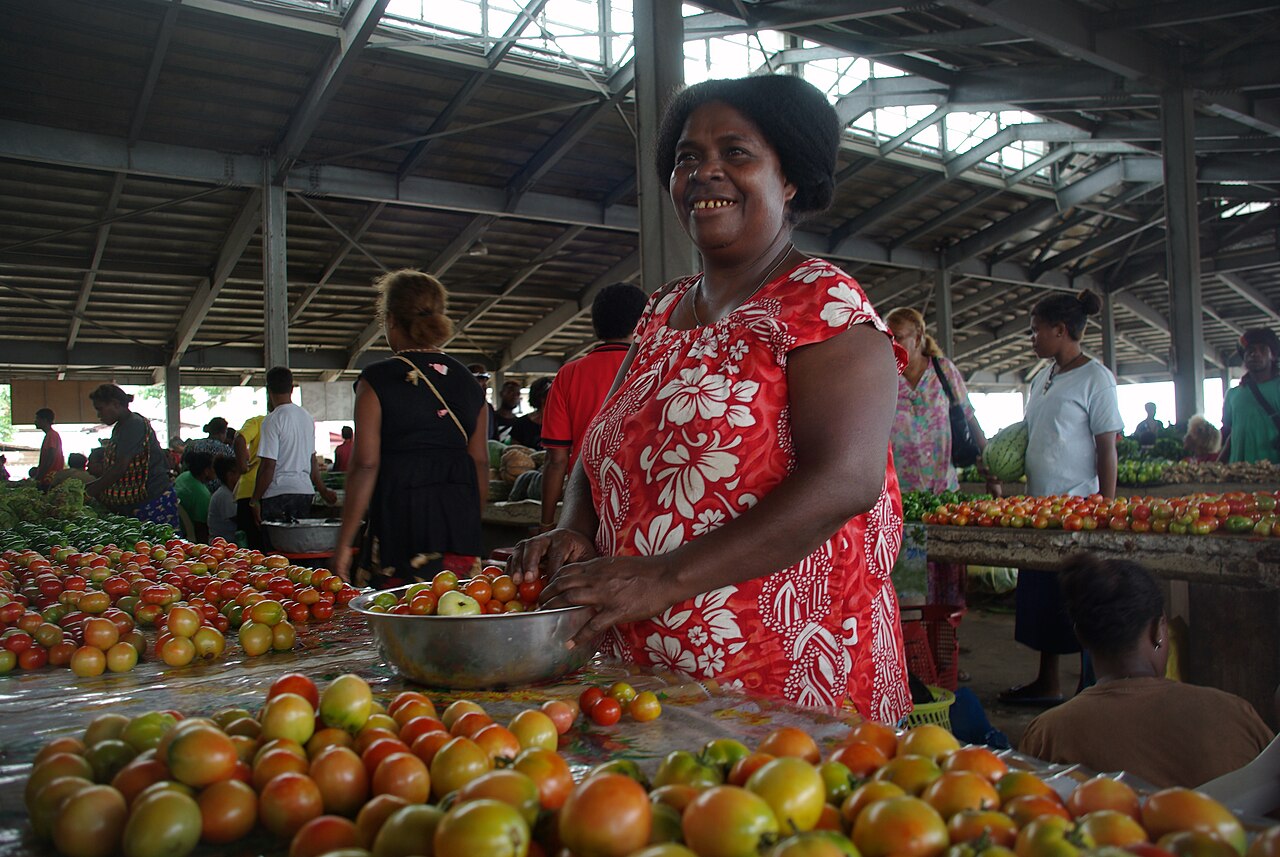
And the tuna: the Solomons run one of the Pacific's great tuna fisheries (the cannery at Noro in the west, the SolTuna brand in every store) — sashimi-grade yellowfin appears in Honiara's Japanese-influenced kitchens at prices that make divers weep with joy, and tinned Solomon tuna is the souvenir tin that actually gets eaten. Where to eat is a short Honiara list and a long market logic: the Central Market on Mendana Avenue is the ground floor (produce pyramids of root crops, ngali nuts in season, live mud crabs, cooked-food stalls at the back, and the flower sellers' color) — go early, go with small notes, and breakfast on market fruit and a pudding slab. The town's tables: the Lime Lounge (the expat-and-business café standard), hotel restaurants at the Heritage Park and Coral Sea Resort (the latter on the water west of town), the Mendana's long history, and a scatter of Asian kitchens along the main strip. Beyond Honiara, eating is the lodge table (Uepi, Tetepare's ecolodge, Gizo's Fatboys and Sanbis resorts) — full-board by necessity, fish-forward by geography, and genuinely good when the supply boat has been; village stays eat what the garden and reef gave that day, which is the cuisine's true form. Water: Honiara town supply is treated at the hotels; elsewhere bottled. Betel nut, chewed with lime and betel leaf, reddens smiles in every market — the social stimulant, offered freely, declinable politely.
Picture the place
Honiara Central Market at 7 a.m.: pyramids of purple taro and gold kumara, a woman cracking ngali nuts with a stone, crab bundles moving hand to hand, and the whole country's breakfast being bought at once.
The easily missed detail
The pudding is a technology, not just a dish: cassava and taro puddings were engineered by the islands' cooks to keep — dense, leaf-wrapped, stable for days of canoe travel without refrigeration — which is why they anchor feasts and markets alike, and why the market slab you buy on Saturday is still perfect on Tuesday's boat. The second detail is the ngali nut's brief season: its harvest is a forest event (the nuts are collected from tall Canarium trees as they fall), families hold customary rights to nut trees, and the market glut lasts a few months at most — time a western-province trip for it and the west's tables change entirely.
A practical rhythm
- Market mornings — Central Market before 8 a.m. for pudding, nuts and the day's fish logic
- Lobster once in Honiara — The Coral Sea or Heritage Park kitchen while the price is Pacific-real
- Lodge tables in the west — Full-board as design: the supply boat is the menu's author
What could complicate the plan
Malaria country rules apply to dinner as to everything: the market is a dawn-and-daylight place (fine — it is anyway), and evening eating in Honiara is hotel-and-restaurant territory reached by taxi, not on foot. Supply is the second author of every menu: outside Honiara, kitchens cook what the island has, imported variety thins to rice-and-tinned-fish at the village end, and the famous fish depends on the day's sea — menus are intentions, and the traveler who asks "what came in today" eats best. Vegetarians are garden-fed and happy (roots, greens, puddings, coconut everything) but should say so at lodges a day ahead; vegans will negotiate coconut cream as a staple and egg as an occasional visitor. Food hygiene is market-standard tropical: cooked hot and fresh is the rule, market raw preparations are for local stomachs, and bottled water is the default outside Honiara's hotels. Shell-money's culinary cousin — the bride-price feasts where pigs and shell valuables move — is kastom business: guests eat by invitation, and the correct move is to accept the invitation and eat what is set before you, asking questions after.
What to do next
Breakfast at the Central Market on your first Honiara morning, order slipper lobster once, and if ngali nuts are in the markets, eat them daily until you leave.
Sources
- Tourism Solomons — Honiara Central Market; cassava pudding; ngali nut season; lodge dining in the Western Province
- Solomon Islands fisheries record — the Noro cannery and SolTuna; tuna as the national industry
- Cultural record — the motu stone oven; supsup gardens; shell money and feast customs
- Travel-health guidance — malaria precautions shaping evening movement in Honiara