Sri Lanka country guide Food and drink
What local dishes should I try in Sri Lanka, and where should I look for them?
The short answer
Lamprais at a Colombo bakery on a Sunday, Jaffna crab curry eaten with your hands, buffalo curd with kithul treacle from a roadside clay pot, isso wade at sunset on Galle Face Green — and a tea tasting in the high factories, because Sri Lanka's drink is grown, not made.
The answer, with local context
The island's communities each sign the menu. Lamprais is the Dutch Burghers' signature: rice cooked in stock with a mixed-meat curry, frikkadels (spiced meatballs), blachang (prawn paste), seeni sambol and pickled eggplant, wrapped in a banana leaf and baked until the leaf perfumes everything — its very name worn down from the Dutch lomprijst, "lump of rice." Colombo's bakeries and Burgher kitchens sell it as a Sunday institution, parcels gone by early afternoon. Kiribath, milk rice cut in diamonds and served at auspicious beginnings with lunu miris, is the Sinhalese ceremonial dish — the thing to accept gratefully if it appears at a guesthouse breakfast on the first of a month.
The north cooks its own cuisine. Jaffna crab curry uses lagoon mud crabs in a roasted northern spice mix, hotter and deeper than southern seafood, eaten with white rice and best in Jaffna itself or at Colombo's Tamil restaurants in Wellawatte; the same kitchens serve koozh, a millet-and-seafood porridge, and pittu steamed in bamboo cylinders. Colombo has also made the crab famous at banquet scale: Ministry of Crab, founded in 2011 in the Old Dutch Hospital precinct by chef Dharshan Munidasa with cricketers Kumar Sangakkara and Mahela Jayawardene, grades its lagoon crabs up to "crabzilla" size and appears on Asia's 50 Best lists — the reservation version of what Jaffna home kitchens do by instinct.
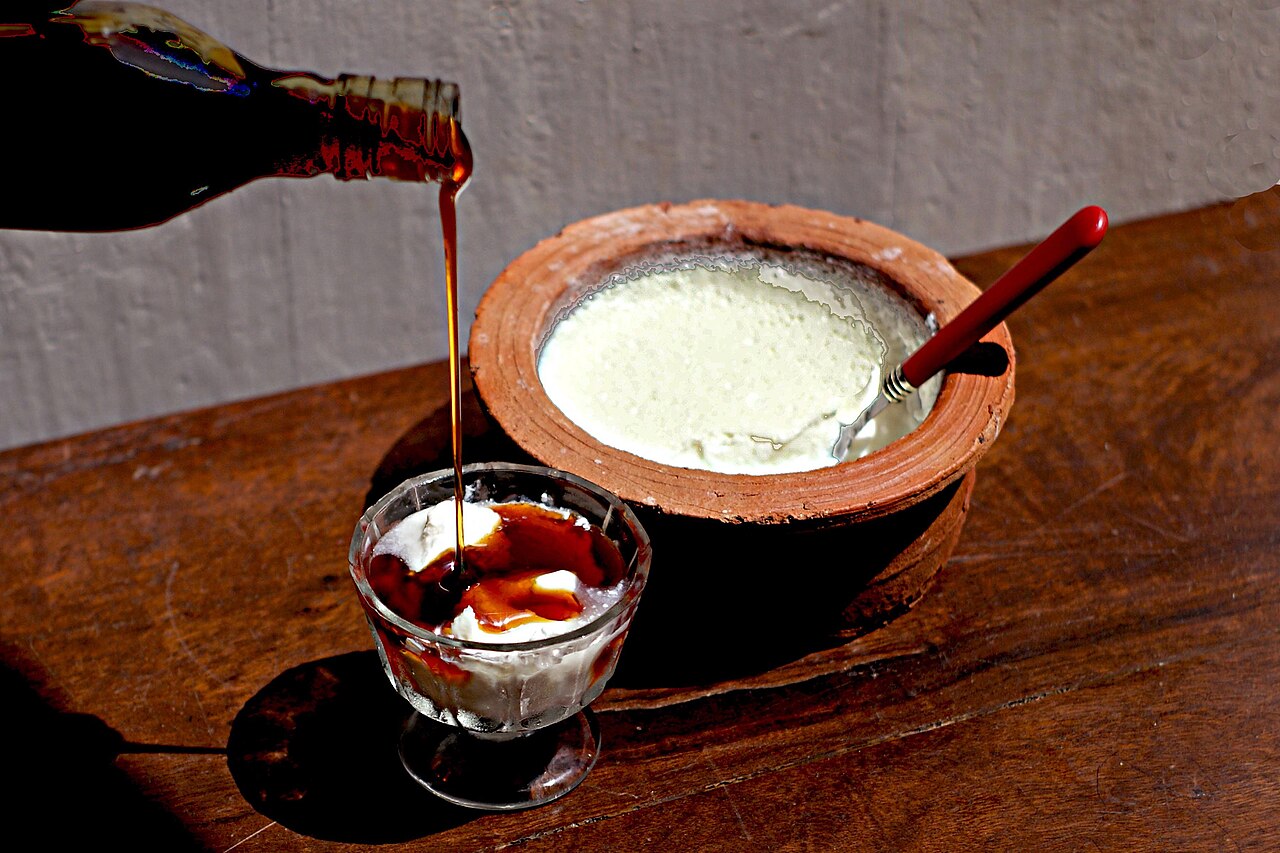
Dessert and the street belong to everyone. Buffalo curd — mee kiri, set in clay pots from water-buffalo milk, tangy and firm — is sold at roadside stalls across the south, especially around Hambantota and Tissamaharama, and eaten flooded with kithul treacle, the caramel sap of the fishtail palm. Wattalappam, the steamed coconut-and-jaggery custard spiced with cardamom from the island's Malay and Muslim kitchens, is the festival sweet to order wherever it appears. And in Colombo at six in the evening, join the city on Galle Face Green for isso wade — crisp lentil fritters each crowned with a prawn — bought from the carts as the kites go up. Above it all, drink the island: high-grown Ceylon tea at a working factory around Nuwara Eliya, where tours end with the grading room and a cup of the estate's own broken orange pekoe, and a tot of coconut arrack, the flower-sap spirit, for the evening.
Picture the place
The lamprais parcel arrives warm and faintly steaming through the leaf; untied, it exhales banana leaf, ghee and spice in one breath, the rice holding the shape of its wrapping — a whole lunch engineered two centuries ago to travel.
The easily missed detail
Sri Lankan "short eats" are a meal category disguised as snacks: the triangular rolls, seeni sambol buns and fish patties in every bakery cabinet constitute how much of the island actually eats between meals, and the correct protocol — a short eats plate and a plain tea at 4 p.m. — is the cheapest cultural immersion in the country.
A practical rhythm
- Colombo — Sunday lamprais, a Ministry of Crab booking, and Galle Face isso wade at sunset in the first two days.
- The south — Roadside curd and treacle whenever the clay pots appear; wattalappam at any festival table that offers it.
- The north and hills — Jaffna crab curry and pittu in Jaffna or Wellawatte; a factory tea tasting fitted to the train day.
What could complicate the plan
Lamprais is a weekend rhythm — outside Sundays and lunch hours the genuine Burgher article thins out fast. Crab pricing at the famous end is by size and serious; the same lagoons supply both the banquet rooms and the Jaffna eateries, at very different tariffs. Buffalo curd's sourness is the point and startles first-timers; treacle proportions are adjustable, so ask for the pour at the table. Poya days and religious seasons reshape menus without notice — another argument for eating where the day's crowd points.
What to do next
Build the food map before the hotel map: Colombo's institutions on arrival, regional dishes in their regions, and the tea factory while the hills are on the route.
Sources
- Lamprais — the Burgher banana-leaf parcel of stock-cooked rice, mixed meats, frikkadels, blachang and seeni sambol, its name derived from the Dutch lomprijst
- Jaffna crab curry and Ministry of Crab — the Colombo restaurant founded in 2011 by Dharshan Munidasa with Kumar Sangakkara and Mahela Jayawardene, serving graded lagoon crabs in the Old Dutch Hospital
- Buffalo curd (mee kiri) with kithul treacle — the clay-pot curd of the southern dry zone and the fishtail palm's sap; wattalappam, the jaggery-coconut custard of Malay and Muslim kitchens
- Lonely Planet's Sri Lanka food coverage — isso wade as the fixture snack of Colombo's Galle Face Green