Sri Lanka country guide Places and experiences
What should a first-time traveler see in Sri Lanka beyond the obvious highlights?
The short answer
Jaffna and the Tamil north, Wilpattu's lake-dotted wilderness, the Sinharaja rainforest, the Knuckles highlands and Delft Island's wild horses — the island's second map, drawn in the places the standard loop drives past.
The answer, with local context
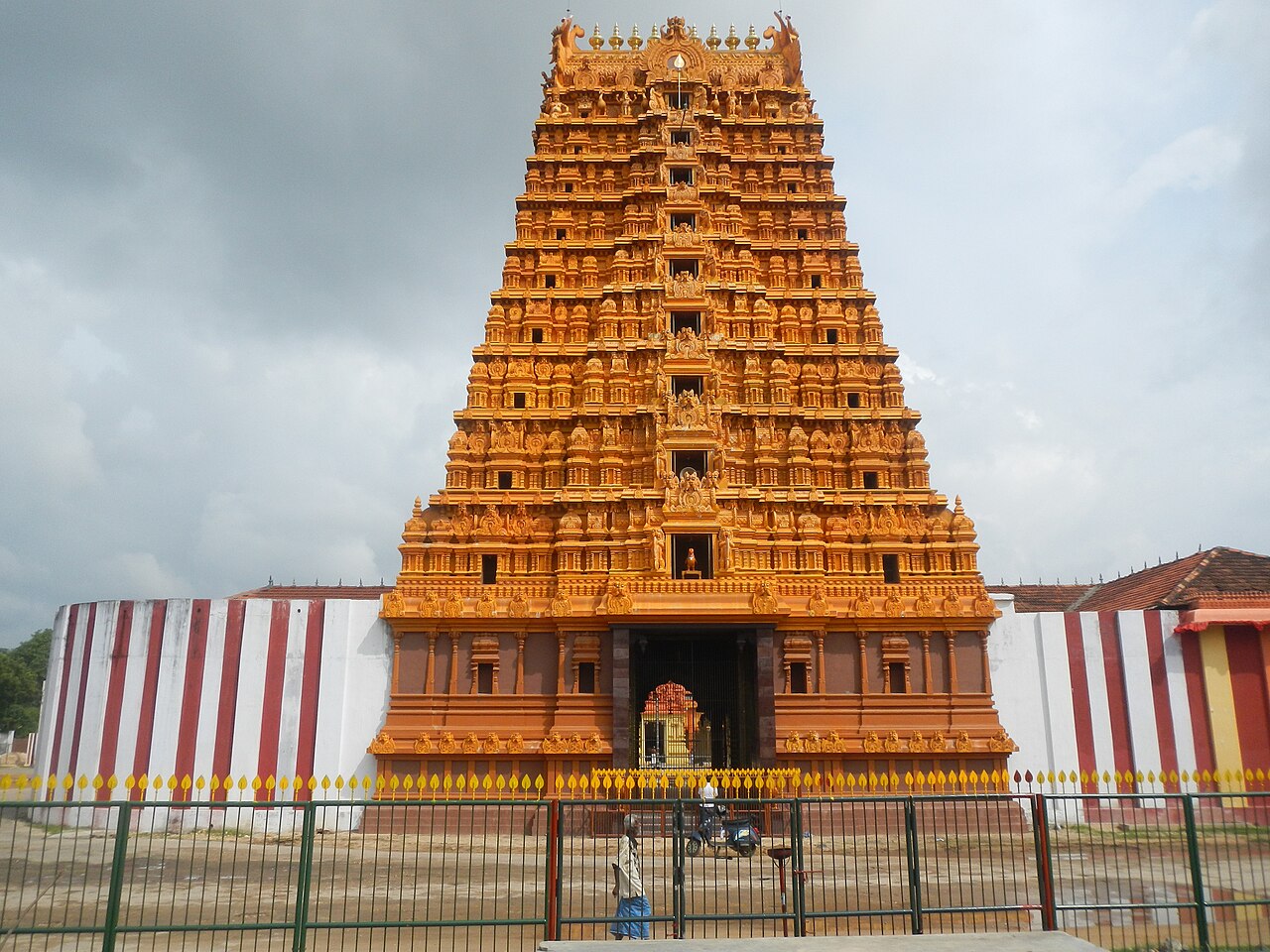
Go north first. Jaffna, the cultural capital of Sri Lanka's Tamil north, was closed off by the 1983–2009 civil war and has reopened into one of Asia's most quietly fascinating cities: palmyra palms, ice-cream parlors, and the golden gopuram of the Nallur Kandaswamy Kovil, the north's most important Hindu temple, whose August festival draws the diaspora home from Toronto and London. The rebuilt Public Library — burned in 1981, restored and reopened — is the city's emblem of recovery, and the offshore islands complete the portrait: Delft, an hour by ferry, where wild horses left by the Portuguese still graze among coral-stone walls and a baobab tree, and Nainativu, sacred to Hindus and Buddhists alike. For decades of travelers, this third of the island simply did not exist; it is now the strongest argument for a longer trip.
The wildlife map has a second page, too. Wilpattu, on the northwest coast, is Sri Lanka's largest and oldest national park — 508 square miles (1,317 km²), gazetted in 1938 — a forest of natural lakes called villus where 30-odd mammal species include leopards and sloth bears, and where a full safari day can pass meeting almost no other jeep, the precise inverse of Yala's famous congestion. In the southwest, the Sinharaja Forest Reserve (UNESCO, 1988) protects the island's last primary lowland rainforest: 21,900 acres (8,864 ha) of canopy patrolled by mixed-species bird flocks, with endemics like the Sri Lanka blue magpie and red-faced malkoha found almost nowhere else on earth.
Complete the set in the high country. The Knuckles Conservation Forest — named by British surveyors for its likeness to a clenched fist — is the wild, trail-laced third of UNESCO's Central Highlands property (2010) that Horton Plains' crowds never reach, all cloud forest and pygmy forest above 5,000 feet. And spare a day for Mannar Island at the island's northwest tip, where donkeys wander a town of baobabs and the causeway runs toward Adam's Bridge, the chain of shoals reaching toward India — in winter the lagoons here and at Jaffna fill with greater flamingos by the thousand.
Picture the place
On Delft the horses move through coral-walled lanes in the heat shimmer, past a Dutch pigeon house and a footprint-shaped pond, on an island where the loudest sound is the wind in the palmyras — an hour from Jaffna and a century from the tourist trail.
The easily missed detail
Anuradhapura, filed under "obvious" by many itineraries, is under-visited in practice: a sacred city founded in the 4th century BCE and a capital for over a millennium, holding the Jaya Sri Maha Bodhi — grown from a cutting of the very tree under which the Buddha attained enlightenment, taken to the island in the 3rd century BCE and among the oldest documented planted trees on earth. Most Triangle itineraries give it half a day; it deserves the full one they give Sigiriya.
A practical rhythm
- The north — Three days for Jaffna, Nallur and one island ferry, using the restored rail line from Colombo as part of the experience.
- The wild west — A full safari day in Wilpattu paired with the Anuradhapura circuit, lodges at the park's edge.
- The green interior — Two days split between Sinharaja's guided rainforest walks and the Knuckles trails, in the drier months for each.
What could complicate the plan
The north's infrastructure is a decade behind the south's: trains and the A9 highway make Jaffna reachable, but hotels and restaurants run thinner and the region rewards a guide who is from it. Sinharaja is rainforest in the literal sense — leeches in the wet months are a certainty, not a risk, and its walks require Forest Department guides. Wilpattu closes in the September–October drought's depths some years and its leopards are earned slowly; travelers with one safari day only should still choose Yala's density.
What to do next
Add three days to the standard loop for the north alone, and choose Sinharaja or the Knuckles rather than both — depth in one wild place beats a windshield survey of two.
Sources
- UNESCO World Heritage Centre — Sinharaja Forest Reserve inscribed 1988 over 8,864 ha of primary lowland rainforest; the Central Highlands inscribed 2010, joining Peak Wilderness, Horton Plains and the Knuckles Conservation Forest
- Wilpattu National Park — Sri Lanka's largest at 1,317 km², declared a national park in 1938, its villus lake system hosting leopards, sloth bears and some 30 mammal species
- Jaffna and the north — the Nallur Kandaswamy Kovil as the region's premier Hindu temple; the civil war's end in 2009 reopening the peninsula; Delft Island's feral horses of Portuguese origin