Sri Lanka country guide When to visit
When is the best time to visit Sri Lanka for Sigiriya?
The short answer
January — the southwest and south coasts are in their dry season, the hill country is at its clearest, and Sigiriya's rock is climbable in cool mornings; the one region this month benches is the east coast, which takes its rain now.
The answer, with local context
Sri Lanka is two climates sharing one island of 25,330 square miles (65,610 km²). The southwest monsoon (Yala) soaks the west, south and hills from May to August; the northeast monsoon (Maha) soaks the north and east from October to January. No month pleases both coasts, so the question is which combination a first trip wants — and for a trip anchored on Sigiriya and the classic circuit, January is the answer. The south and west coasts are mid-dry-season: Galle's ramparts walkable, the surf beaches from Weligama to Hiriketiya settled, and blue-whale watching off Mirissa inside its prime November-to-April window. The hill country runs clear and cool, and the Adam's Peak pilgrimage season — the climb lit and staffed from the December full moon to May — is fully underway.
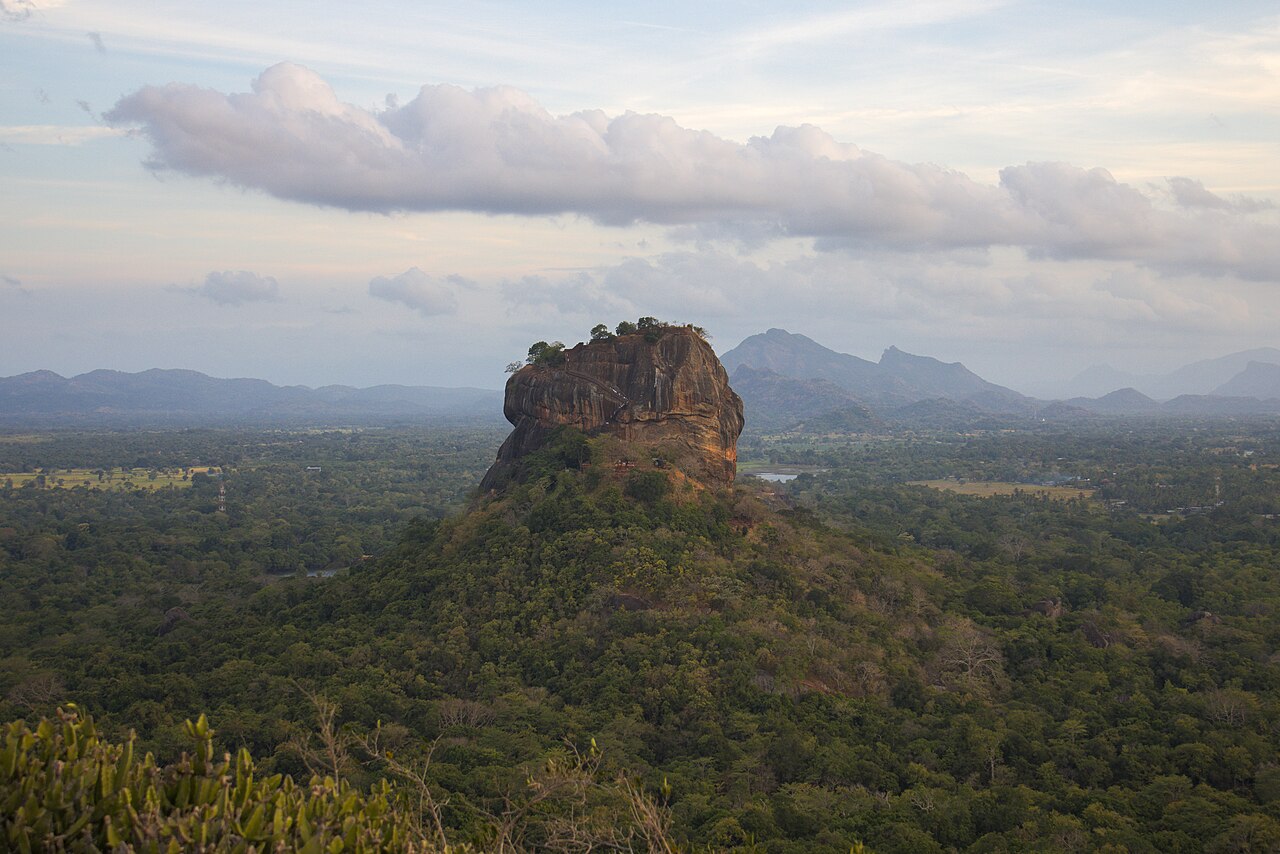
Sigiriya itself, in the dry-zone interior, asks less of the calendar than of the clock. Its rains come mainly from the northeast monsoon and inter-monsoon storms, and by January the heaviest of that weather (October–November) has eased; mornings are the coolest of the year, near 70°F (21°C), which matters because the Central Cultural Fund opens the site at 7:00 a.m. and the climb is best finished before midday. The authority fact behind the destination: Sigiriya is one of Sri Lanka's 8 UNESCO World Heritage properties — six cultural and two natural, inscribed between 1982 and 2010 — and the Cultural Triangle holds four of them (Anuradhapura, Polonnaruwa, Sigiriya and Dambulla) within a morning's drive of each other, which is exactly why January's reliable roads repay planning.
The honest trade is the east. Trincomalee's beaches and Arugam Bay's surf belong to the opposite season, roughly May to September, and a January trip trades them away — as it trades away the biggest elephant gatherings at Minneriya (a dry-season spectacle peaking around September). January also shares its roads with the island's peak international season, so the Triangle's hotels and the famous hill train are at their most contested.
Picture the place
On a January evening in Galle Fort, the lighthouse throws its beam across a flat calm sea while couples walk the Dutch ramparts — and 125 miles (200 km) northeast, Sigiriya is cooling after its day, ready for the seven o'clock climbers.
The easily missed detail
Sri Lanka's public calendar is lunar in a way that ambushes travelers: every full-moon day is a Poya holiday, roughly one a month, on which alcohol sales stop island-wide and the temples fill. A January trip almost certainly contains one — plan the big temple day for it and the beach-club night for any other.
A practical rhythm
- The Triangle first — Sigiriya, Dambulla and Polonnaruwa in the opening days, climbs at opening time, before moving south.
- The hills mid-trip — Kandy and the rail climb to Ella while the highlands are clear, with Adam's Peak's season open for the ambitious.
- The coast last — Galle and the southern beaches in guaranteed dry weather, whales off Mirissa in the morning calm.
What could complicate the plan
January is peak season: prices crest, the Kandy–Ella reserved rail seats vanish fastest (see the planning answer for the 30-day booking discipline), and Sigiriya's gate is at its busiest by nine. Late January can still catch the tail of northeast-monsoon rain in the Triangle — wet stairs, not cancelled days. And a traveler whose heart is set on the east coast should flip the whole trip to June–August instead, accepting wetter western hills as the exchange.
What to do next
Book January, route west-side (Triangle → hills → south coast), and leave the east for the second trip the island reliably inspires.
Sources
- UNESCO World Heritage Centre, Sri Lanka States Parties page — 8 inscribed properties: Anuradhapura, Polonnaruwa and Sigiriya (1982); Kandy, Galle and Sinharaja (1988); Dambulla (1991); Central Highlands (2010), six cultural and two natural
- Sri Lanka's monsoon pattern — the southwest monsoon (Yala) bringing rain to the west and south from May to August and the northeast monsoon (Maha) to the north and east from October to January; Mirissa whale season November to April
- Central Cultural Fund — Sigiriya's 7:00 a.m. opening, the daily anchor for climbing in the cool