Taipei / Taiwan Things to do
What are the most worthwhile things to do in Taipei on a first visit?
The short answer
The National Palace Museum's imperial treasures, Taipei 101 and its visible 660-ton damper, Longshan Temple's incense-thick courtyards, the Chiang Kai-shek Memorial at the guard change, a Maokong gondola ride to the tea hills, and a soak in Beitou — the whole layered history of the island inside one metro system.
The answer, with local context
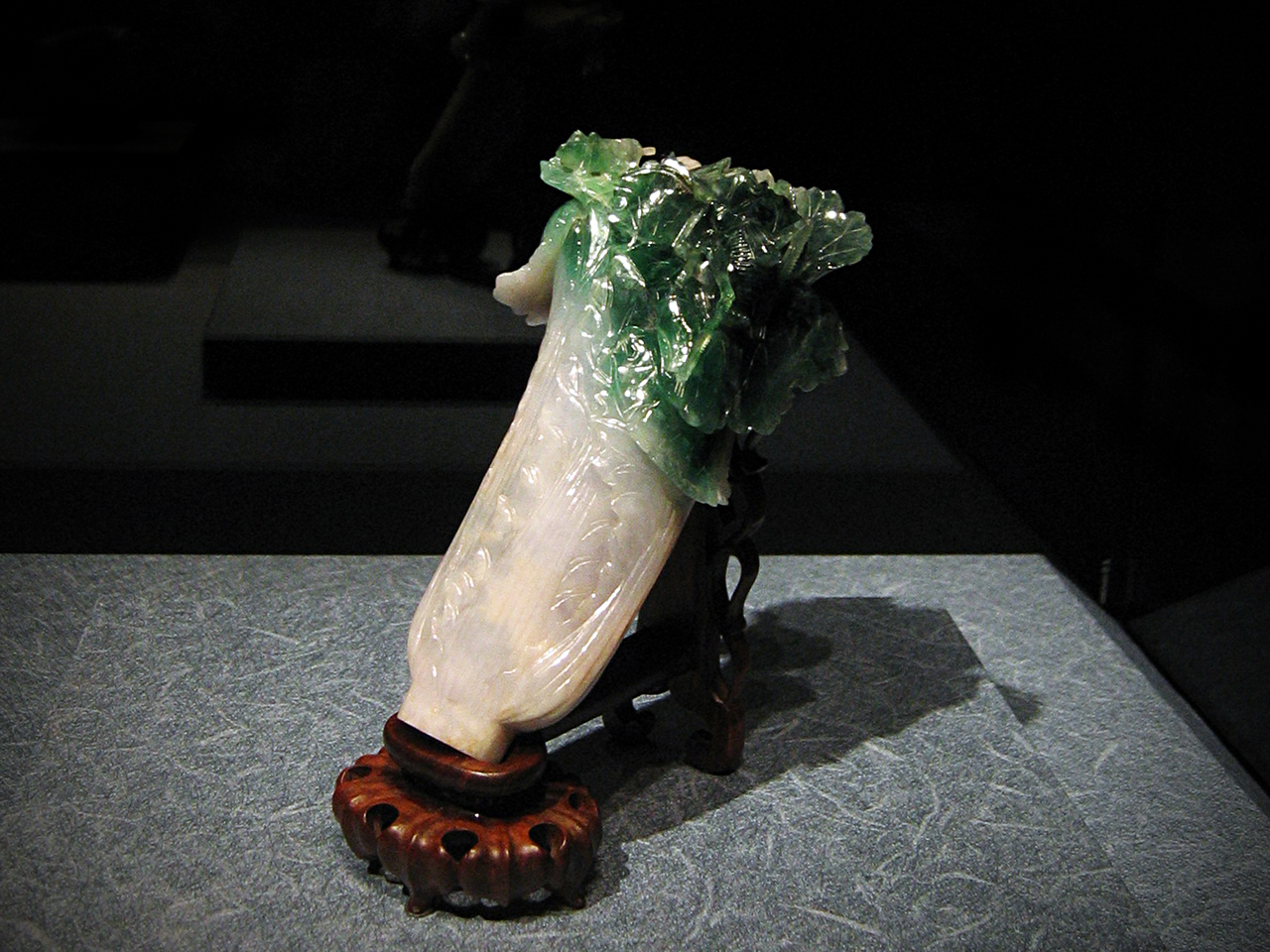
Start with the greatest collection of Chinese art on earth. The National Palace Museum in Shilin holds nearly 700,000 pieces spanning 8,000 years — the imperial collection of the Forbidden City, carried to Taiwan in 1948–49 in crates ahead of the civil war's end. Its three treasures define the visit: the Jadeite Cabbage, a 7.3-inch (18.7 cm) bok choy carved from a single flawed stone so the blemish becomes the leaf's white stalk; the Meat-Shaped Stone, a banded jasper indistinguishable from braised pork; and the Mao Gong Ding, a bronze cauldron whose 500-character inscription is among the longest of the ancient world. Only a fraction can be shown at once, so the rotation is the point — what you see, the visitor last year did not.
Across town, the modern icon earns its ticket twice. Taipei 101 rises 1,667 feet (508 m) through 101 floors in stacked, bamboo-like sections; completed in 2004, it was the world's tallest building until the Burj Khalifa took the title in 2010, and the first skyscraper to break the half-kilometer mark. Its elevators climb from the 5th to the 89th floor in 37 seconds at up to 37.6 mph (60.6 km/h), and the observatory includes the building's strangest treasure: the 660-metric-ton tuned mass damper, a golden steel sphere 18 feet (5.5 m) across hanging between the 87th and 92nd floors, cutting wind sway by up to 40 percent — the world's largest damper, and deliberately on public view. Go up on the clearest day of the trip, and come back at ground level for Elephant Mountain's 20-minute climb, the sunset shot the postcards use.
The city's older layers fill the remaining days. Bangka Longshan Temple, founded in 1738 by Fujian settlers in Taipei's oldest district, is the island's beloved working temple — Guanyin at its heart, a hundred deities in attendance, its bronze dragon pillars and swallowtail roofs rebuilt after the 1945 air raid that left the main statue untouched. The Chiang Kai-shek Memorial Hall, which first opened to the public on April 5, 1980, raises its white octagonal hall 249 feet (76 m) over a commemorative plaza of 25 hectares; climb the 89 marble steps — one for each year of Chiang's life at his death — for the hourly guard change under the bronze giant. Then leave the monuments for the hills: the Maokong Gondola runs 2.5 miles (4.03 km) from the zoo to the tea plantations above Muzha, and Beitou, one metro ride north, steams with the Japanese-era hot springs that made it a resort in the 1890s — the public Millennium Hot Springs baths cost a few dozen Taiwan dollars and the Thermal Valley's jade-green source pool boils at up to 212°F (100°C) at the surface vents.
Picture the place
In Longshan's courtyard at dusk the incense arrives in visible strata — smoke from the seven censers hanging in bands under the beams, fortune blocks clicking on the stone, and an old woman teaching a grandchild how to shake the divination sticks loose one at a time.
The easily missed detail
The Memorial Hall is now a site with two names and an argument. Liberty Square's gate and the exhibitions inside increasingly tell Taiwan's democratization story rather than only Chiang's — read the ground-floor galleries before the statue, and the visit becomes the island's civics lesson instead of a photo stop. Taipei rewards travelers who let its politics be interesting.
A practical rhythm
- Day one — The Palace Museum at opening for three hours, then Shilin's night market in the same district at night.
- Day two — Longshan Temple and Bopiliao's Qing-era street, the Memorial Hall at a guard change, and the 101 deck if the sky has cleared.
- Day three — Maokong's gondola and tea hills by day, Beitou's baths by evening, Elephant Mountain for the tower at dusk.
What could complicate the plan
The Palace Museum's headline pieces rotate and travel — the Cabbage and the Meat Stone are occasionally on loan, including to the museum's southern branch in Chiayi, so check the exhibition list in the week of the visit. The museum and CKS Hall run on an EasyCard-and-MRT city; cash-only travelers will feel the friction at gates and gondolas. Taipei 101's deck is a weather purchase: in the basin's gray weeks the 89th floor can be a room inside a cloud, which is exactly what the flexible-day plan in the season answer is for.
What to do next
Base near Taipei Main Station or Zhongshan where the red and green lines cross, load an EasyCard on arrival, and let the MRT — clean, bilingual, and running until midnight — carry the whole itinerary.
Sources
- National Palace Museum — a collection of nearly 700,000 pieces across 8,000 years; the Jadeite Cabbage, Meat-Shaped Stone and Mao Gong Ding as its emblematic treasures; the collection's relocation to Taiwan in 1948–49
- Council on Tall Buildings and Urban Habitat — Taipei 101 at 508 m (1,667 ft), the world's tallest building from 2004 to 2010 and the first past the half-kilometer mark; the 89th-floor observatory reached in 37 seconds at 60.6 km/h; the 660-tonne, 5.5 m tuned mass damper between floors 87 and 92 reducing sway by up to 40 percent
- Ministry of Culture, Republic of China (Taiwan) — Longshan Temple established in 1738 and designated the country's 99th national historic site (Dalongdong Bao'an Temple of 1804 the 100th), and the National Chiang Kai-shek Memorial Hall Administration's own figures: a 76 m hall, an 89-step marble stairway and a 25-hectare commemorative plaza, first opened to the public on April 5, 1980