Taipei / Taiwan Food and drink
Where should I eat in Taipei, and which local food or drink is worth trying?
The short answer
Beef noodle soup at a Bade Road institution, xiaolongbao at Din Tai Fung's 1958 original store, pepper buns straight from the clay oven at Raohe's gate, and a soy-milk breakfast at Fuhang — Taipei is a city that eats in shifts, and the shifts are the itinerary.
The answer, with local context
Begin where Taipei begins: breakfast. The Taiwanese breakfast is a cuisine of its own — warm soy milk (doujiang), sweet or set savory with vinegar and chili oil; shaobing, sesame flatbread baked on a clay oven wall, wrapped around a crisp youtiao cruller; dan bing egg pancakes; and fantuan, sticky rice rolled around pickles and pork floss. Its cathedral is Fuhang Soy Milk, a food-court stall in Huashan Market whose queue forms before its 5:30 a.m. opening and runs down the stairs — Michelin Bib Gourmand-listed, and worth the one-time pilgrimage. Its neighborhood rivals run 24 hours (Yong He Soy Milk King began the all-night pattern), and a full spread costs NT$60–100, the city's best-value great meal.
Lunch is the national argument: beef noodle soup. Taiwan's signature bowl — beef braised in soy and spice or served in a clear broth, hand-pulled-chewy wheat noodles, pickled mustard greens — is so contested that the Taipei International Beef Noodle Festival has run cook-off competitions since 2005. Try the old guard at Yong Kang Beef Noodles (trading since 1963, in the lane off Yongkang Street, spicy and tendon-rich) and the late-night faithful's choice, Lin Dong Fang on Bade Road, whose herbaceous broth and midnight hours make it the chefs' pick. Then dumplings: Din Tai Fung began in 1958 as a cooking-oil shop on Xinyi Road and converted to a restaurant in the early 1970s; its original store still serves the xiaolongbao — 18 folds, weighed fillings — that the New York Times ranked among the world's top ten restaurants in 1993, before the chain had left Asia. The original has a queue; so does Hangzhou Xiaolongbao by the Memorial Hall, at half the price.
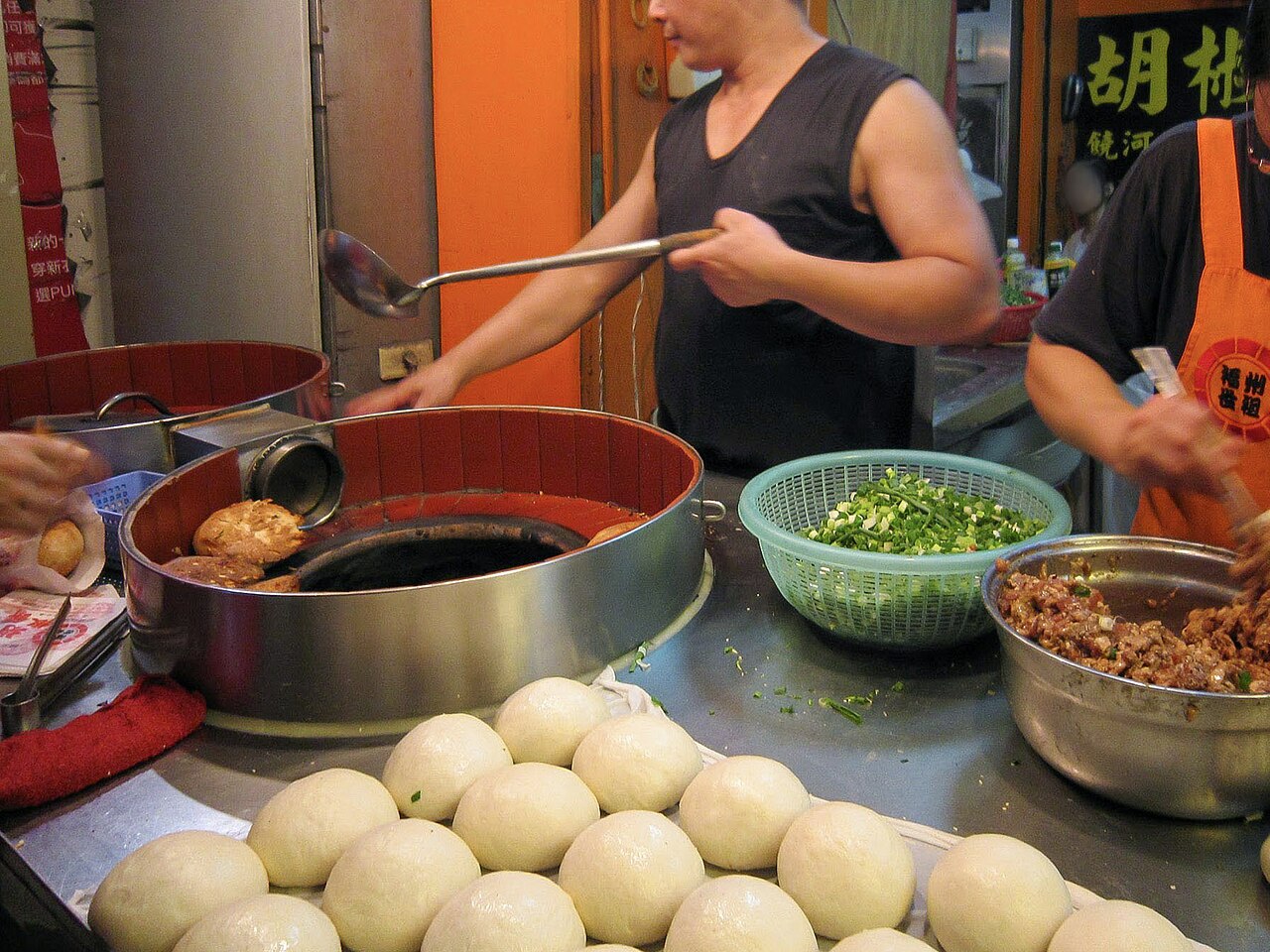
Dinner belongs to the night markets, and Raohe is the food-lover's market: one straight street of about 1,970 feet (600 m) from the Ciyou Temple gate, anchored at its entrance by Fuzhou Shizu Pepper Bun — pork, scallion and a heavy hand of black pepper sealed in dough and slapped onto the inside wall of a clay tandoor, emerging blistered and close to boiling, about NT$60 and Michelin-listed. Graze onward: Chen Dong's herbal pork rib soup, oyster omelets, grilled squid, shaved ice. Shilin, the giant, is the alternative — Hot Star's face-sized fried chicken (the original of the chain, since the 1990s) and a hundred other stalls in a covered food court. Between meals, drink the invention: boba milk tea, created in Taiwan in the 1980s — Taichung and Tainan still argue the patent — with Chun Shui Tang, the Taichung house that claims the 1987 original, running Taipei branches; and take home pineapple cakes, where SunnyHills in the Songshan cultural park bakes with native pineapples instead of the traditional winter-melon blend.
Picture the place
At the pepper-bun oven the baker works bare-armed into the clay drum's mouth, slapping dough rounds against its inner wall where they blister in minutes — and the queue, forty deep at six o'clock, shuffles forward each time a batch peels free.
The easily missed detail
Taipei's Michelin Guide is the rare one that lists breakfast stalls and night-market vendors alongside the three-star rooms (Le Palais and Taïrroir held three stars in the 2025 guide). Use it as a street-food map: its Bib Gourmand list is effectively a certified itinerary of the city's stalls, from pepper buns to soy milk, at street prices.
A practical rhythm
- Breakfast — Fuhang once for the legend, then any neighborhood soy-milk shop for the habit: shaobing, youtiao, salty doujiang.
- Lunch — A beef-noodle bowl at midday and Din Tai Fung's original at an off-hour, or the order reversed.
- Dinner — Raohe end to end, pepper bun first while the appetite is honest, rib soup halfway, ice at the far end.
What could complicate the plan
Night markets are cash economies — stalls run on coins and small bills, and a full graze costs NT$300–500. The famous counters queue hardest exactly when hunger peaks, so the discipline is temporal: breakfast before seven, markets before six. Din Tai Fung's original store wait can pass an hour at weekends; the same dumplings at the Taipei 101 branch come with a number-and-text system that lets you shop while waiting. And the beef-noodle argument is unwinnable — order both broths on different days and abstain from verdicts in public.
What to do next
Stay within walking distance of one great market, eat breakfast like a local at least twice, and let the Bib Gourmand list, not the hotel concierge, plan the evenings.
Sources
- Fuhang Soy Milk — the Huashan Market breakfast stall opening at 5:30 a.m., Michelin Bib Gourmand; the traditional breakfast canon of doujiang, shaobing, youtiao, dan bing and fantuan at NT$60–100
- Taipei beef noodle culture — the Taipei International Beef Noodle Festival running since 2005; Yong Kang Beef Noodles since 1963; Lin Dong Fang on Bade Road
- Din Tai Fung — founded 1958 as a cooking-oil shop on Xinyi Road, converted to a restaurant in the early 1970s; the 1993 New York Times top-ten restaurant ranking
- Raohe Street Night Market — about 600 m of stalls from the Ciyou Temple gate; Fuzhou Shizu pepper buns baked in clay ovens at about NT$60, Michelin-listed; boba milk tea originating in Taiwan in the 1980s